13 Best Statement Floor Plants
One big plant in a corner does more for a room than a shelf of small ones. It adds height, fills a dead space, and gives your eye a place to land. It is also the plant you will pay the most for, so it is worth picking one that fits your light and your patience.
Big plants ask for a few things small ones do not. They need a heavy pot that will not tip, a spot away from heat vents and drafty doors, and room to spread. Many of them also dislike being moved, so choose the spot before the plant comes home. Light is the big filter. Most floor plants here need a bright room to stay full. Put one in a dim corner and it slowly grows thin and drops leaves. Several are toxic to pets, and the notes say which.
How we picked: Each plant is a large or tall plant in our profiles that can stand on the floor and anchor a room on its own.
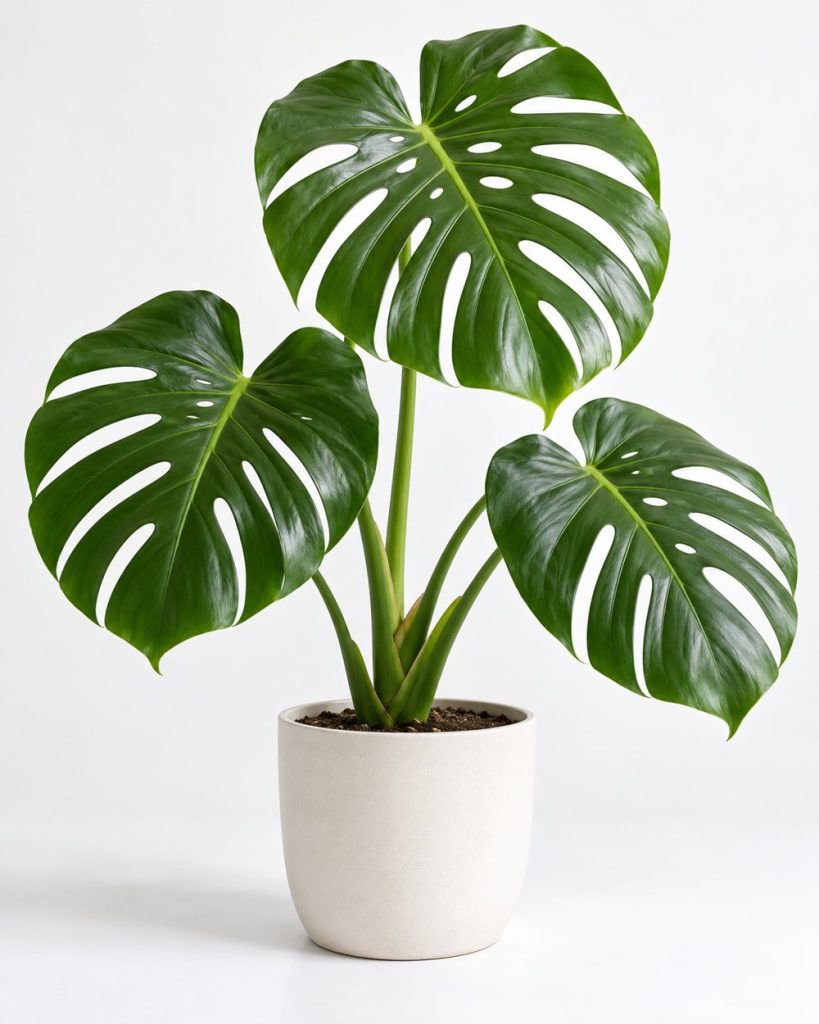
1.Monstera
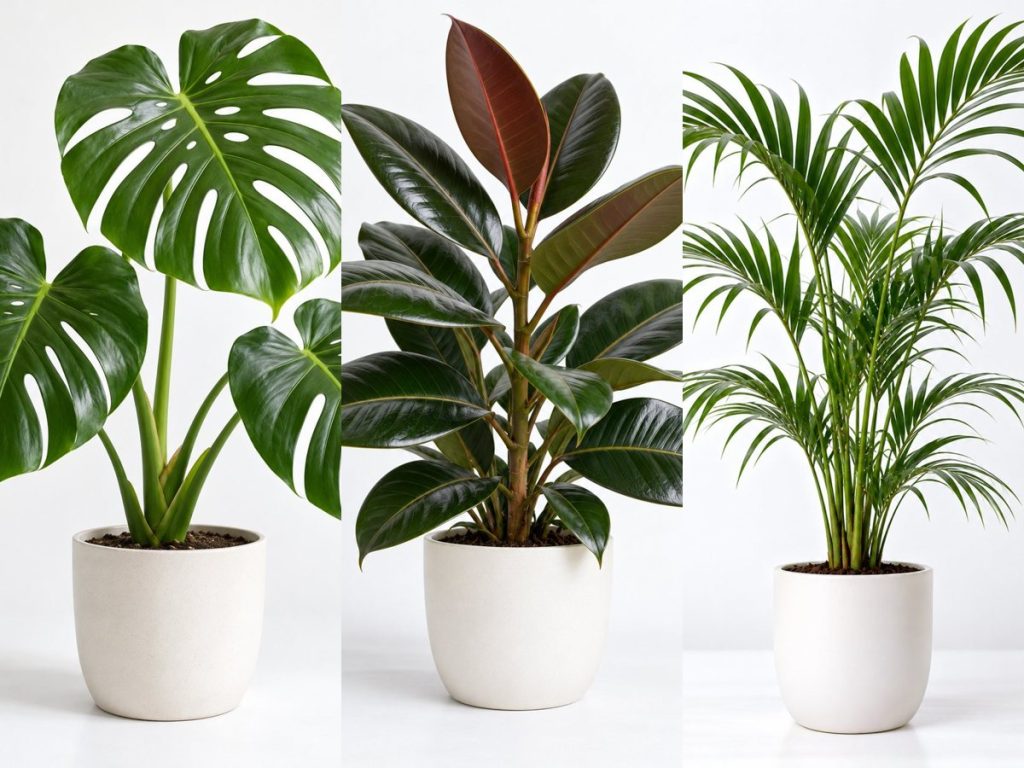
Monstera deliciosaThe forgiving choice for a first big plant. It handles uneven watering and normal room air, and the holes in the leaves get better as it ages. It will need a pole and a lot of room, often 6 feet or more across in time. It is toxic to pets.
Read the full care guide →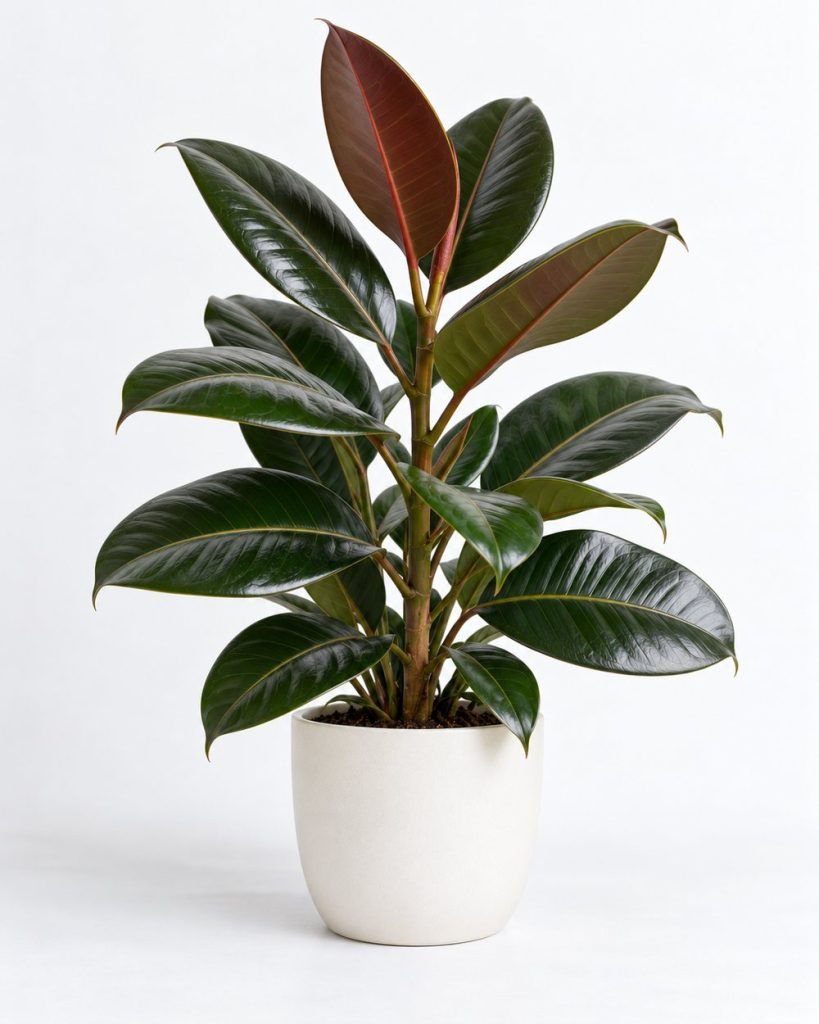
2.Rubber Plant
Ficus elasticaWant a tree shape without the drama? This is it. Dark burgundy leaves look striking against a pale wall. Cut the top and it branches out, so you control the height. It sheds a few leaves when moved, and the sap irritates skin.
Read the full care guide →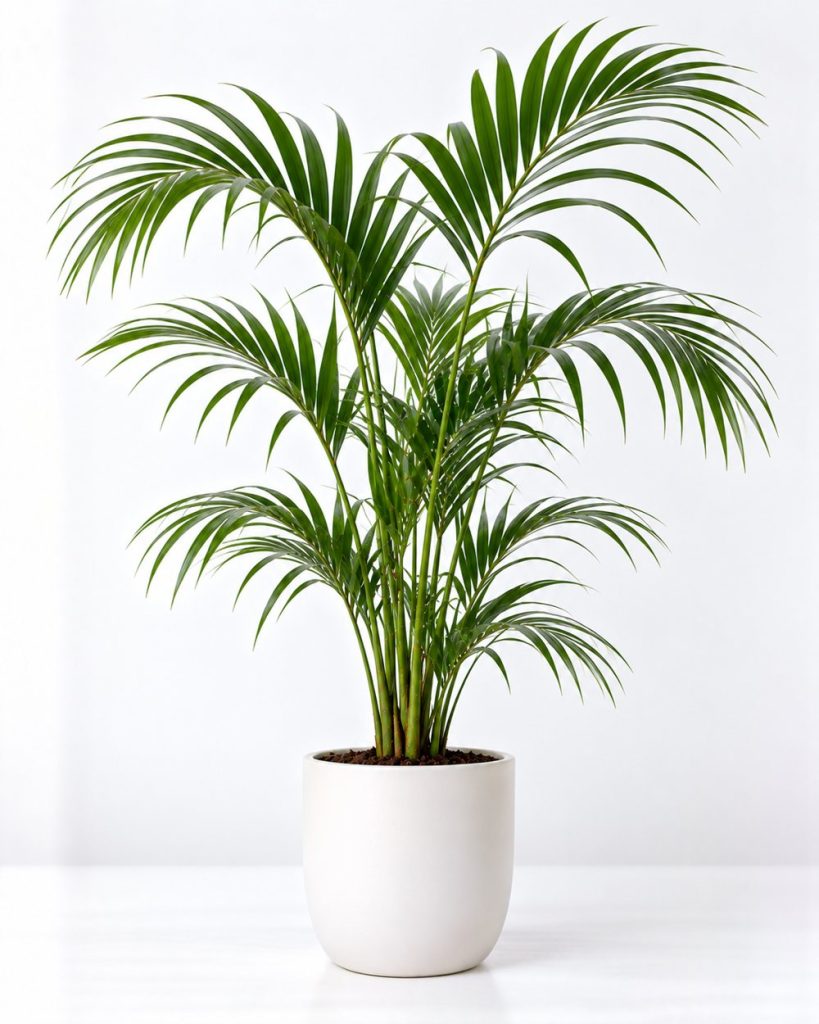
3.Kentia Palm
Howea forsterianaThe palm for a big room that is not very bright. It copes with low light, looks fullest in medium, and can reach 5 to 10 feet over many years. It is non-toxic to cats and dogs. Growth is slow, so a tall one is pricey. Turn it each month so the fronds grow evenly.
Read the full care guide →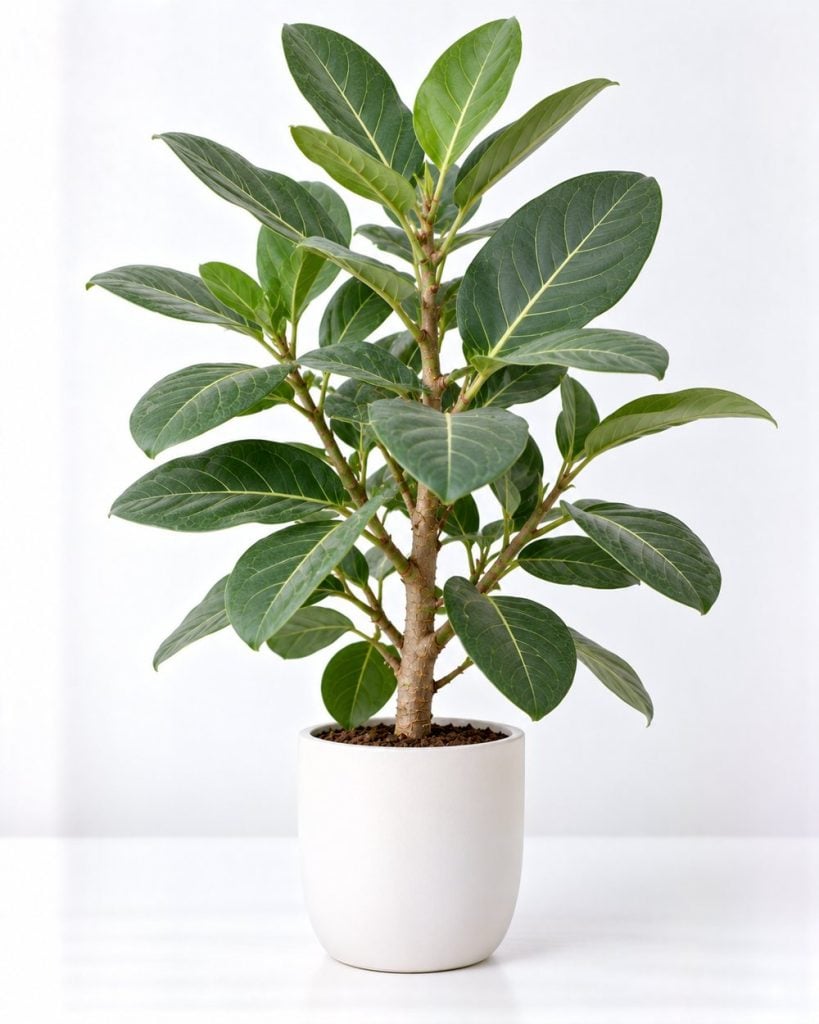
4.Ficus Audrey
Ficus benghalensis 'Audrey'Think of it as a fig that forgives more than the fiddle-leaf. The pale stems and soft, oval leaves look calm in a living room, and it copes with medium light, though it grows slowly and leans there. It is still a fig, so the milky sap is toxic to pets and can bother your skin.
Read the full care guide →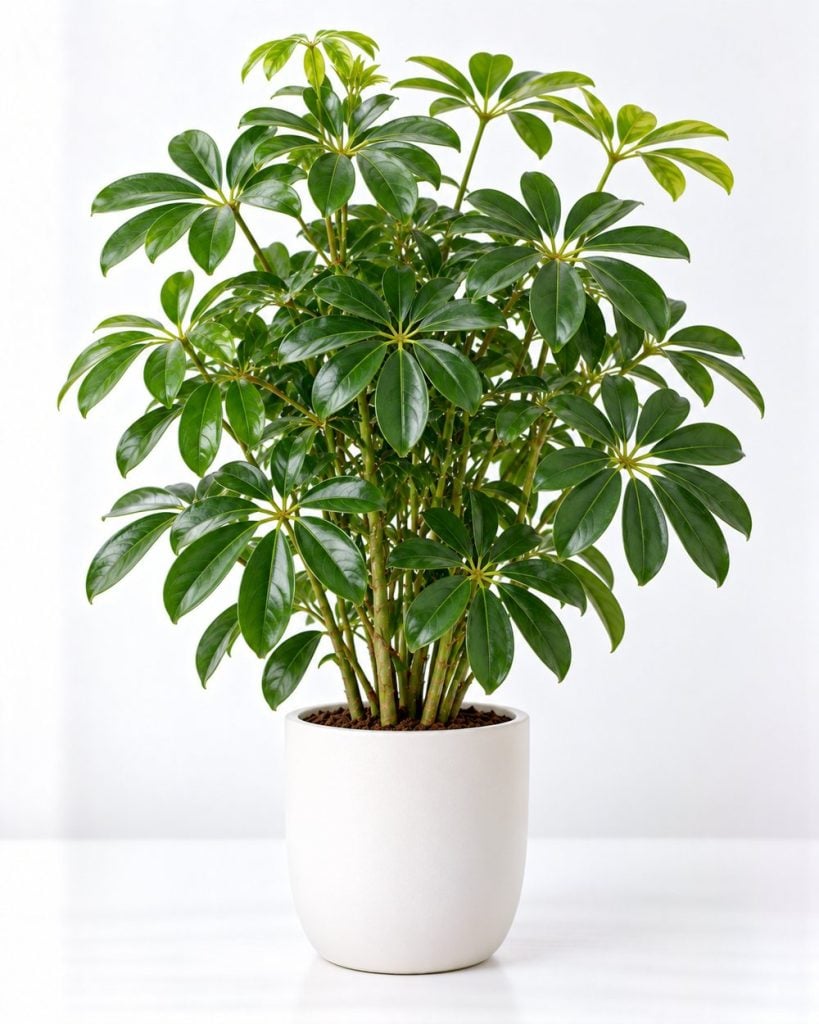
5.Umbrella Plant
Heptapleurum arboricolaUmbrella-shaped clusters of glossy leaflets on woody stems give you a tree without much fuss. It grows to 4 to 6 feet in a pot, and you can cut it back to keep it shorter. Medium light is enough. Hot afternoon sun through glass scorches it, and the leaves burn a pet's mouth if chewed.
Read the full care guide →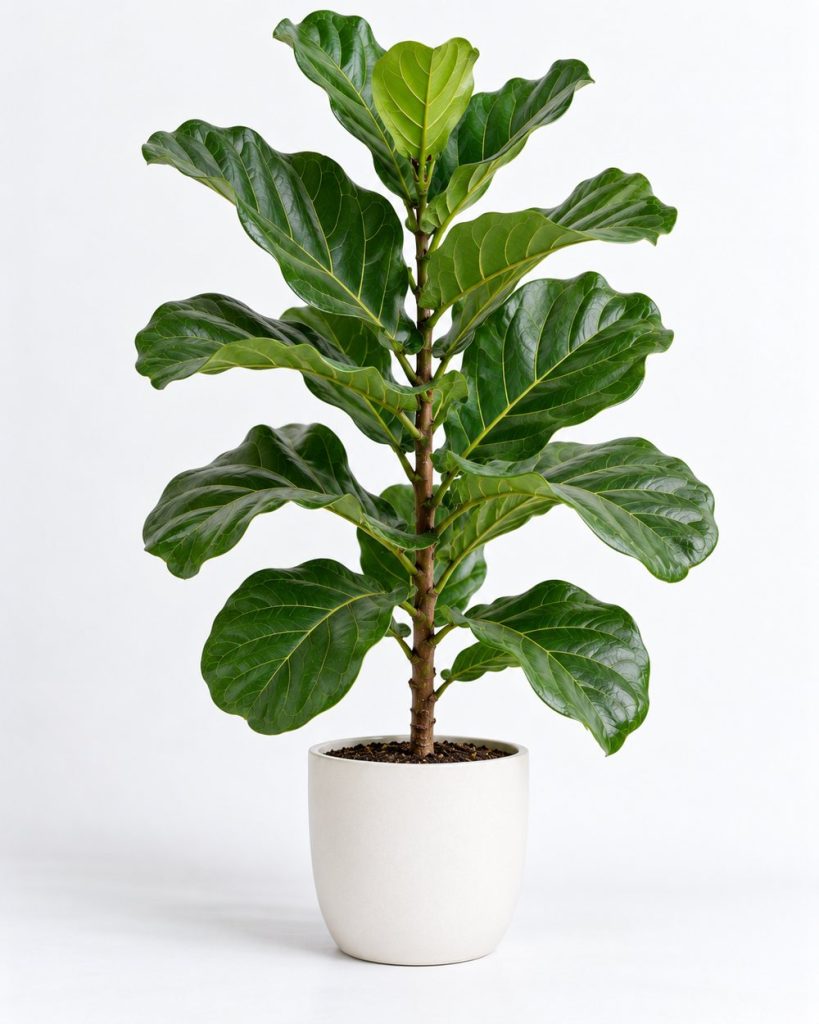
6.Fiddle-Leaf Fig
Ficus lyrataThe most famous floor plant, and the hardest one here. It needs a very bright spot, the same water routine every time, and no moves. If you have a big east or south window and patience, it can be worth it. If not, the rubber plant above is the calmer pick.
Read the full care guide →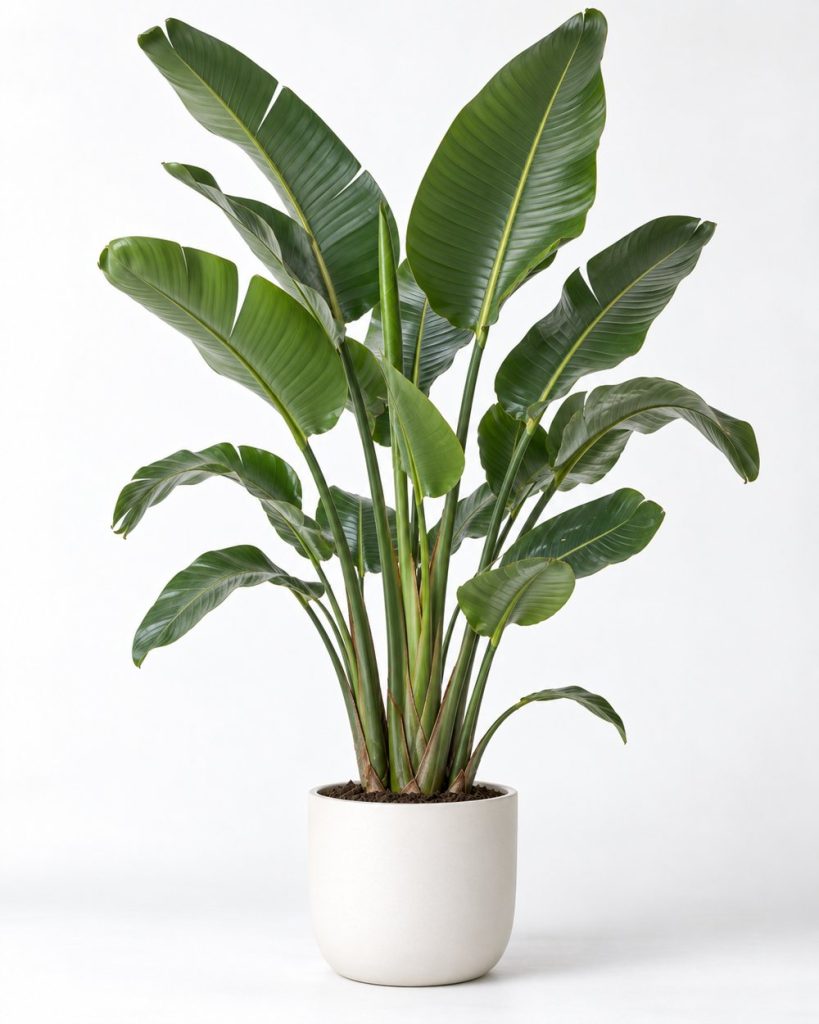
7.Bird of Paradise
Strelitzia nicolaiFor the sunniest room you have. Its giant paddle leaves can top 6 feet and give a room a warm, resort feel. It stalls in medium light, the leaves split with age, and it is toxic to pets. Buy it for the leaves, since flowers indoors are rare.
Read the full care guide →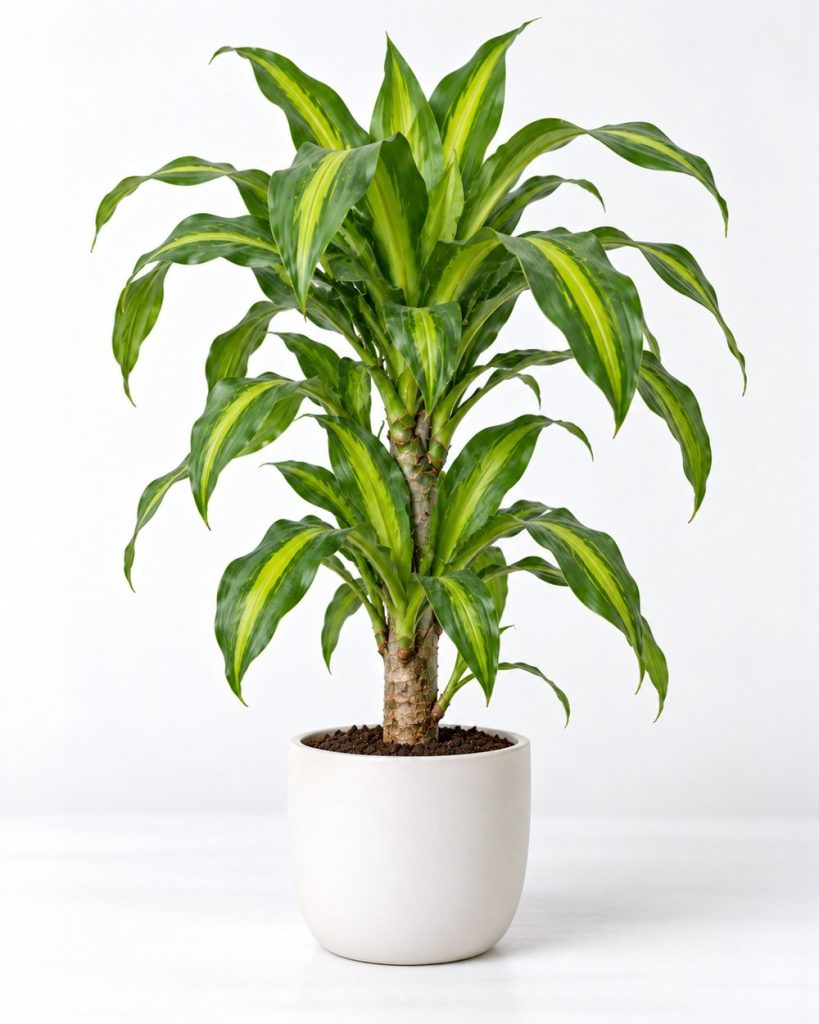
8.Corn Plant
Dracaena fragransLong striped leaves arch from thick woody canes, so it reads as a tree even in a modest room. It takes medium light and a drink every one to three weeks. Expect slow growth, often years to reach 4 to 6 feet. It is toxic to cats and dogs, so think about a dog that chews.
Read the full care guide →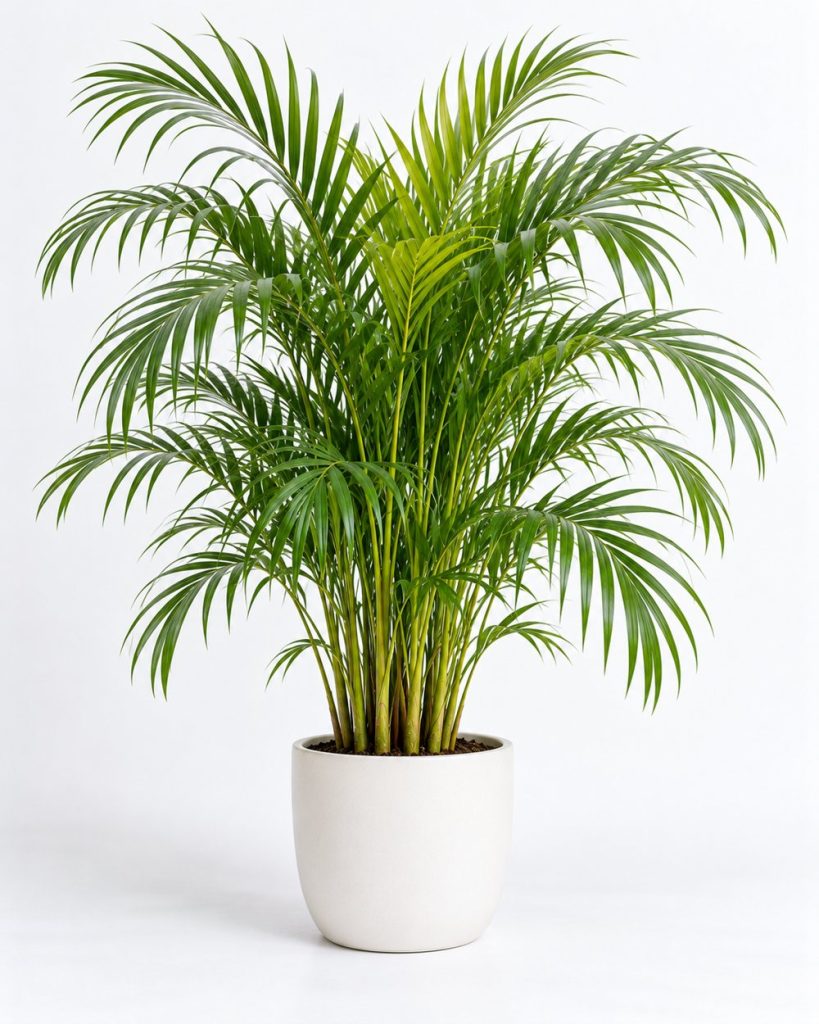
9.Areca Palm
Dypsis lutescensHeight and softness together. The arching fronds sway when someone walks past and feel lighter than a leafy tree, and it is pet-safe. Big ones cost a lot, the tips brown in dry air, and spider mites love it in winter. A humidifier helps with both.
Read the full care guide →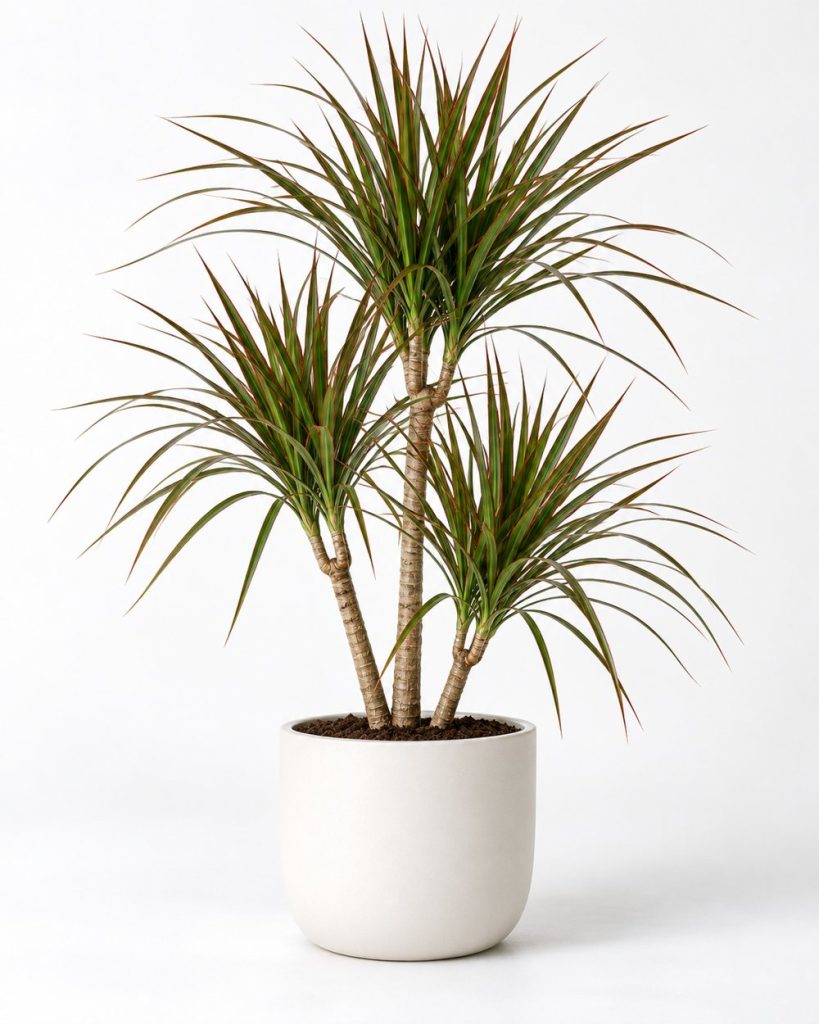
10.Dracaena Marginata
Dracaena reflexa var. angustifoliaThe slim choice. It can reach 6 feet on thin trunks, so it suits a narrow gap beside a TV or a door. It handles missed waterings well. Lower leaves drop as it grows and leave bare trunks, which is how it is meant to look. It is toxic to pets.
Read the full care guide →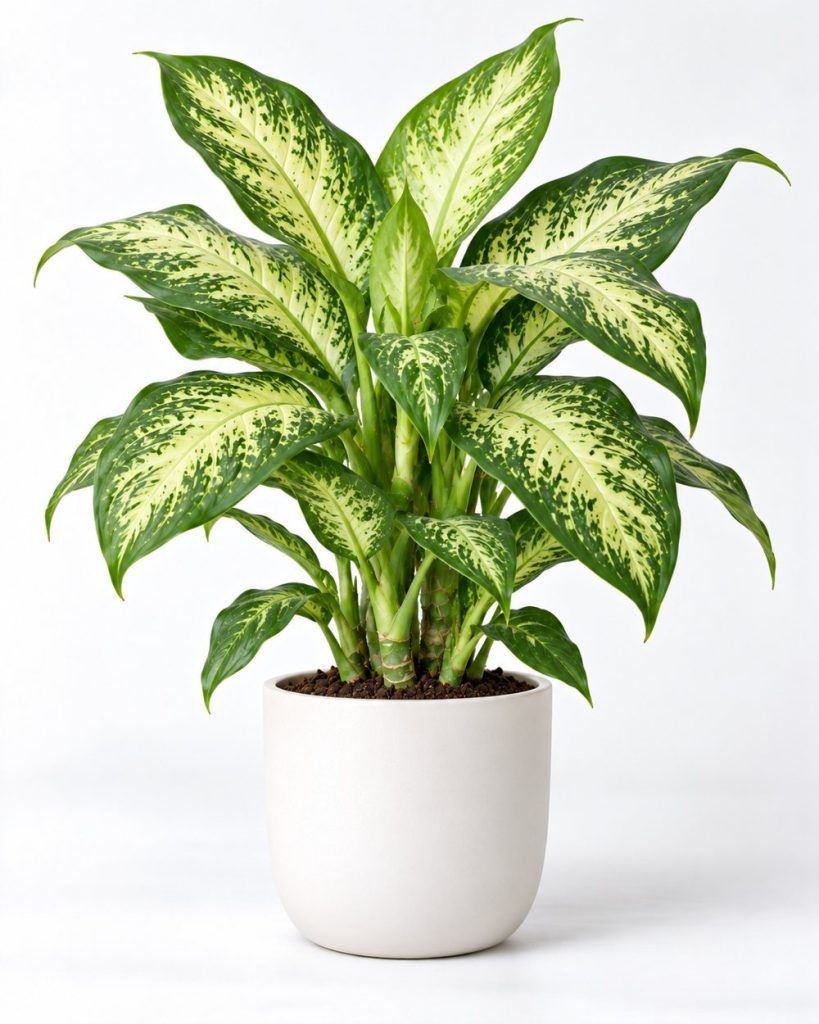
11.Dumb Cane
Dieffenbachia spp.Big leaves splashed with cream or white sit on thick canes that reach 3 to 6 feet. It takes medium light, though it leans hard toward the window there. The sap is the serious part. Chewing it makes a pet's mouth burn and swell, so it suits a home without toddlers or chewers.
Read the full care guide →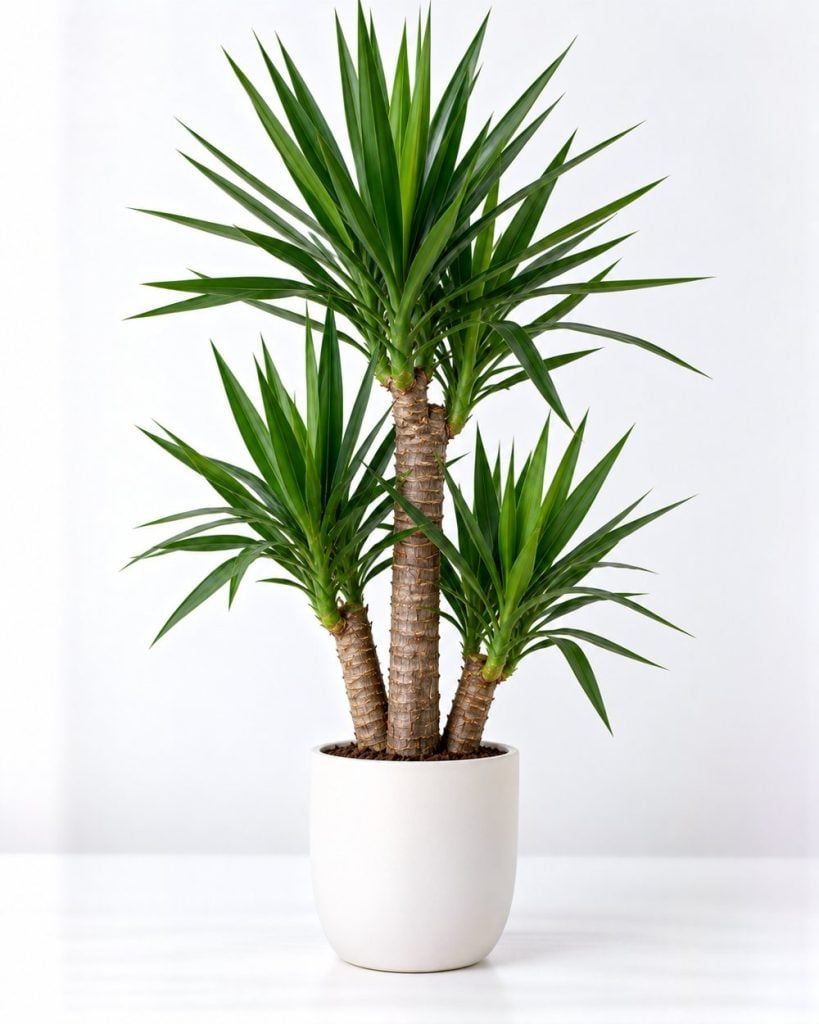
12.Yucca
Yucca giganteaChunky trunks and spiky leaf tufts suit a sunny modern room. It needs a south or west window with some direct sun, and it is happy with dry air and a drink every two or three weeks. In a dim corner the leaves flop and the canes can rot. The ASPCA lists it as toxic to cats and dogs.
Read the full care guide →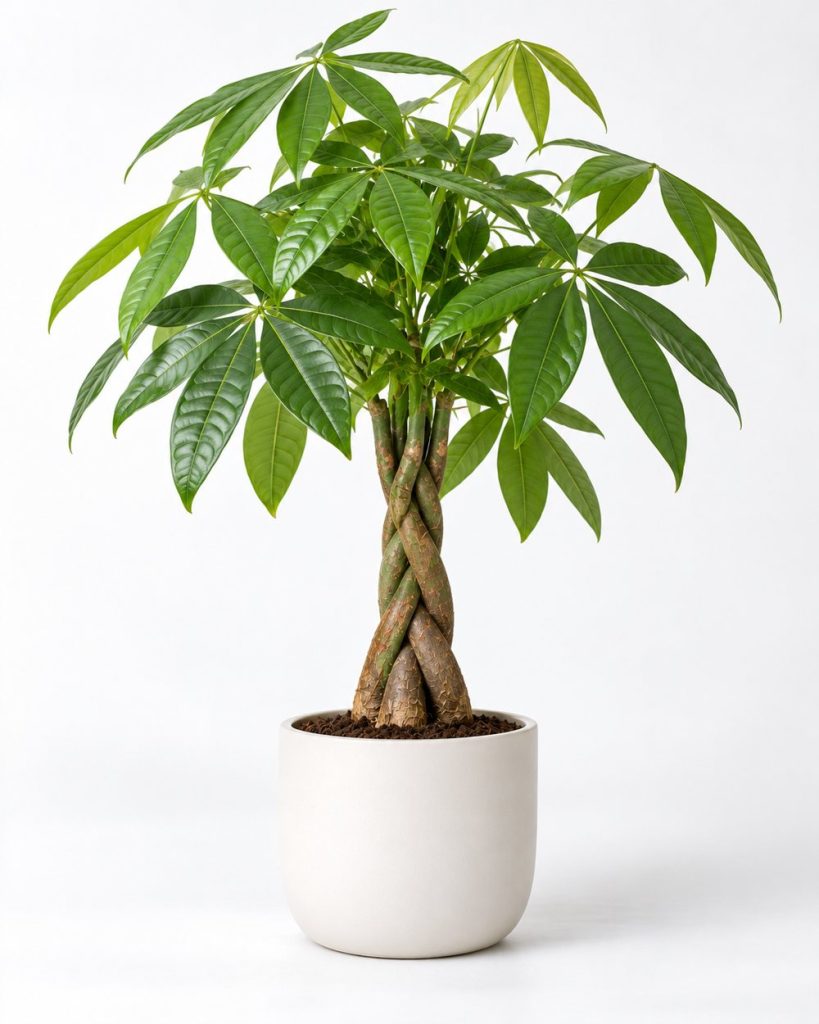
13.Money Tree
Pachira aquaticaThe best tree shape here for a pet home. The braided trunk adds a little polish to a living room or office. It settles at 3 to 6 feet, so it suits a room where a taller plant would crowd the ceiling. Pick a bright spot and leave it there, because moves cause leaf drop.
Read the full care guide →Buy the biggest plant you can afford of the kind you want, since most of these grow slowly at home. Make sure the pot has a drainage hole, and set it on a saucer or a plant stand so the floor stays dry. A rolling stand makes cleaning easier. Just roll it out and back again, because these plants hate a new spot.
Frequently asked questions
Should I repot a big plant right after I buy it?
No. Let it settle for a few weeks first, since big plants already sulk after a move. Repot in spring, and only go up one or two inches in pot size.
How do I stop a tall plant from leaning?
Give the pot a quarter turn every week or two so each side faces the window. A stake or a moss pole helps monsteras and other heavy plants stand straight.
Which big floor plants are safe for pets?
From this list, the ASPCA lists the areca palm, kentia palm, and money tree as non-toxic to cats and dogs. The others are toxic if chewed, so they suit homes without a plant-chewing pet.
Want a plant picked for you?
Take a plant quiz