Money Tree
Pachira aquatica · also called Guiana chestnut, Malabar chestnut, Pachira
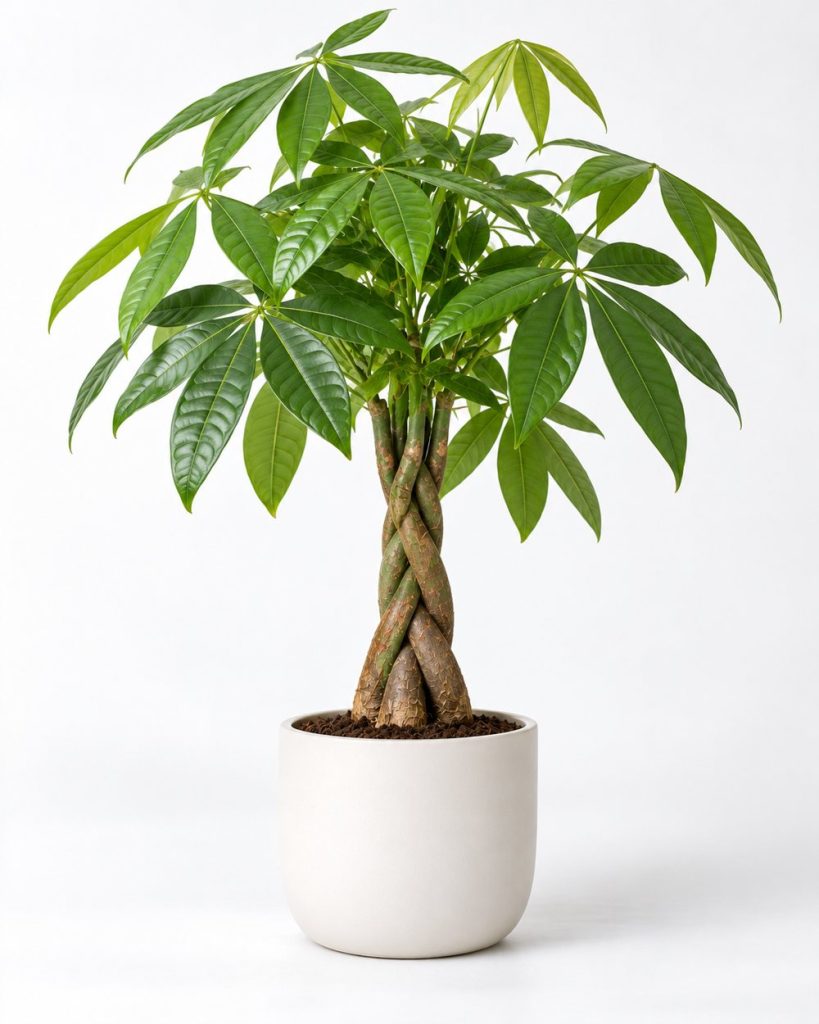
A braided trunk and umbrella leaves, safe around cats and dogs
- Light
- Bright indirect, Medium light: Bright indirect is best, lives in medium light
- Water
- Every 1-2 weeks, when the top 2-3 inches of soil are dry
- Difficulty
- Easy
- Pet safety
- Non-toxic to cats and dogs
- Size
- Large
- Height
- 3-6 ft indoors
- Growth
- Moderate
- Humidity
- Average humidity is fine, a bit more helps
- Temperature
- 60-80°F
- Good rooms
- Bedroom, Kitchen, Living room, Office
The braided trunk on a money tree is not something it grows on its own. Growers plant several young trees in one pot and twist the soft stems together while they are green. As they thicken, the braid sets in place. On top, each stem carries leaves split into five to seven shiny leaflets, held out like an open hand. It looks tidy, a little formal, and very much like a tree.
This is a good choice for homes with pets. The ASPCA lists it as non-toxic to cats, dogs, and horses. It also suits people who want a tree shape without the drama of a fiddle-leaf fig. In bright indirect light it grows at a steady pace and handles normal room humidity. In many homes it settles at 3 to 6 feet tall. One label quirk: many plants sold under this name are a close cousin, Pachira glabra. The care is the same.
Its weak spots are moving and wet soil. A money tree that gets carried to a new spot often drops leaves while it adjusts, so pick a place and leave it there. The braid also holds several separate trees. If one gets root rot from soggy soil, it can die while the others look fine. A dead stem in the middle of a braid is hard to hide. Water when the soil has dried a few inches down, not on a fixed day.
Money Tree care
Light
Bright indirect light is best, such as near an east window or a few feet back from a south or west one. It can live in medium light but grows slowly and leans. A little soft morning sun is fine. Hot afternoon sun through glass can scorch the leaves. Turn it a quarter turn every few weeks so it grows evenly.
Watering
Water when the top 2 to 3 inches of soil are dry. In bright light that may be every 1-2 weeks. In winter it needs much less. Water deeply, let it drain fully, and empty the saucer. Many store pots have a tight plastic liner or no hole, so check that water can escape.
Soil and pot
A fast-draining mix is best. Use indoor potting mix blended with perlite or orchid bark, or a peat-based mix with a little sand. The pot must have a drainage hole. Clay pots dry a little faster, which gives you more room for error with water.
Humidity and temperature
Average home humidity works. It likes a bit more, so a pebble tray helps in a very dry winter room. Keep it away from heat vents, air conditioners, and cold doors. Sudden drafts are a common reason for leaf drop.
Feeding
Money trees in good light grow faster than most people expect, so feed them monthly from spring through summer. A balanced liquid fertilizer at half the label rate is fine. In a medium-light spot, every other month is enough. Watch the leaf edges. If they turn brown and crispy after a feed, salts are building up. A slow soak with plain water every few months clears the soil. No food in winter.
Repotting
Repot every two to three years in spring, going up one size. Keep the braid at the same depth. Loosen any wire or tape the grower left on the trunks, since it can cut into the bark as they thicken.
Propagation
Take a stem cutting about 6 inches long with a few leaves, ideally in spring or early summer. Root it in water or damp mix in a warm, bright spot. Roots show up in a few weeks. Keep in mind that a cutting grows a single trunk, not a braid.
Common problems
Why is my money tree dropping leaves?
Leaf drop usually follows a change, like a move, a draft, or a big swing in watering. Keep it in one spot, check the soil, and give it a few weeks to settle.
Why are money tree leaves going yellow?
Yellow leaves with damp soil often mean too much water. Let the soil dry deeper between drinks and make sure the pot drains.
Why is one trunk in the braid soft?
That stem has likely rotted. Cut it out at soil level, let the soil dry, and water less. The other trunks can carry on.
What makes the leaf edges dry and brown?
Dry air, sun scorch, or salt from food are common causes. Move it out of direct sun and flush the soil with plain water.
Frequently asked questions
Is a money tree safe for cats and dogs?
The ASPCA lists it as non-toxic to cats, dogs, and horses. Eating a lot of leaves can still cause vomiting or loose stool.
Can I braid my own money tree?
Yes, with three to five young, bendy stems in one pot. Twist them loosely and tie the top with soft string, then loosen it as they grow.
Will it bring me money?
There is no proof it does. It is a good-looking plant, though, and that is reason enough to keep one.
Not sure this plant fits your home?
Take a plant quizSources: aspca.org, plants.ces.ncsu.edu