Parlor Palm
Chamaedorea elegans · also called Neanthe bella palm, Good luck palm
A soft, slow palm that copes with shade and pets
- Light
- Low light, Medium light: Fine in low light, happiest in medium light
- Water
- Every 1-2 weeks, when the top inch of soil is dry
- Difficulty
- Moderate
- Pet safety
- Non-toxic to cats and dogs
- Size
- Medium
- Height
- 2-4 ft indoors
- Growth
- Slow
- Humidity
- Average humidity, more in winter helps
- Temperature
- 65-80°F
- Good rooms
- Bedroom, Living room, Office
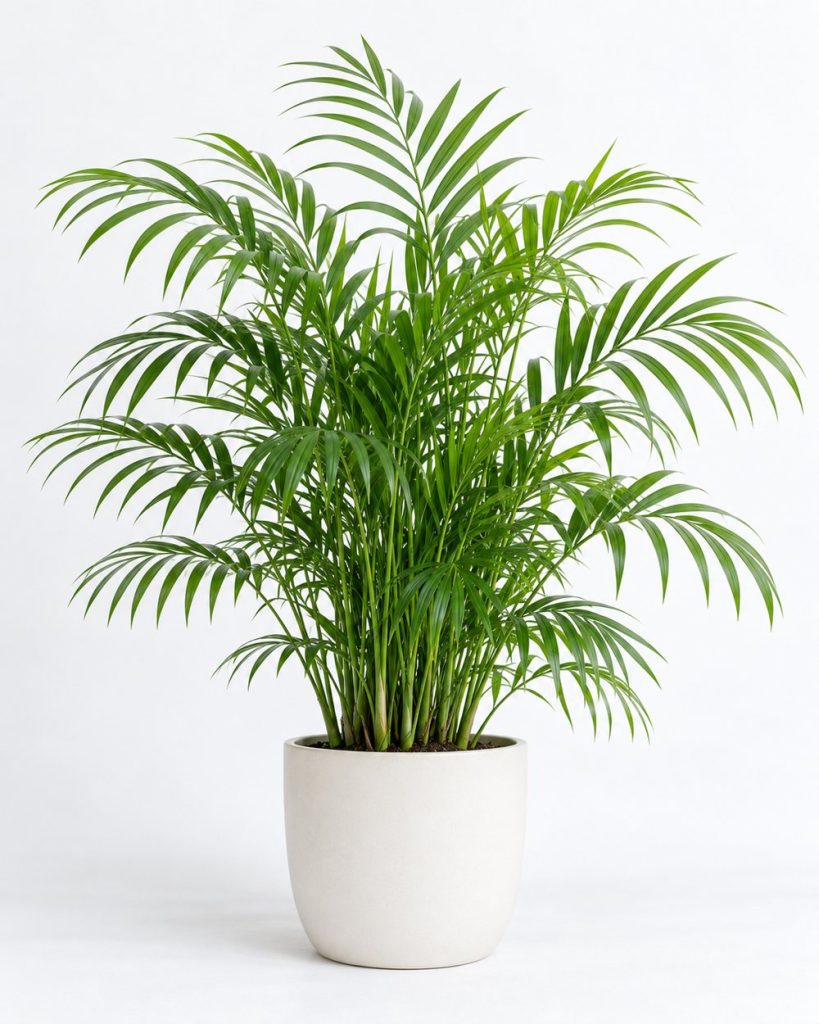
The name gives away its history. Parlor palms were a favorite in dim old sitting rooms, and they still handle shade better than almost any other palm. It grows soft, feathery fronds on thin green stems. Most pots are sold as a cluster of several small plants growing together, which makes it look full from day one. It is often sold small enough for a desk, then grows into a floor plant over the years.
If you want a palm and you have cats or dogs, this is a strong pick. The ASPCA lists it as non-toxic to both. It stays a manageable size indoors, usually 2 to 4 feet after many years, so it fits a living room corner or a bedroom without taking over. It is also one of the few palms that does not need a sunny window to look good.
The catch is speed and pests. It grows slowly, so a small plant stays small for a long time, and you cannot trim it into a new shape. Cut a stem and that stem is done. In dry winter air it can also pick up spider mites. These are tiny pests that leave fine webbing and a dusty, speckled look on the fronds. A monthly shower for the plant keeps most of them away. Keep the soil evenly moist, too, and the frond tips stay green longer.
Parlor Palm care
Light
Medium light is ideal, a few feet from an east or north window. Low light is fine for keeping it going, but growth will be slow. Keep it out of direct sun, which turns the fronds yellow and crispy. A sheer curtain is enough to soften a bright window.
Watering
Water when the top inch of soil is dry. That is often every 1-2 weeks, less in winter and in dim rooms. Palms hate both extremes, so do not let it sit in a wet saucer, and do not let it stay bone dry for long. Brown frond tips are often the first sign the watering is uneven.
Soil and pot
A regular potting mix with good drainage works. Add a little perlite if your mix feels heavy and stays wet for days. Stick with a pot that has a hole in the bottom. Clay or plastic both work, as long as extra water can escape.
Humidity and temperature
Average humidity is fine most of the year. In winter, when the heat is on, dry air can bring crispy tips and spider mites. Rinsing the fronds in the shower every month or so helps with both, and grouping plants raises the humidity a little.
Feeding
A parlor palm grows a few new fronds a year, and its food needs match that slow pace. Slow-release palm pellets pressed into the soil once in spring cover the whole season for most plants. If you prefer liquid, a weak dose every couple of months in summer works too. Brown frond tips can come from salt buildup, so soak the pot through and let it drain fully every few months.
Repotting
Parlor palms like a snug pot and have fragile roots. Repot only every two to three years, when roots come out the bottom. Go up one size and keep the plant at the same depth. Do not pull the cluster apart unless you have to.
Propagation
Most home growers never propagate it, and that is fine. You cannot root a cutting. The clump can be gently divided in spring, but palms often sulk for months after. Growers raise new plants from seed, which is slow and patchy. Buying a new small pot is easier.
Common problems
Why are the frond tips brown?
Usually uneven watering, dry air, or salt buildup from food. Trim the brown bits with clean scissors and water more evenly.
What is the fine webbing on my palm?
That is spider mites. Rinse the plant well in the shower, wipe the stems, and repeat every few days for a couple of weeks. Insecticidal soap helps with stubborn cases.
Why are the lower fronds turning yellow?
Old lower fronds yellow and die off over time, which is normal. If many fronds yellow at once, check for soggy soil or a spot that gets too much sun.
Why does my palm look thin?
Store pots are packed with seedlings, and some weaker stems fade away over the years. Better light helps the rest stay full.
Frequently asked questions
Is parlor palm safe for dogs and cats?
The ASPCA lists it as non-toxic to both. It is still smart to stop chewing, since eating any plant can upset a pet's stomach.
What happens if I trim the tallest stem?
That stem stops growing for good, since each one grows from a single tip. Cut off only old, browned fronds, and pick a shorter plant if height is a problem.
Does it flower indoors?
Sometimes, with small yellow beads on branched stalks. You can cut them off if you prefer the plain green look.
Not sure this plant fits your home?
Take a plant quizSources: www.aspca.org, hort.ifas.ufl.edu, www.ukhouseplants.com