Chinese Evergreen
Aglaonema · also called Aglaonema, Philippine evergreen
Silver, pink, and red leaves for rooms without much sun
- Light
- Low light, Medium light: Green types take low light, pink types want medium
- Water
- Every 1-2 weeks, when the top inch of soil is dry
- Difficulty
- Easy
- Pet safety
- Toxic to cats and dogs
- Size
- Medium
- Height
- 1-3 ft indoors
- Growth
- Slow
- Humidity
- Average home humidity is fine
- Temperature
- 65-80°F
- Good rooms
- Bedroom, Living room, Office
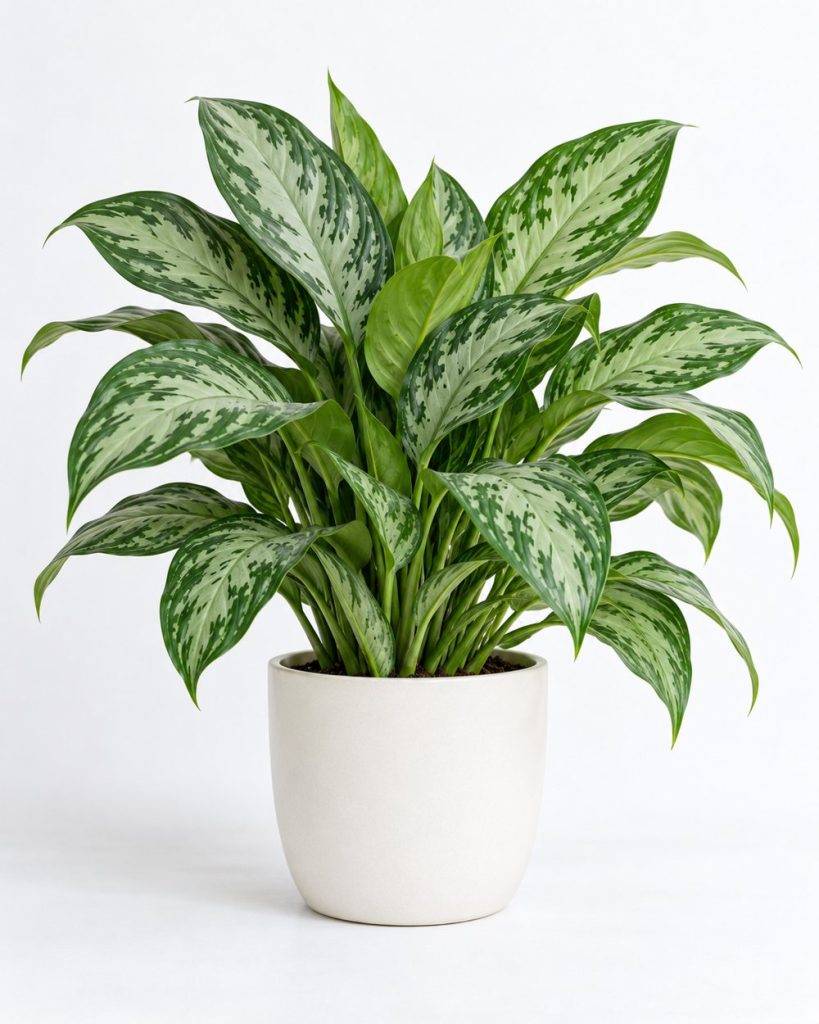
Chinese evergreen is the low light plant for people who want color. Older types have green leaves brushed with silver. Newer ones come in pink, red, and cream patterns that look almost painted on. The leaves are wide and pointed, held on short stems in a tidy clump that rarely needs pruning. It is one of the few plants that adds real color to a room without any flowers.
The general rule is simple. The darker green the leaves, the lower the light it can take. Silver and plain green kinds handle a dim office or bedroom well. The bright pink and red ones need a brighter spot to keep their color, so pick your type to match your room first and your taste second. It grows slowly in either case, so buy the size you want. Many offices use the silver types for this reason.
It has two real weak points. First, it hates cold. Leaves get dark, wet-looking spots if the room drops below about 55°F, or if the plant leans against a cold window in winter. Second, it is toxic to cats and dogs. Chewing the leaves causes mouth pain and drooling, and sometimes vomiting. Put it up high if you have a chewer. A pot that is easy to move helps, too, since you may want to shift it away from the glass in winter.
Chinese Evergreen care
Light
Plain green and silver types do fine in low to medium light, several feet from a window. Pink and red types do best in medium to bright indirect light. All of them burn in direct sun. If a colorful one starts to fade, move it a little closer to the light.
Watering
Water when the top inch of soil is dry. In most homes that is every 1-2 weeks. It likes the soil lightly moist but never soggy. Use water at room temperature, since very cold water can shock the roots in winter.
Soil and pot
A regular potting mix with some perlite for drainage works well. Use a pot with a drainage hole. Heavy, wet soil that stays soaked for days leads to root rot, which is the most common way these plants are lost.
Humidity and temperature
Average home humidity is fine, but it enjoys a little more. Keep it away from heat vents, doors that open to the cold, and chilly windows. Keep the room above 60°F if you can, and never let it sit below 55°F.
Feeding
Chinese evergreens are slow, and slow plants need less food than you might expect. A balanced liquid fertilizer, mixed weaker than the label says, every six weeks or so in the warm months is enough. The pink and red types in brighter rooms can take it a little more often. Brown tips on new leaves are the usual sign of too much. When in doubt, skip a feed, since a hungry aglaonema only grows a bit slower.
Repotting
It grows slowly and likes a snug pot. Repot every two to three years, in spring, going up one size. This is also a good time to split a crowded plant into two. Use fresh mix and keep the plant at the same depth.
Propagation
Divide large clumps when you repot, keeping roots on each piece. You can also take stem cuttings. If an older plant gets a bare, leggy stem, cut the top off with a few inches of stem and root it in water or damp mix. The old base often sprouts again.
Common problems
Why are there dark, wet-looking patches on the leaves?
This is often cold damage from a draft or a cold window. Move the plant somewhere warmer. Damaged leaves will not recover, but new ones will be fine.
Why is my pink Chinese evergreen turning green?
It needs more light. Colorful types fade in dim rooms. Move it to a brighter spot without direct sun, and new leaves should come in with better color.
Why are the lower leaves yellow?
Older leaves yellow and drop with age. Many yellow leaves at once usually mean too much water or a cold spot.
Why is the stem bare at the bottom?
Older plants drop low leaves over time and get leggy. Cut and root the top to start over with a fuller plant.
Frequently asked questions
Which Chinese evergreen is best for low light?
Dark green and silver types, like the common Silver Bay, handle low light best. Save the pink ones for brighter rooms.
Does Chinese evergreen flower?
Older plants sometimes grow a small pale flower that looks like a tiny peace lily. Many people cut it off to keep the plant focused on leaves.
Is it hard to care for?
Not really. The main things to watch are cold, too much water, and direct sun. Get those right and it asks for little else.
Not sure this plant fits your home?
Take a plant quizSources: www.aspca.org, hgic.clemson.edu, www.petpoisonhelpline.com