Peace Lily
Spathiphyllum · also called Spath, White sails
Droops when thirsty, perks up fast, and flowers in shade
- Light
- Low light, Medium light: Stays green in low light, flowers in medium light
- Water
- About once a week, when the top inch of soil is dry
- Difficulty
- Easy
- Pet safety
- Toxic to cats and dogs
- Size
- Medium
- Height
- 1-3 ft indoors
- Growth
- Moderate
- Humidity
- Likes a bit of extra humidity
- Temperature
- 65-85°F
- Good rooms
- Bathroom, Bedroom, Living room, Office
Few plants are as dramatic about being thirsty. When a peace lily runs dry, every leaf droops flat against the pot as if it has given up. Water it, and within a few hours it stands back up. For a beginner, that is useful. The plant tells you when it needs a drink. That makes it a good first plant for anyone who is not sure how often to water.
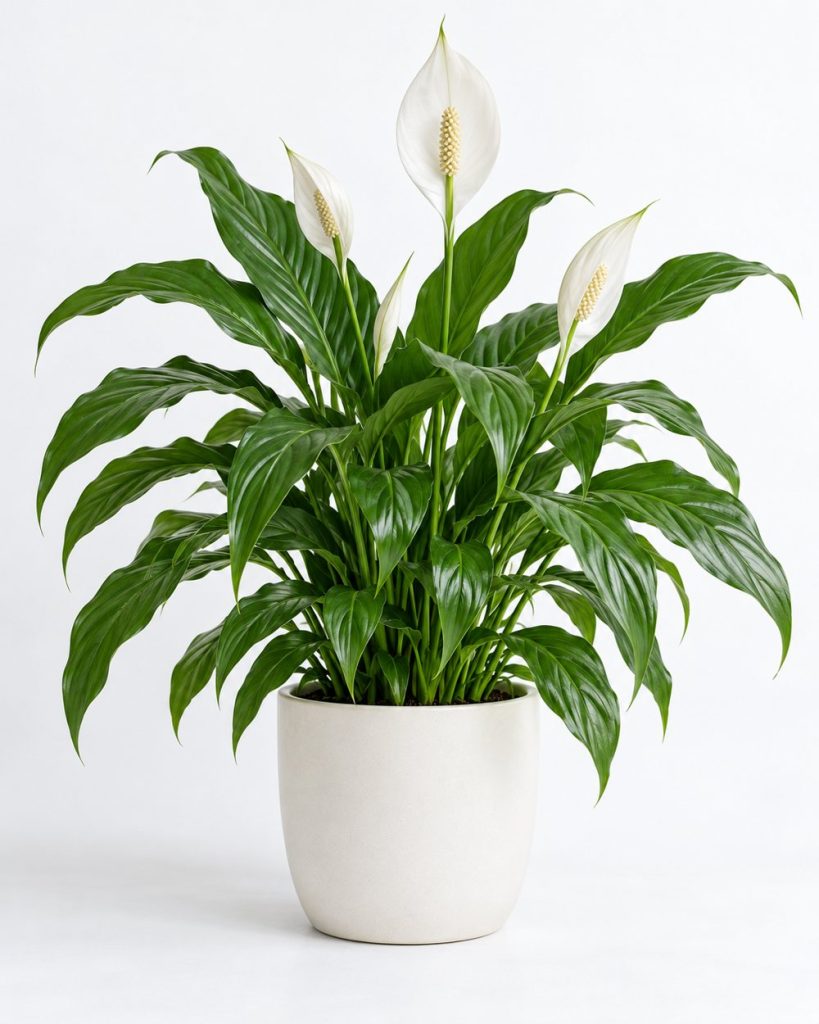
It has dark, glossy leaves and, in the right spot, white flowers that look like a single curved petal wrapped around a spike. It handles low light well enough to stay green, which is why you see it in offices and waiting rooms. To get flowers, though, it needs a brighter spot, like near an east window. In a dim corner it may never bloom again after the first flowers it had at the store. In good light, each flower lasts for weeks before it fades.
It is toxic to cats and dogs. Chewing causes painful mouth irritation and drooling. It is not one of the true lilies that harm a cat's kidneys, but that is little comfort if your pet chews everything. It also does not like to dry out often. Each big droop stresses it, and the lower leaves start to yellow. Water at the first small droop, not the full flop, and it stays much happier.
Peace Lily care
Light
Medium light keeps it green and helps it flower. Think of a spot near a north or east window, or a few feet back from a brighter one. It will hold on in low light, but blooms stop there. Direct sun burns the leaves and leaves pale, scorched patches.
Watering
Peace lily likes evenly moist soil, not wet and not bone dry. Water when the top inch is dry, which might be once a week in summer. A slight droop is your reminder. Try not to wait for a full collapse every time, because repeated wilting browns the leaf tips and edges.
Soil and pot
Use a regular potting mix that holds some moisture but still drains. A plastic or glazed pot keeps the soil damp longer than clay, which suits this plant. Make sure there is a drainage hole in the bottom. Skip cactus mix, which dries out too fast for it.
Humidity and temperature
It enjoys more humidity than most homes have in winter, but it copes. Brown edges in a dry room can be helped with a pebble tray or by grouping plants together. A bathroom with some daylight is a good spot.
Feeding
Feeding a peace lily is mostly about flowers. A bloom fertilizer, or a balanced one, every six to eight weeks from spring to late summer is plenty. More than that brings brown leaf tips and still no blooms. If yours has not flowered in a year, move it closer to a window before you reach for the bottle. Let it rest without food from fall until new growth starts in spring.
Repotting
Repot every year or two when roots fill the pot and it starts wilting faster than before. Move up one size. Older, crowded plants can be split at the same time, which also tends to bring back flowers. Spring and early summer are the best times.
Propagation
Division is the way to go. Tip the plant out, pull or cut the clump into pieces that each have leaves and roots, and pot them on their own. Water well and keep them out of strong light for a week while they settle. Peace lilies do not grow from leaf cuttings.
Common problems
What causes brown tips on peace lily leaves?
Brown tips come from letting it dry out too often, dry air, or salts from food and tap water. Water more evenly and flush the pot with plain water every few months.
Why won't my peace lily flower?
It usually needs more light. Move it to a brighter spot with no direct sun, and give it a few months. Young or just-divided plants may also need time.
Why is my peace lily getting yellow leaves?
One or two old yellow leaves are normal. Many yellow leaves at once often mean soggy soil, or a plant that has wilted too many times.
Why does it wilt when the soil is wet?
That points to root rot. The roots cannot take up water because they are damaged. Check for black, mushy roots, trim them off, and repot in fresh mix.
Frequently asked questions
Do the flowers turn green?
Yes, as they age the white flowers often turn green and then brown. Cut the stalk off at the base once it looks tired.
Is a peace lily a real lily?
No. It belongs to the same plant family as pothos. It is still toxic to pets, just in a different way from true lilies.
What size peace lily should I buy?
Small desk types stay around a foot tall, and most store plants reach 1 to 3 feet. A few large types can top 4 feet, so check the label before you buy.
Not sure this plant fits your home?
Take a plant quizSources: www.aspca.org, plants.ces.ncsu.edu, hgic.clemson.edu