Spider Plant
Chlorophytum comosum · also called Airplane plant, Ribbon plant
A pet-friendly plant that keeps making free baby plants
- Light
- Low light, Medium light: Best in medium light, puts up with lower light
- Water
- About once a week, when the top inch of soil is dry
- Difficulty
- Easy
- Pet safety
- Non-toxic to cats and dogs
- Size
- Small
- Height
- 1-2 ft, baby stems trail 2-3 ft
- Growth
- Fast
- Humidity
- Average home humidity is fine
- Temperature
- 55-80°F
- Good rooms
- Bathroom, Bedroom, Kitchen, Office
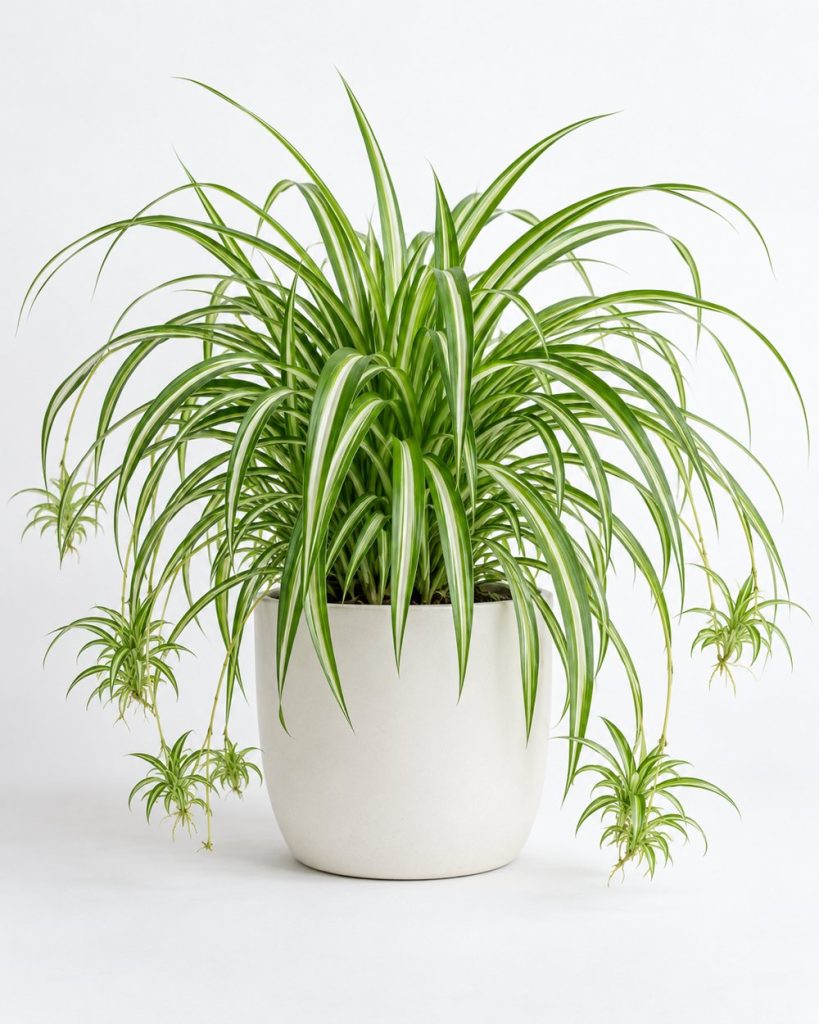
A healthy spider plant makes babies. Long, arching stems shoot out from the center, small white flowers open on them, and then tiny new plants form at the tips. They dangle in the air like spiders on a thread. Hang it up or set it on a high shelf and it looks like a green fountain. The striped type with white edges is the one you see most in stores, and the plain green type is a little tougher.
This is a good plant for homes with cats and dogs, because the ASPCA lists it as non-toxic to both. Cats seem to love chewing the grassy leaves, which is less fun for the plant. It also suits people who like to share. Every baby you root is a free plant for a friend, a coworker, or a new windowsill. It grows fast enough that you can see a change from one month to the next.
Its weak spot is the leaf tips. They turn brown easily from dry soil, dry air, or the salts and fluoride in some tap water. The brown tips do not hurt the plant much, but they are the first thing guests notice. It also wants more light than most plants on a low light list. In a dim room it hangs on, but it grows slowly and rarely makes babies. Give it an east window and it is a much happier plant.
Spider Plant care
Light
Medium light is the sweet spot, such as a few feet back from an east window. It can live in lower light, but expect slower growth, paler leaves, and few babies. Hot direct sun through a south window scorches the leaves, so soften it with a sheer curtain.
Watering
Keep the soil lightly moist in spring and summer, watering when the top inch feels dry. That is often once a week. In winter, let it dry a bit more. The thick white roots store water, so it forgives a short dry spell better than a soggy pot. If brown tips bother you, try rainwater or distilled water.
Soil and pot
A regular indoor potting mix is fine. Make sure the pot drains well, since the fleshy roots can rot if they sit in water. Hanging baskets dry faster than pots on the floor, so check them more often, mostly in summer.
Humidity and temperature
Normal room humidity works. Very dry winter air can add to brown tips. Grouping it with other plants or setting it near a humidifier helps a little. A bathroom with a bright window makes a happy home for it. In winter, keep it away from heat vents.
Feeding
Spider plants react fast to salt, and the brown leaf tips will tell on you. Use a gentle liquid fertilizer at about a quarter strength every two to three weeks while it is pushing out new runners, then stop when the days get short. Every few months, water heavily in the sink and let it drain so leftover salts wash out. A plant fed too hard makes leaves but fewer babies.
Repotting
Spider plants grow quickly and can fill a pot with roots in a year. Repot in spring when the roots push the plant up or water runs straight through. Go up one size, or split the clump into two plants.
Propagation
Snip off a baby that has small root bumps at its base. Set it in a small pot of damp mix, or in a glass of water with only the bottom touching. Roots grow in a week or two. You can also pin a baby into a pot next to the mother and cut the stem once it has rooted.
Common problems
Why do spider plant leaves get brown tips?
Common causes are dry soil, dry air, too much food, and fluoride or salt in tap water. Water more evenly and try rainwater or distilled water for a few months. Trim old brown tips with clean scissors, following the shape of the leaf.
Why is my spider plant not making babies?
Most often it needs more light or is still young. A slightly snug pot and the longer days of spring and summer also help it flower and make babies.
Why are the leaves pale or limp?
Pale, limp leaves usually mean too little light. Striped types lose some of their white in dim rooms. Move it closer to a window.
Why is the plant lifting out of its pot?
The thick roots are filling the pot and pushing up. It is time to repot or divide.
Frequently asked questions
Is a spider plant safe for cats?
The ASPCA lists it as non-toxic to cats and dogs. A cat that eats a lot of it may still throw up, so hang it out of reach if yours grazes on it.
Can I grow a spider plant in a bathroom?
Yes, as long as there is a window. The extra moisture in the air can help with brown tips.
How do I get a thin spider plant to look bushy?
Pin a few of the babies onto the soil in the same pot and let them root there. Within a season the clump looks thicker.
Not sure this plant fits your home?
Take a plant quizSources: www.aspca.org, plants.ces.ncsu.edu, hgic.clemson.edu