Cast Iron Plant
Aspidistra elatior · also called Aspidistra, Bar room plant
Slow, plain, and tough enough for your darkest hallway
- Light
- Low light: Handles deep shade, burns in direct sun
- Water
- Every 1-2 weeks, when the top 2 inches of soil are dry
- Difficulty
- Easy
- Pet safety
- Non-toxic to cats and dogs
- Size
- Medium
- Height
- 1-3 ft indoors
- Growth
- Slow
- Humidity
- Dry air is fine
- Temperature
- 50-85°F
- Good rooms
- Bedroom, Entryway, Living room, Office
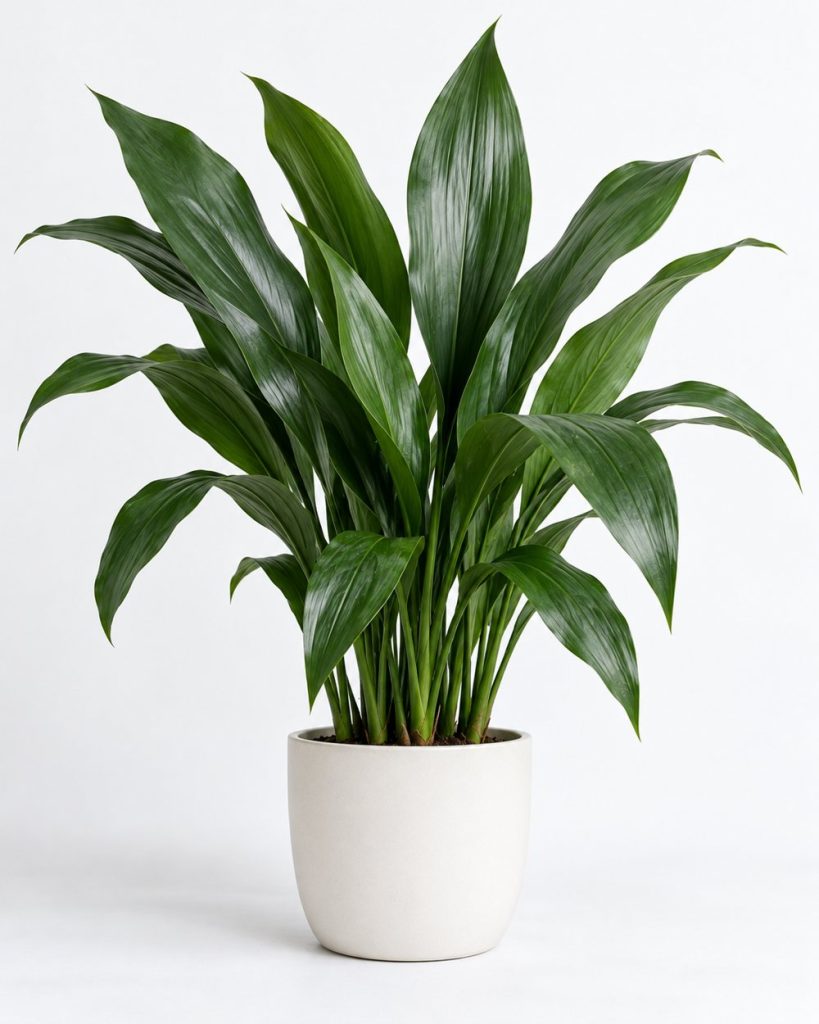
Start with the bad news. Cast iron plant is slow, often just a few new leaves a year, and a small pot stays small for a long time. It is also not flashy. It grows long, dark green, strap-shaped leaves straight up from the soil, and that is about it. If you want a plant that changes every week, look elsewhere.
Now the reason people love it. It earned its name long ago by living through dim, drafty rooms and cold hallways that killed most other plants. It is one of the few houseplants that can handle a very shady corner, like a hallway with no window of its own. It also puts up with uneven watering and cooler rooms better than most. It can sit in a cool entryway all winter, where many tropical plants would sulk.
It is a good pick for pet homes, since the ASPCA lists it as non-toxic to cats, dogs, and horses. Look for speckled or striped types if plain green feels dull to you. Because it grows so slowly, expect to pay more for a big one than you would for a fast grower of the same size. In this case, buying the bigger plant is worth it. Give it a few years and it fills out into a thick, full clump.
Cast Iron Plant care
Light
Low to medium light is where it does best. It can live several feet from a north window or in a dim hallway. Direct sun is the one thing it will not take, since it bleaches and burns the leaves. If the leaves look washed out or yellow, move it farther from the window.
Watering
Water when the top inch or two of soil is dry. That is about every 1-2 weeks in summer, and less in a cool room or in winter. It handles a missed watering well. Soggy soil is the bigger risk, since the roots rot in wet mix.
Soil and pot
Regular potting mix that drains well is all it needs. Mixing in some perlite helps if your home stays cool and the soil dries slowly. Use a sturdy pot with a drainage hole, since the plant can get top heavy.
Humidity and temperature
Average home air is fine. It is not fussy about dry air at all, and it needs no misting. Wipe the broad leaves with a damp cloth every month or two. Dust builds up on them and blocks the little light they get.
Feeding
This is the plant to forget about at feeding time. In a dark hallway, one diluted dose of all-purpose fertilizer in May and one in July is the whole routine. Near a brighter window you can go to monthly in summer. Push it harder and the dark leaves can develop brown spots or streaks. From fall to early spring, give it water only.
Repotting
It likes to be crowded and only needs a new pot every three to five years. When you do repot, go up just a little in size. Spring is the best time, right before it puts out new leaves. Use fresh mix and water it well after.
Propagation
Division is the only practical way at home. In spring, ease the root ball out and cut the clump of thick roots into pieces, each with at least two or three leaves. Pot them at the same depth. Expect them to sit still for a while before new leaves appear.
Common problems
Why are the leaves pale or bleached?
Too much sun. Move it away from direct light. Damaged leaves stay pale, so you can cut them off at the base once new ones come in.
Why are there brown spots on the leaves?
Brown spots can come from too much food, cold damage, or soggy soil. Check the roots if many spots show up at once.
Why are the leaf tips turning brown?
Uneven watering or salt buildup is the usual cause. Water deeply when dry, and flush the soil with plain water a few times a year.
Why hasn't it grown at all?
In low light, a year with only one or two new leaves is normal. A bit more light and a spring feeding may wake it up.
Frequently asked questions
Can it live in a room with no windows?
It handles less light than almost any houseplant, but it still needs some. A spot with bright lamps on for many hours a day can work.
Can I grow it outdoors?
In warm areas, it is often grown outside in shade. In cold areas, keep it as a houseplant and bring it in before frost.
Why is it called cast iron plant?
It earned the name by surviving dark, drafty Victorian parlors that killed other plants. Most indoor plants reach 2 to 3 feet tall, and they take their time getting there.
Not sure this plant fits your home?
Take a plant quizSources: www.aspca.org, plants.ces.ncsu.edu, hort.ifas.ufl.edu