Snake Plant
Dracaena trifasciata · also called Mother-in-law's tongue, Sansevieria
Stiff upright leaves for people who forget to water
- Light
- Bright indirect, Low light: Lives in low light, grows best in bright indirect
- Water
- Every 2-4 weeks, only when the soil is dry all the way down
- Difficulty
- Easy
- Pet safety
- Toxic to cats and dogs
- Size
- Medium
- Height
- 1-4 ft indoors
- Growth
- Slow
- Humidity
- Dry air is fine
- Temperature
- 60-85°F
- Good rooms
- Bedroom, Entryway, Living room, Office
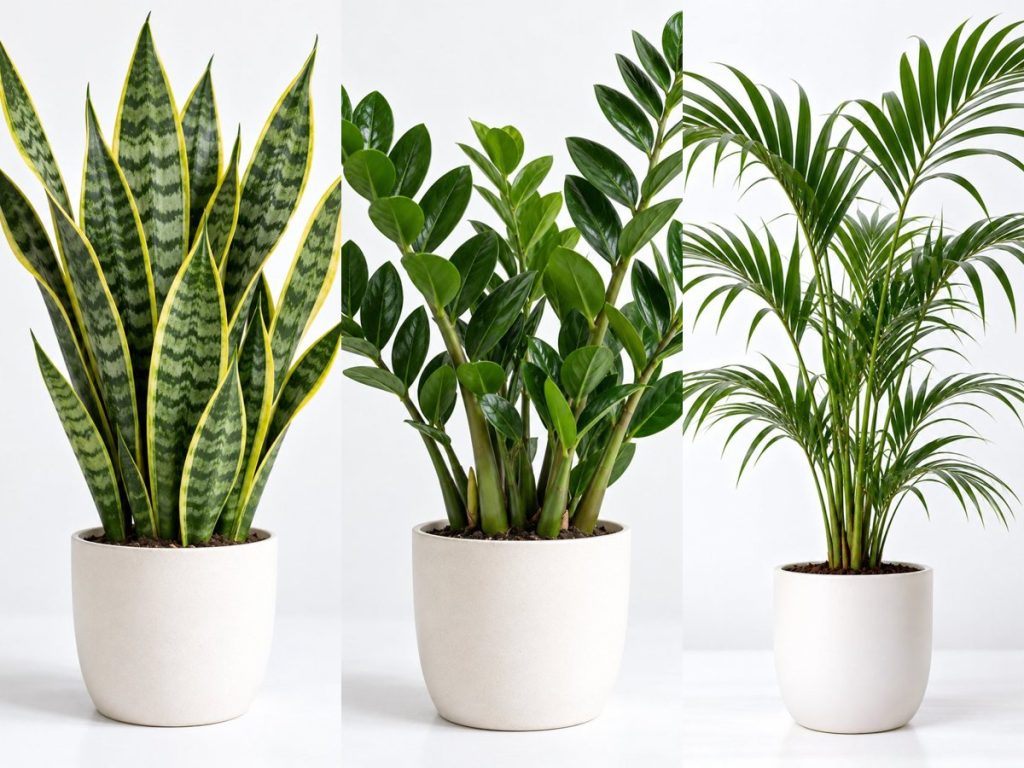
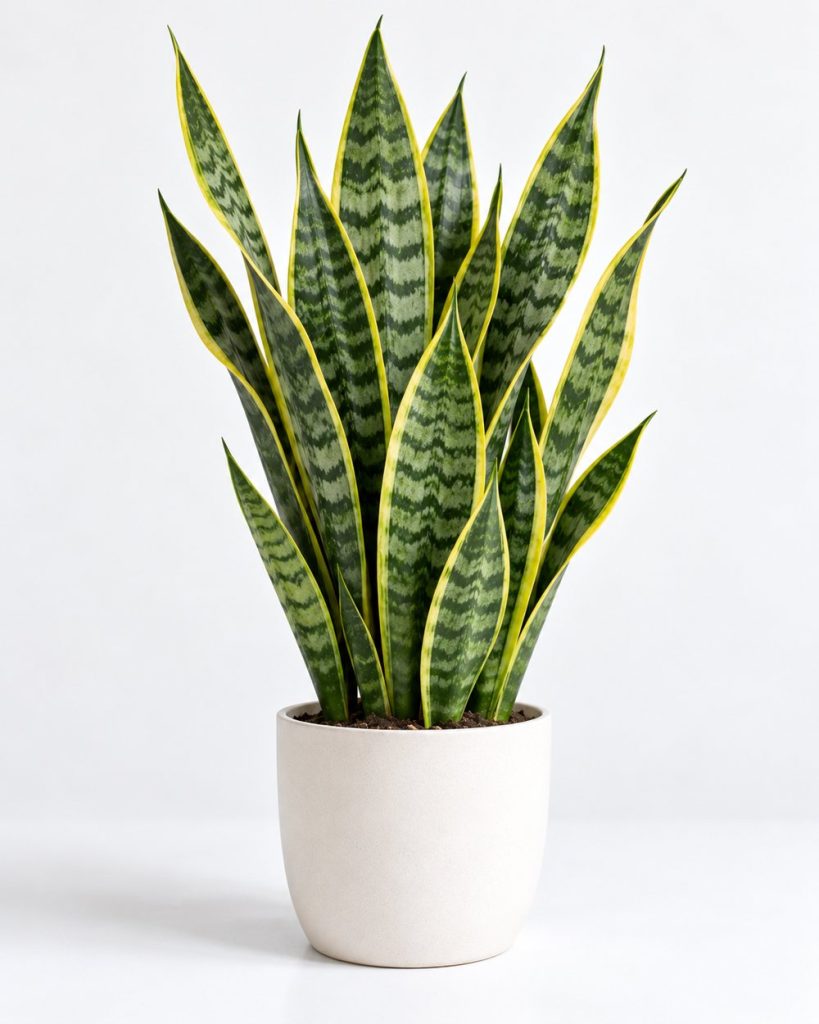
Picture a cluster of stiff, sword-shaped leaves standing straight up out of the pot. They are banded in dark and light green, and some types have yellow edges. That is the snake plant. It takes up very little floor space, so it fits a narrow corner, the end of a desk, or the gap beside a bedroom closet. It also looks sharp in a plain pot, which makes it an easy pick for a modern room.
Its big flaw is the opposite of what most people expect. It rarely dies from being forgotten. It dies from being loved too much. Water it every few days and the base turns soft and mushy, then the leaves flop over. In most homes it does best with a drink about once a month, and even less in winter. A good rule is to wait until you are sure the soil is dry, then wait a few more days.
It is toxic to cats and dogs if chewed and usually causes an upset stomach. Its tough, bitter leaves are not much fun to chew, but keep it away from pets that eat anything green. You will often see it sold under its old name, Sansevieria. Plant scientists moved it into the Dracaena group a few years ago. It is the same plant with a new label. Keep it dry and out of reach, and it can stay with you for many years.
Snake Plant care
Light
Snake plant grows best in bright indirect light and can take some direct sun once it is used to it. It also lives for years in low light, like a room that faces north. In dim spots it grows very slowly, maybe a leaf or two a year. Do not expect fast changes either way.
Watering
Let the soil dry all the way down before you water. Push a wooden chopstick deep into the pot. If any damp soil clings to it, wait. That often means every 2-4 weeks in summer and every 4-8 weeks in winter. Water well, let it drain, and never leave it sitting in water.
Soil and pot
Use a cactus and succulent mix, or regular potting mix with about a third perlite or coarse sand. Clay pots help because they let the soil dry faster. A heavy pot also keeps tall plants from tipping over when you bump them.
Humidity and temperature
Dry air does not bother it. Normal home humidity is fine, and it copes with a room near a heater as long as it is not right on top of it. Skip misting. Water that sits in the center of the leaves can lead to rot.
Feeding
Snake plants get by on almost nothing. Two feeds a year is a sensible routine for most homes: one in late spring and one in midsummer, using a cactus fertilizer cut with an equal amount of water. If yours sits in a dim corner, skip food entirely. Overfed leaves grow thin and floppy and may tip over, which is harder to fix than a hungry plant. Never feed it from October to March.
Repotting
It likes being a bit crowded and only needs a new pot every two to four years. You will know it is time when the roots or new shoots start to bend or crack the pot. Pick a pot only slightly bigger and fairly wide, since new shoots come up around the edges.
Propagation
Division is the easiest way. Slide the plant out, find a pup with its own roots, and cut it free with a clean knife. Pot it in dry mix and wait a week before watering. Leaf cuttings also root, but they are slow, and yellow-edged types often grow back plain green.
Common problems
Why are the leaves soft and falling over?
This is almost always too much water. Check the base. If it is mushy and smells bad, cut away the rotten part and repot what is still firm in dry mix.
Why are there brown, dry patches on the leaves?
Brown patches can come from sunburn after a sudden move into strong sun, or from a scrape. Damaged spots do not heal, but new leaves will be fine.
Why is my snake plant not growing?
In low light and cool rooms, it can sit still for months. That is normal for this plant. More light in spring and summer is the main way to speed it up.
Why are the leaves wrinkled?
Deep wrinkles and thin leaves mean it stayed too dry for too long. Give it a good soak, and it should firm up over a week or two.
Frequently asked questions
Is a snake plant good for a bedroom?
It is a good fit, since it handles dim light and needs so little care. Keep it out of reach if your cat sleeps in there and likes to chew.
Will a snake plant outgrow its spot?
Slowly, if at all. Most common types reach 2 to 4 feet indoors over several years. Short bird's nest types stay under a foot.
Is it OK on a shady patio for the summer?
Yes, in a shady spot once nights stay above 50°F. Bring it in well before frost, and ease it into any sun slowly.
Not sure this plant fits your home?
Take a plant quizSources: www.aspca.org, plants.ces.ncsu.edu, extension.psu.edu