ZZ Plant
Zamioculcas zamiifolia · also called Zanzibar gem, Eternity plant
Glossy, slow, and happy to be left alone for weeks
- Light
- Low light, Medium light: Handles low light, grows faster in medium light
- Water
- Every 2-4 weeks, when the soil is dry most of the way down
- Difficulty
- Easy
- Pet safety
- Toxic to cats and dogs
- Size
- Medium
- Height
- 2-3 ft indoors
- Growth
- Slow
- Humidity
- Average home humidity is fine
- Temperature
- 60-80°F
- Good rooms
- Bedroom, Entryway, Living room, Office
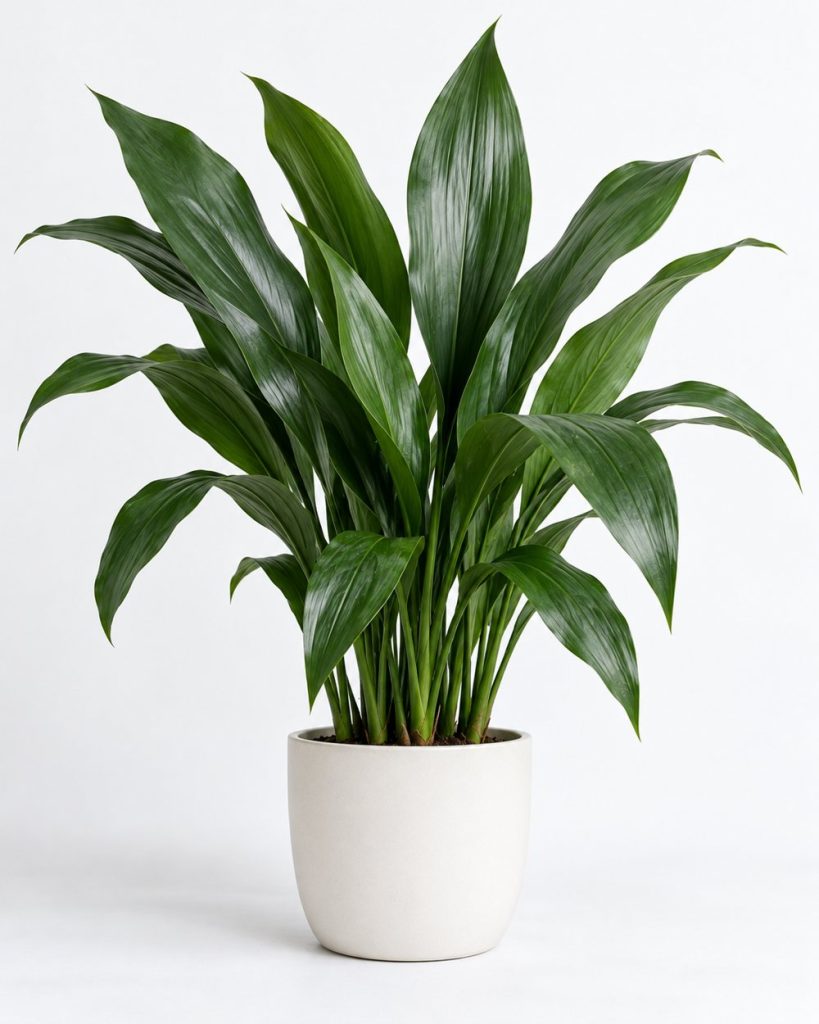
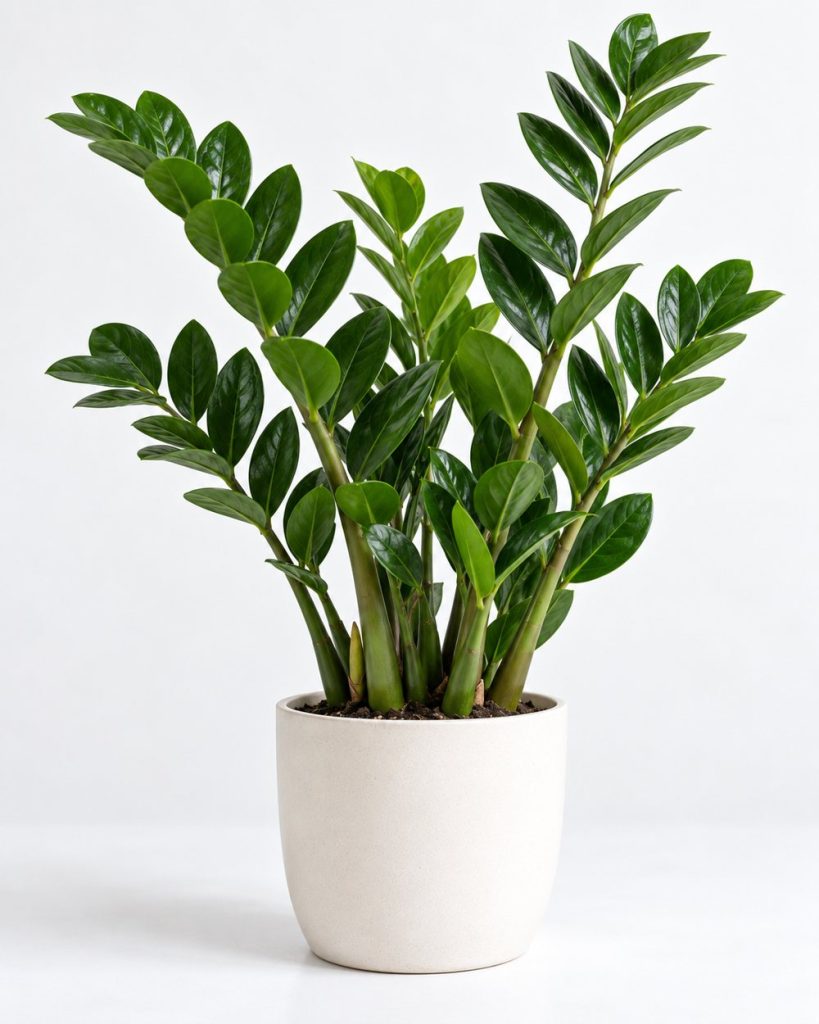
A lot of people think a ZZ plant is fake the first time they see one. The leaves are thick, waxy, and so glossy they shine, set in neat rows along upright stems. Under the soil it stores water in fat, potato-like roots called rhizomes. That is why it shrugs off a missed watering or a two-week trip. Those roots also make it slow to show stress, so a ZZ can look fine for weeks after something goes wrong.
It fits busy people, frequent travelers, and offices where the lights go off on Friday night and come back on Monday. It handles low light better than most plants, though it grows very slowly there. In a bright spot you might get a few new stems each summer. There is also a black-leaved type, often sold as Raven, that needs the same easy care. Both look neat in a modern room and drop very few leaves on the floor.
Two warnings. It is toxic to pets and people if chewed, so keep it away from curious cats, dogs, and small kids. Extension plant guides rate it as moderately poisonous. And because those roots hold so much water, the most common way to lose one is watering on a schedule instead of checking the soil first. Lift the pot. If it still feels heavy, it does not need water yet.
ZZ Plant care
Light
ZZ grows best in medium to bright indirect light. It will also hold on for a long time in low light, even a few feet from a north window. Strong direct sun can yellow or scorch the leaves. If it starts leaning hard toward the window, turn the pot a quarter turn each time you water.
Watering
Water only when the soil is dry most of the way down. For many homes that means every 2-3 weeks in summer and about once a month in winter, sometimes less in low light. Soak it, let it drain, and walk away. If the stems feel soft at the base, you have been too generous.
Soil and pot
A fast-draining mix is best. Cactus mix works, or regular potting mix blended with perlite. A pot with a drainage hole is a must. Plastic pots are fine if you water less often. Clay pots dry out faster and give you more room for error.
Humidity and temperature
Average home humidity is fine. It does not need a humidifier, a pebble tray, or misting. Keep it out of cold drafts, though. It prefers rooms between about 60 and 80°F and does not like it below 50°F.
Feeding
Your ZZ stores food and water in its fat underground stems, so it is rarely hungry. Many owners give it a quarter-strength balanced fertilizer every other time they water in summer and nothing the rest of the year. Hold off for a good month after repotting, because fresh potting mix already has some nutrients. Yellowing from too much food is rare. Yellowing from too much water is common, so check that first.
Repotting
Repot every two to three years, or when the roots push hard enough to bulge a plastic pot. Choose a pot just an inch or two wider. Handle the rhizomes gently and keep them at the same depth they were before.
Propagation
You can split the clump at repotting time, keeping a rhizome with each piece. Leaf and stem cuttings also work in damp mix, but be patient. A single leaf may take several months to grow a small rhizome, and many more to send up a new stem.
Common problems
Why are the stems turning yellow?
Yellow stems with soft bases usually mean too much water. Cut off the yellow stems, let the soil dry well, and water less from now on. If the rhizomes feel mushy, repot into dry mix and remove the rotten parts.
Why is my ZZ plant not putting out new growth?
ZZ is slow by nature and slower still in low light or cool rooms. New stems tend to come in spring and summer, often a few at once. More light is the best way to help.
Why are the leaves falling off?
Some leaf drop happens when the plant stays very dry for a long time, or after a cold draft. Check the soil and the spot where it sits.
Why is it leaning or flopping?
Tall stems lean when light comes from one side, so turning the pot helps. Very floppy stems in a dim room are a sign it wants more light.
Frequently asked questions
Do I need gloves to handle a ZZ plant?
Gloves are a good idea when you cut or repot it, since the sap can irritate skin. Wash your hands afterward either way.
Can a ZZ plant grow under office lights?
Yes, it is one of the better choices for an office with only ceiling lights. It will grow slowly, but it can stay healthy for years.
Will my ZZ get much bigger?
Over several years most indoor ZZ plants reach 2 to 3 feet tall and about as wide. Growth comes in spurts, with a few new stems at a time.
Not sure this plant fits your home?
Take a plant quizSources: plants.ces.ncsu.edu, edis.ifas.ufl.edu, extension.okstate.edu