Ponytail Palm
Beaucarnea recurvata · also called Elephant's foot, Bottle palm
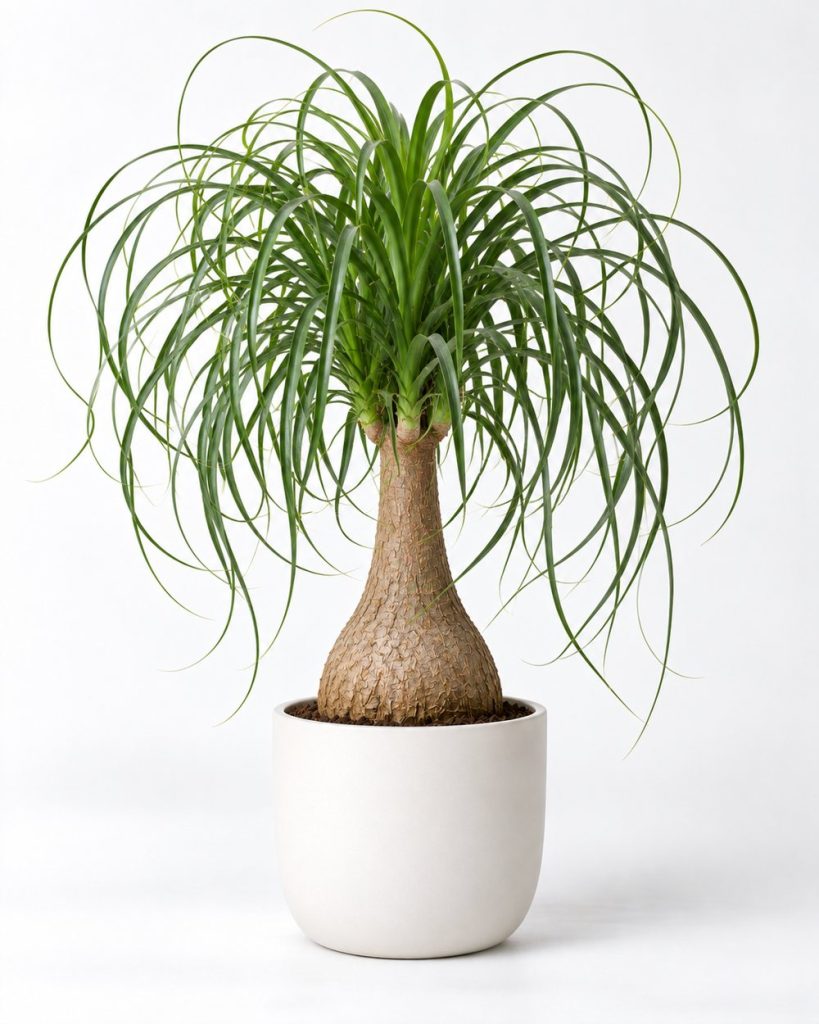
A swollen trunk full of water under a mop of curly leaves
- Light
- Bright indirect, Full sun: Wants a sunny window, some direct sun is good
- Water
- Every 2-4 weeks, only when the soil is dry all the way
- Difficulty
- Easy
- Pet safety
- Non-toxic to cats and dogs
- Size
- Medium
- Height
- 3-6 ft indoors after many years
- Growth
- Slow
- Humidity
- Dry air is fine
- Temperature
- 60-85°F
- Good rooms
- Kitchen, Living room, Office
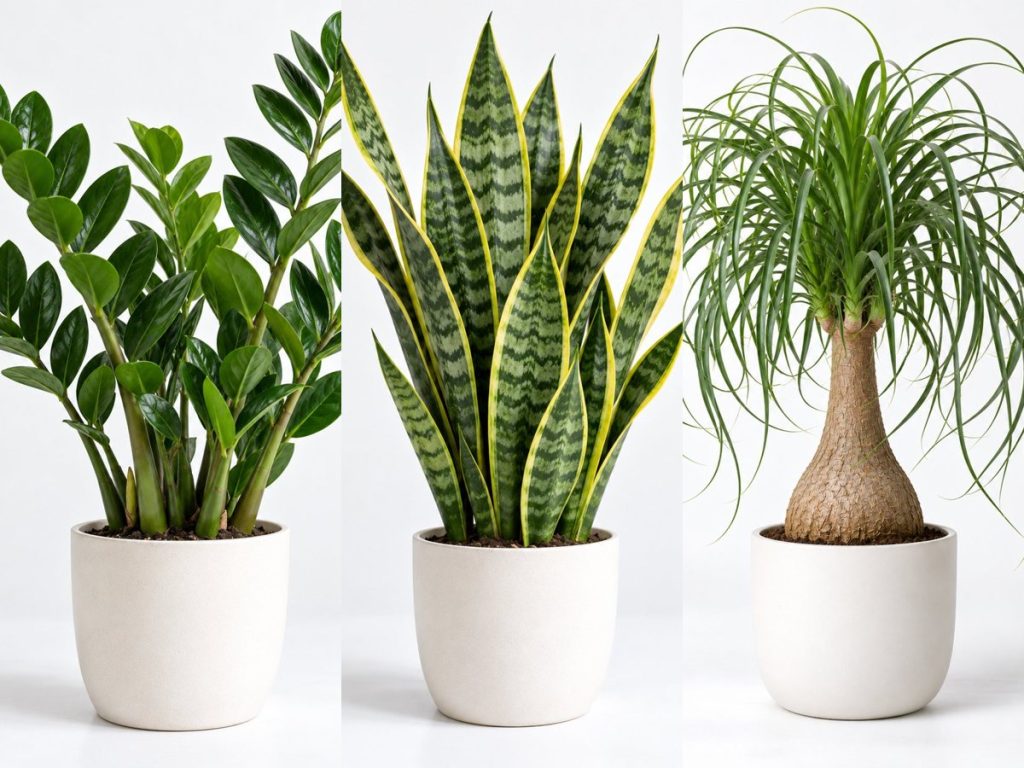
Here is a palm that is not a palm. The ponytail palm is closer kin to agave and yucca than to any true palm. Its trunk swells into a round, bulb-like base that stores water, and from the top springs a fountain of long, thin, curling leaves. Young plants look like an onion having a bad hair day. Old ones become small, odd-looking trees.
It suits sunny homes and forgetful owners. That swollen base can carry the plant through weeks without water, so it is one of the better plants for people who travel. The ASPCA lists it as non-toxic to cats, dogs, and horses. It also stays a manageable size, since it grows very slowly in a pot. Most indoor plants reach 3 to 6 feet after many years. A young one fits on a sunny windowsill, and an older one becomes a floor plant.
Its weak point is the very thing that makes it easy. A plant built to store water rots fast if you give it too much. Water it every week and the base turns soft, which is hard to reverse. It also needs real light. Unlike many plants on beginner lists, it wants a sunny window and slowly weakens in a dim corner. And the slow growth cuts both ways. A small plant stays small for years, so buy the size you want to live with.
Ponytail Palm care
Light
Give it as much light as you can. A south or west window with some direct sun is ideal, and an east window works too. It can sit outside in summer if you ease it into the sun. In medium light it holds on for a while, but new leaves come in thin and pale.
Watering
Water deeply, then let the soil dry all the way down. In summer that often means every 2-3 weeks. In winter, once a month or less. If the base feels firm and the soil is dry, it is safe to water. If you are not sure, wait. It forgives drought far better than wet soil.
Soil and pot
Use a cactus and succulent mix, or regular mix with plenty of sand or perlite. A clay pot is a good match, since it dries faster. Wide, shallow pots suit it well. The swollen base should sit on top of the soil, not buried in it.
Humidity and temperature
Dry air is fine. It needs no misting and handles a heated winter room well. Keep it out of cold drafts, though. It does not like temperatures below about 50°F for long. Wipe the leaves with a damp cloth now and then to clear dust.
Feeding
Ponytail palms store water in the swollen base and need very little food. One or two feeds of cactus fertilizer in late spring and summer are plenty, and many plants grow fine with none. Extra food will not speed it up. It only risks burnt roots and brown leaf tips. Because it likes a snug pot and may stay in one for years, old tired soil is the one time a light summer feed matters.
Repotting
Ponytail palm likes being crowded. Repot only every three to four years, in spring, when roots fill the pot. Go up just one size. A snug pot also keeps it smaller, which most owners prefer indoors. Wait a week before watering after the move.
Propagation
Older plants sometimes grow small pups at the base. Cut one off with a clean knife, let the cut dry for a few days, and set it in dry cactus mix. Water lightly after a week. It does not grow from leaf cuttings, and seeds are slow.
Common problems
Why are the leaf tips brown?
Brown tips are common and often come from soil that stayed dry too long, sun scorch, or salt from food. Trim them with clean scissors. They do not harm the plant.
Why is the base soft or wrinkled?
A soft, mushy base means rot from too much water. A wrinkled but firm base means it is thirsty. Feel it before you water.
Why are the leaves pale and floppy?
Too little light. Move it to your sunniest window over a week or two so the leaves do not burn.
Why are the lower leaves turning yellow?
A few old lower leaves die off as the plant grows, which is normal. Many at once can point to overwatering.
Frequently asked questions
Is ponytail palm safe for cats?
The ASPCA lists it as non-toxic to cats, dogs, and horses. Some cats love to chew the long leaves, so expect a few nibbled tips.
Can I trim the long leaves?
Yes. Trim brown tips or extra-long leaves with sharp scissors. Cut leaves stay cut, but new ones keep growing from the top.
Why is it called elephant's foot?
Old plants grow a huge, wrinkled base that looks like an elephant's foot. It takes many years to get that big.
Not sure this plant fits your home?
Take a plant quizSources: www.aspca.org, plants.ces.ncsu.edu