Haworthia
Haworthiopsis attenuata · also called Zebra plant, Zebra haworthia, Haworthia fasciata
A tiny striped succulent that copes with less sun than most
- Light
- Bright indirect, Medium light: Bright indirect is ideal, manages medium light
- Water
- Every 2-4 weeks, only when the soil is fully dry
- Difficulty
- Easy
- Pet safety
- Non-toxic to cats and dogs
- Size
- Small
- Height
- 3-6 in tall
- Growth
- Slow
- Humidity
- Dry air is fine
- Temperature
- 55-85°F
- Good rooms
- Bedroom, Kitchen, Living room, Office
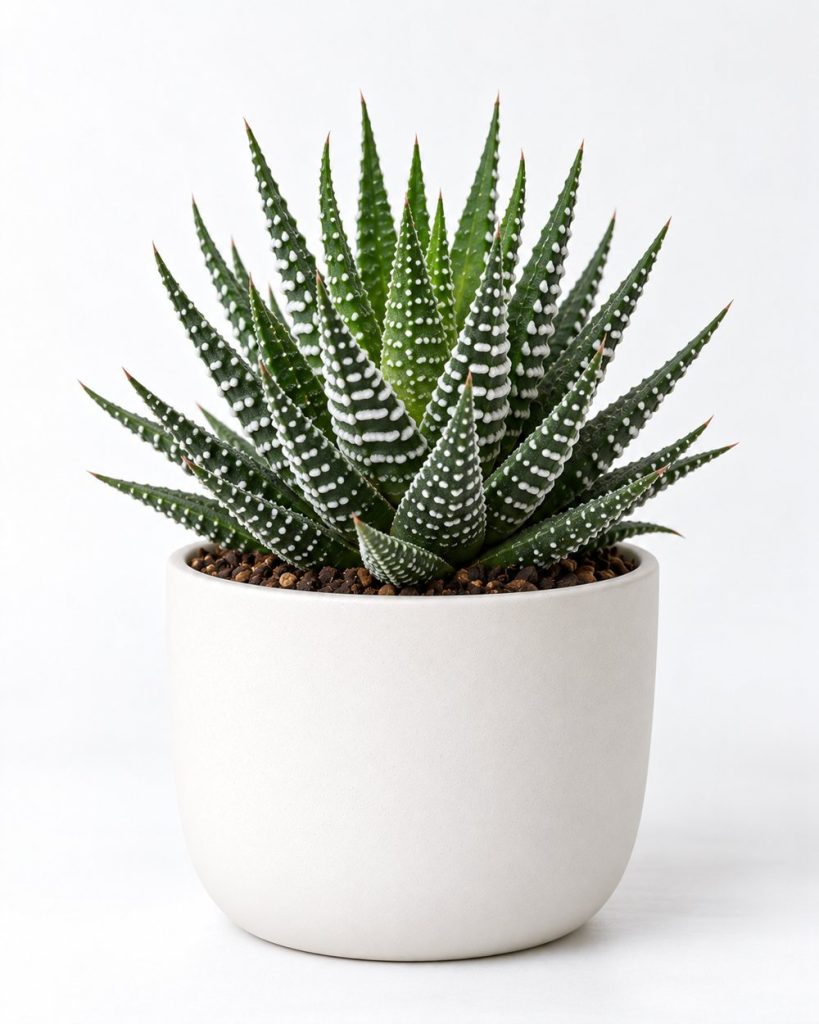
Small enough for a coffee mug, the zebra haworthia is a tight rosette of stiff, pointed leaves covered in raised white bumps. The stripes look like they were piped on with icing. Most plants stay under 6 inches tall and slowly fill the pot with small offsets, or pups, around the edges. Over time one plant becomes a little clump. It looks at home in a small clay pot on a desk or a kitchen shelf.
Its big advantage over other succulents is light. Most succulents want hours of direct sun. Haworthia grows in partial shade in the wild, tucked under rocks and shrubs, so it copes with a bright desk or a windowsill that only gets morning light. That makes it a good first succulent for an office or a north-facing apartment. The ASPCA lists the zebra haworthia as non-toxic to cats, dogs, and horses.
The name can be confusing. It was long sold as Haworthia fasciata. Botanists moved the zebra types into a new group, Haworthiopsis, and most plants sold today are Haworthiopsis attenuata. The real Haworthiopsis fasciata is rare in stores and has smooth upper leaves. As for downsides, it is slow and it is small, so do not expect a dramatic plant. It also rots quickly in wet soil, and in hot direct sun the leaves turn red, brown, or pale.
Haworthia care
Light
Bright indirect light is ideal. An east window, or a spot a little back from a south or west window, works well. It also manages medium light, though it may stretch and pale over time. Hot afternoon sun through glass can bleach or redden the leaves. A pale, open rosette is asking for more light.
Watering
Soak the soil, then let it dry out completely before watering again. That usually means every 2-3 weeks in spring and summer, and about once a month in winter. Water the soil, not the center of the rosette. Firm, plump leaves mean all is well. Thin, wrinkled ones mean it is thirsty.
Soil and pot
Use a gritty cactus and succulent mix, and add extra pumice or perlite if you have it. A small clay pot with a drainage hole is the best match. It has shallow roots, so a wide, shallow pot works better than a deep one.
Humidity and temperature
Average home air is fine, and dry winter air does not bother it. Do not mist. Water that sits in the rosette can rot the center. Keep it in a room that stays above about 50°F. A bright bathroom is fine as long as the soil can still dry out.
Feeding
Haworthia barely needs feeding. A cactus fertilizer at quarter strength once in spring and once in early fall is generous. Many plants live for years on almost no food. Overfed rosettes stretch and turn soft. This plant often rests in the heat of midsummer, so if it stops growing in July, hold off until the weather cools. Nothing at all in winter.
Repotting
Repot every two to three years, or when pups crowd the pot. Do it in spring. Use fresh gritty mix and the same size pot or one just a bit wider. Wait about a week before watering so any torn roots can heal.
Propagation
Gently pull or cut off a pup that has its own roots when you repot. Let it sit out for a day, then plant it in dry gritty mix. Water lightly after a week. Leaf cuttings can work too, but they are slow and fail more often.
Common problems
Why is my haworthia turning red or brown?
Red or brown leaves usually mean too much direct sun, or a sudden move into bright light. Move it to softer light. Mild stress color fades back to green over time.
Why are the leaves mushy and see-through?
That is rot from too much water. Remove the soft leaves, let the soil dry fully, and repot in dry mix if the base is affected.
Why are the leaves thin and wrinkled?
It is thirsty, or the roots have rotted. Check the roots. If they look healthy and white, give it a deep drink.
Why is it stretching and opening up?
Not enough light. Move it closer to a window, but ease it in over a week to avoid sunburn.
Frequently asked questions
Is haworthia safe for cats and dogs?
The ASPCA lists zebra haworthia as non-toxic to cats, dogs, and horses. A pet that eats a lot can still get a mild stomach upset.
Is haworthia a baby aloe?
No, though they look alike and are related. Aloe grows much bigger and wants more sun.
Can haworthia grow under office lights?
It can do well close to bright office lights or under a small LED grow light. Keep it within a foot or two of the light.
Not sure this plant fits your home?
Take a plant quizSources: www.aspca.org, plants.ces.ncsu.edu