Aloe Vera
Aloe vera · also called Aloe, Barbados aloe
Spiky, sun-loving, and fine with a month between drinks
- Light
- Bright indirect, Full sun: Needs a sunny window, or very bright indirect light
- Water
- Every 2-4 weeks, only when the soil is dry all the way
- Difficulty
- Easy
- Pet safety
- Toxic to cats and dogs
- Size
- Small
- Height
- 1-2 ft indoors
- Growth
- Slow
- Humidity
- Dry air is fine
- Temperature
- 55-80°F
- Good rooms
- Kitchen, Living room, Office
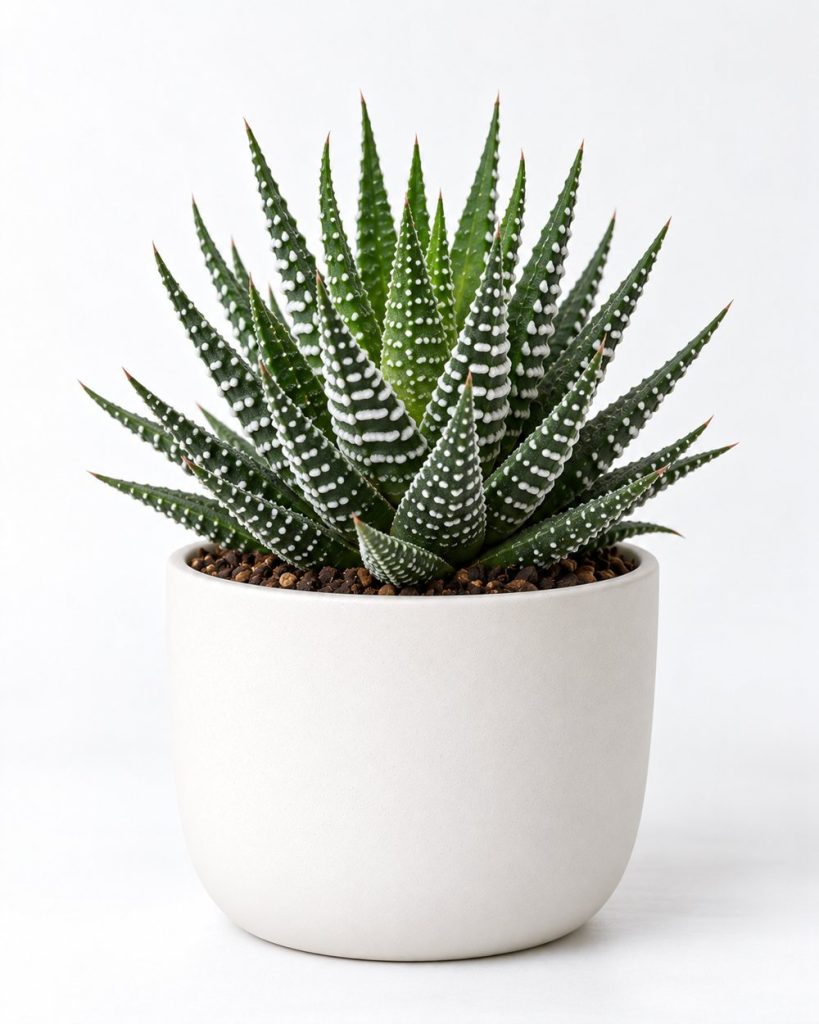
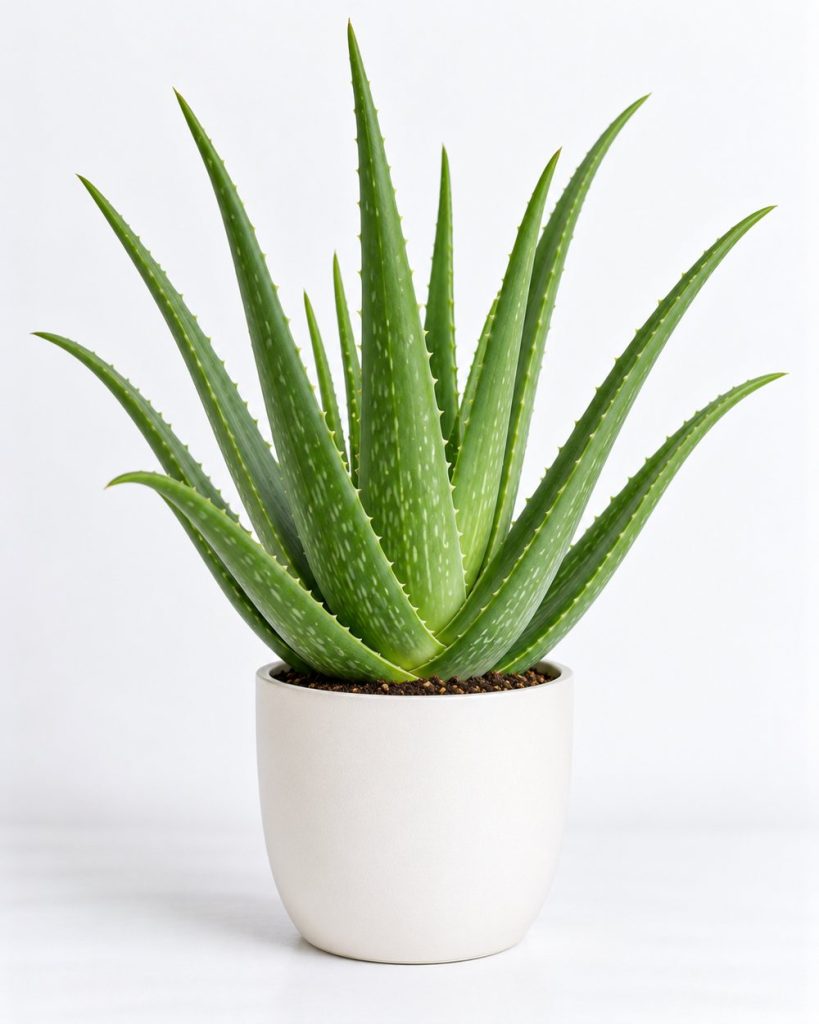
You probably know aloe from the green gel in a bottle. The plant itself is a rosette of thick, gray-green leaves with soft teeth along the edges, sometimes flecked with pale spots. It stays fairly small indoors, usually 1 to 2 feet tall, and it looks neat on a windowsill. Over time it grows little offsets, called pups, around its base. Give it a few years and one pot becomes a family.
It suits people with a sunny window and not much time. A kitchen sill facing south or west is a classic spot. It only wants water when the soil has dried all the way down. That can mean every two or three weeks in summer and once a month in winter. Most people do best by watering less than they think they should. It is also small enough to share a sill with a few herbs.
The weak points are clear. Aloe is toxic to cats and dogs. The ASPCA warns that chewing it can cause vomiting, diarrhea, and low energy, so keep it away from pets. It also needs real light. In a dim room the leaves grow thin, pale, and floppy, and they bend toward the window. Too much water turns the base soft and mushy. And the toothed edges can scratch, so it is a poor pick for a narrow walkway or a toddler's reach.
Aloe Vera care
Light
A south or west window is ideal, with a few hours of direct sun each day. A very bright east window also works. If you move it into stronger sun, do it over a week or two, since a sudden change can turn leaves brown or orange. Turn the pot now and then so it grows evenly.
Watering
Soak the soil, let it drain, and then wait until it is dry all the way down. That is often every 2-3 weeks in summer and every 4 weeks or more in winter. Thin, curled leaves mean it needs water. A soft, brown base means it has had far too much.
Soil and pot
Use a cactus and succulent mix, or regular mix with lots of perlite or coarse sand. A clay pot with a drainage hole is the best choice, because it dries faster than plastic. Pick a wide, heavy pot so the plant does not tip.
Humidity and temperature
Dry home air is no problem at all. Do not mist it. Water sitting in the center of the rosette can cause rot. Keep it away from cold windows in winter, since it does not like temperatures below about 50°F.
Feeding
Aloe often needs no fertilizer at all. A plant in fresh cactus mix can go a full year on what is already in the soil. If yours has sat a few years in the same pot, one or two doses of succulent fertilizer at half strength in late spring are enough. Too much makes long, floppy leaves that lean out of the pot. Repotting every couple of years does more good than any bottle.
Repotting
Repot every two or three years in spring, or when pups crowd the pot. Go up only a little in size. Let it sit dry for a week after repotting before you water, so broken roots can seal over first.
Propagation
The easiest way is to separate the pups. Wait until a pup is a few inches tall with its own roots. Slide the plant out, cut or pull the pup free, and pot it in dry cactus mix. Wait a week, then water lightly. Single leaves rarely grow a new plant.
Common problems
Why are the leaves thin and flat?
Thin leaves usually mean it is thirsty, and pale, floppy ones mean too little light. Check the soil first, then the window. Plump, firm leaves are what you want to see.
Why is the base turning soft and brown?
That is rot from too much water. Cut away the soft parts, let it dry, and repot in dry cactus mix.
Why are the leaves turning brown or red?
Strong sun after a sudden move can stress it into this color. Give it a little shade and move it slowly next time.
Why is my aloe falling over?
Low light makes it lean and stretch, and a pot that is too small or light can tip. Move it brighter and use a heavier pot.
Frequently asked questions
Does aloe vera flower indoors?
It can, on a tall stalk of yellow or orange tubes, but indoor plants rarely bloom. More sun and age help.
Can I put it outside?
Yes, in summer once nights stay above 50°F. Start in light shade and bring it inside before frost. Watch for slugs and snails that like the soft leaves.
How often should I water aloe in winter?
Very little. Once a month or less is common, and only when the soil is fully dry.
Not sure this plant fits your home?
Take a plant quizSources: www.aspca.org, plants.ces.ncsu.edu