Peperomia
Peperomia obtusifolia · also called Baby rubber plant, American rubber plant, Pepper face
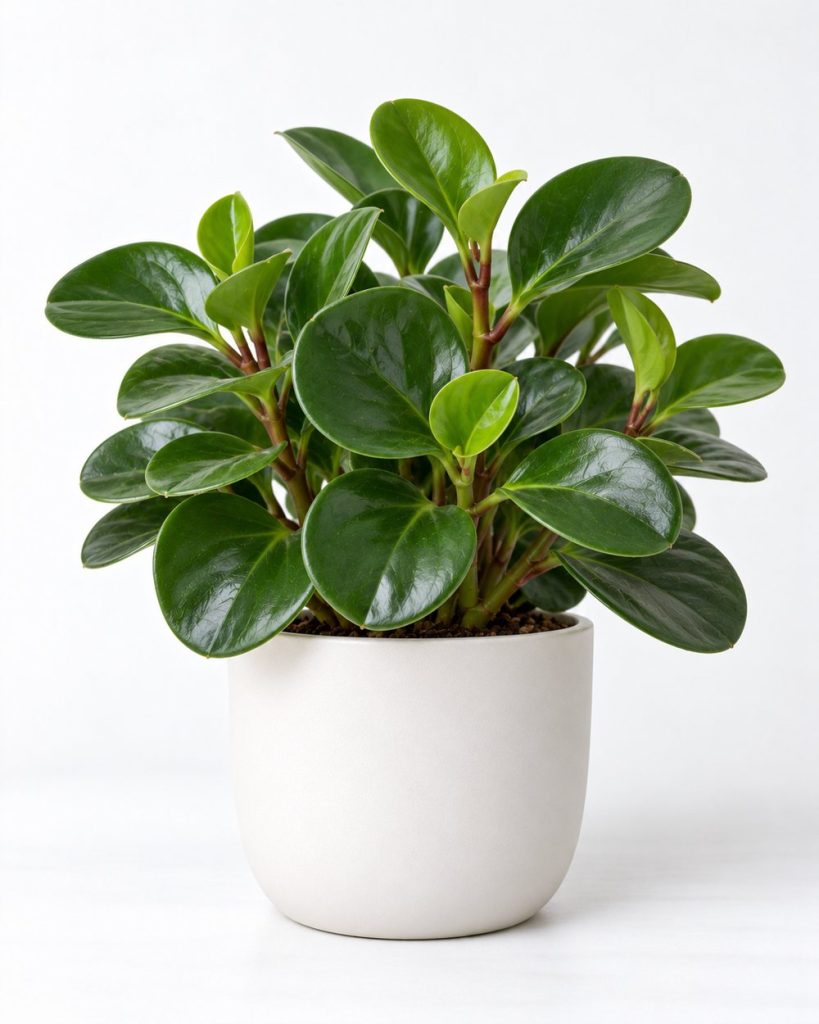
Glossy, spoon-shaped leaves on a small, sturdy plant for shelves
- Light
- Bright indirect, Medium light: Medium to bright indirect, no hot direct sun
- Water
- Every 1-2 weeks, when the top half of the soil is dry
- Difficulty
- Easy
- Pet safety
- Non-toxic to cats and dogs
- Size
- Small
- Height
- 8-12 in tall
- Growth
- Slow
- Humidity
- Average home humidity is fine
- Temperature
- 60-80°F
- Good rooms
- Bathroom, Bedroom, Kitchen, Living room, Office
Thick, glossy, spoon-shaped leaves are the first thing you notice. They grow on sturdy, upright stems in a tight little bush, either deep green or splashed with cream and lime. Peperomia obtusifolia is often called the baby rubber plant, though it is not related to the rubber tree. It comes from the pepper family instead, and it stays small, usually under a foot tall.
That small size is the selling point. It fits a desk, a bookshelf, or a kitchen windowsill. The ASPCA lists it as non-toxic to cats and dogs, which is why the name mix-up matters. The real rubber tree is a ficus that can irritate a pet, so check the Latin name on the tag. The thick leaves and stems hold water, which lets this plant go a little longer between drinks. It also copes with medium light, though the cream types like it a bit brighter.
The downside is that it hates wet feet. It has small, fine roots, and soggy soil rots the stems at the base quickly, often before you see much warning above. In a pot that is too big, the extra soil stays wet and the problem gets worse. It also grows slowly and can turn leggy in low light. Keep it in a small pot, wait until the soil is half dry, and it rarely asks for more.
Peperomia care
Light
Medium to bright indirect light suits it best. A spot near an east window or a few feet from a brighter one is ideal. Plain green types handle lower light for months. Patterned types fade toward green in dim spots. Keep it out of hot direct sun, which can scorch the leaves.
Watering
Let the top half of the soil dry before you water. In most homes that is every 1-2 weeks, and less in winter. The leaves store water, so a short dry spell is fine. Soggy soil is not. If the leaves feel soft and a little limp, the plant is thirsty.
Soil and pot
An airy, fast-draining mix works best. Blend regular potting mix with perlite or orchid bark, about half and half. Use a small pot with a drainage hole. Peperomia roots stay compact, so a pot only a little wider than the root ball is plenty.
Humidity and temperature
Average home humidity is fine. It does not need misting or a humidifier. Keep it away from cold drafts and heating vents. It prefers rooms between about 60 and 80°F and may drop leaves in a cold spot. A bathroom with a window works well too.
Feeding
Peperomia has small, fine roots and burns easily. Feed every six to eight weeks during spring and summer using a balanced liquid fertilizer at quarter strength. That is often less than the bottle suggests, and that is fine. In bright light it grows a bit faster and can take a feed once a month. Water the soil first so the food never hits dry roots. Give it nothing in fall and winter.
Repotting
Repot every two to three years, or when roots poke out of the bottom. Go up only one size, about an inch wider. It likes a snug pot, and a big one stays wet. Spring is the best time. Use fresh, airy mix each time.
Propagation
Cut a stem tip about 3 to 4 inches long with a few leaves. Remove the lowest leaf and root it in water or damp mix. A single leaf with a short stalk also roots in damp mix. Keep cuttings warm and out of direct sun, and expect roots in three to six weeks.
Common problems
Why are the stems soft and black at the base?
That is stem rot from wet soil. Cut off any healthy tops and root them. Throw out the rotten part and use a smaller pot with a lighter mix.
Why are the leaves dropping?
Sudden leaf drop often follows cold, a draft, or soggy soil. Check the temperature near the plant and let the soil dry more.
What are the corky bumps under the leaves?
That is often edema. The roots took in water faster than the leaves could use it. Water less often, and new leaves should come in smooth.
Why is my peperomia leggy?
It needs more light. Move it closer to a window and pinch back long stems to keep it bushy.
Frequently asked questions
Is peperomia safe for cats?
The ASPCA lists Peperomia obtusifolia as non-toxic to cats and dogs. Eating a lot of it may still upset a pet's stomach.
Is it the same as a rubber plant?
No. It is a peperomia from the pepper family. The rubber plant is a ficus that can grow into a tall tree.
Will a peperomia fit on a narrow shelf?
Yes, most stay 8 to 12 inches tall and about as wide. Older plants can sprawl a bit, and pinching the tips keeps them neat.
Not sure this plant fits your home?
Take a plant quizSources: www.aspca.org, plants.ces.ncsu.edu