African Violet
Streptocarpus ionanthus · also called Saintpaulia, Saintpaulia ionantha, Usambara violet
Small fuzzy rosettes that can flower for most of the year
- Light
- Bright indirect, Medium light: Bright indirect for blooms, or a small grow light
- Water
- About once a week, when the soil surface feels dry
- Difficulty
- Moderate
- Pet safety
- Non-toxic to cats and dogs
- Size
- Small
- Height
- 4-6 in tall, 6-12 in wide
- Growth
- Moderate
- Humidity
- Moderate humidity, 40-60% helps
- Temperature
- 65-80°F
- Good rooms
- Bedroom, Kitchen, Living room, Office
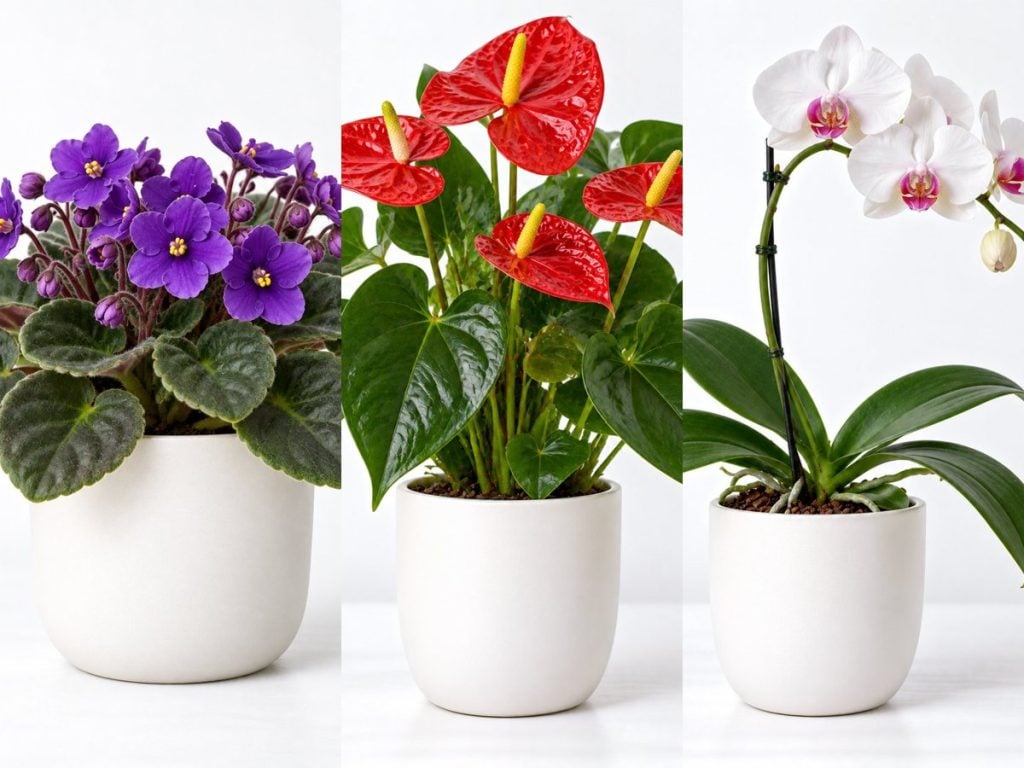
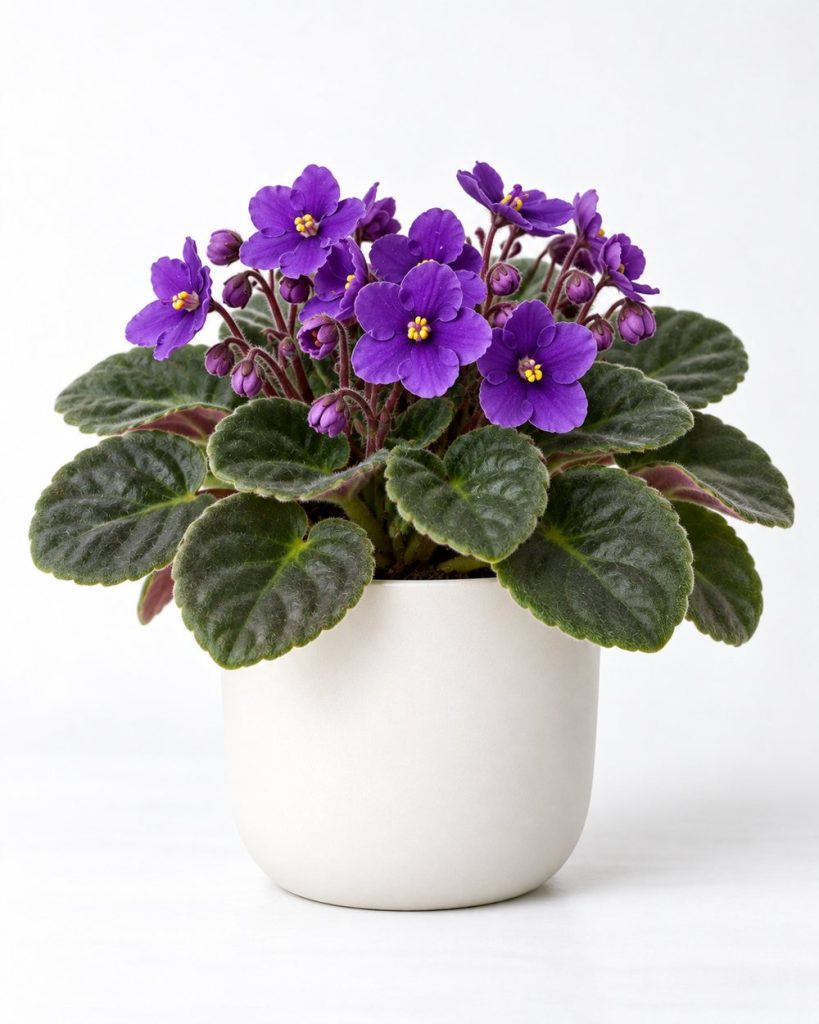
African violets can bloom on and off for most of the year, and few houseplants can match that. Each plant is a neat rosette of fuzzy, rounded leaves with a cluster of small flowers in the center. Colors run from purple and blue to pink, white, and two-tone. A full plant fits on a saucer, so a single windowsill can hold a small collection.
They suit people with a bright window or a small grow light and a steady watering habit. The ASPCA lists them as non-toxic to cats, dogs, and horses. Many old guides still call them Saintpaulia. Botanists have since moved them into the Streptocarpus group, so you may see Streptocarpus ionanthus on newer labels. Garden centers still sell them as African violets, and the care has not changed.
Water is where it gets tricky. The center crown rots if the soil stays soggy, and cold water on the fuzzy leaves causes pale rings and spots. Use room temperature water and pour it onto the soil, not the leaves, or water from below. Violets also need more light than most people expect to keep flowering. A dim shelf gives you leaves and no blooms. The fuzzy leaves catch dust, too, and you clean them with a soft brush rather than a wet cloth. All of this adds up to a plant that asks for small, regular attention.
African Violet care
Light
Bright indirect light is best, such as an east or north window, or a spot a little back from a south one. Direct midday sun can burn the leaves. Many growers use a small LED grow light for about 12 hours a day, which keeps flowers coming even in winter. Turn the pot weekly so the rosette grows evenly.
Watering
Water when the top of the soil feels dry to the touch, which is often once a week. Use room temperature water and keep it off the leaves. Bottom watering works well. Set the pot in a dish of water for 20 to 30 minutes, then let it drain. Do not leave it sitting in water.
Soil and pot
Use a light, airy African violet mix, or regular potting mix with extra perlite. The roots are fine and shallow, so pick a small pot. A good rule is a pot about a third as wide as the spread of the leaves. Self-watering violet pots work if you keep them from staying soaked.
Humidity and temperature
Moderate humidity helps, around 40 to 60 percent. A pebble tray under the pot is an easy fix in a dry winter room. Do not mist the leaves, since water on the fuzz can cause spots. Keep it at 65 to 80°F and away from cold glass.
Feeding
African violets bloom almost nonstop when fed steadily. The easy method is a violet fertilizer at quarter strength with every watering, all year, since they keep flowering through winter in good light. Once a month, water with plain water only to wash out salt. A crust on the pot rim can burn leaves resting on it. Pale, small leaves mean it needs more food. A tight, bunched center can mean too much.
Repotting
Repot about once a year into fresh mix, keeping the same small pot if the plant has not grown much. Older plants can grow a bare neck under the leaves. Repot those a little deeper so the neck sits under the soil.
Propagation
Snap off a healthy leaf with an inch or two of stalk. Push the stalk into damp mix at an angle, or stand it in water. Keep it warm and bright. Tiny plantlets appear at the base in about two to three months. Separate them when each has a few leaves.
Common problems
Why won't my African violet bloom?
Low light is the usual cause, with skipped feeding second. Move it closer to a window or add a grow light, and feed it on a steady schedule.
What are the pale rings on the leaves?
Those spots come from cold water touching the leaves. They do not heal, but new leaves will be fine if you use room temperature water and aim for the soil.
Why is the center mushy?
That is crown rot from soggy soil, and it rarely recovers. Root a healthy leaf to start a new plant, and water less next time.
Why are the leaves long and reaching up?
The plant wants more light. Move it closer to a bright window or under a grow light.
Frequently asked questions
Are African violets safe for cats?
The ASPCA lists them as non-toxic to cats, dogs, and horses. A cat that chews a lot may still throw up.
Do I have to water from the bottom?
No, but it makes it easier to keep water off the leaves and crown. Top watering is fine if you aim for the soil.
Should I remove dead flowers?
Yes. Pinch off faded flowers and their stalks. It keeps the plant tidy and helps new buds form.
Not sure this plant fits your home?
Take a plant quizSources: www.aspca.org, plants.ces.ncsu.edu, www.rhs.org.uk