11 Best Flowering Houseplants That Bloom Indoors
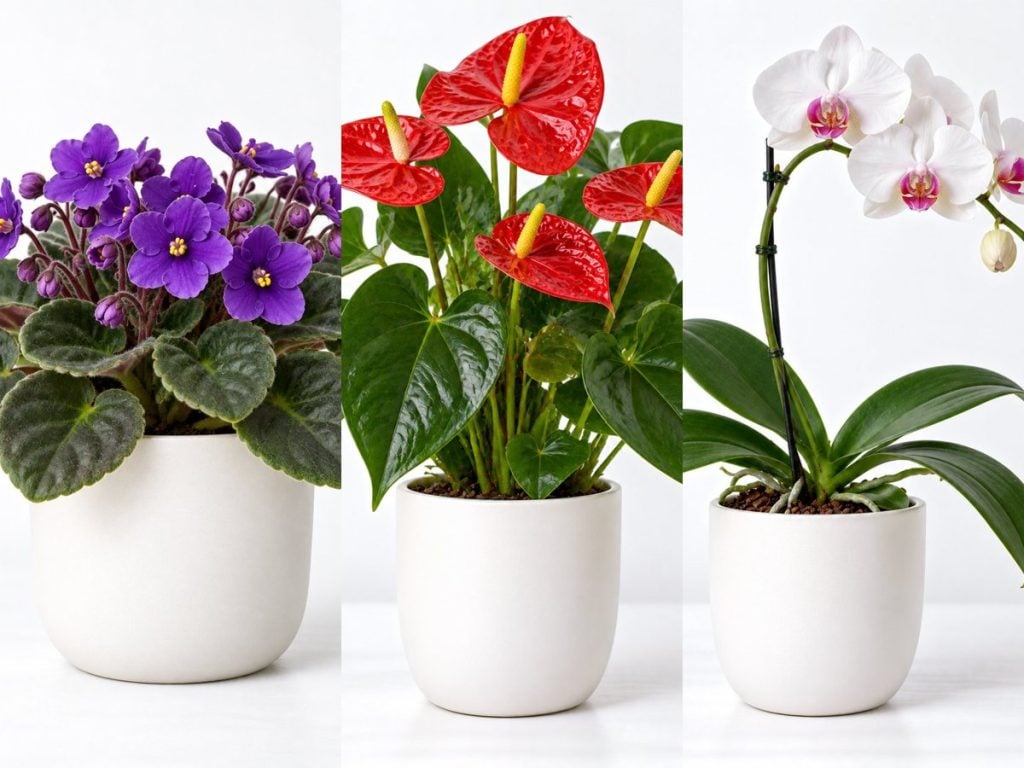
Flowers are expensive for a plant. Each bloom takes energy, and indoors that energy comes almost entirely from light. That is why a plant can look healthy for years on a dim shelf and never flower once. It has enough light to live, but none to spare.
So this list comes with one rule. Most of these plants need a bright spot to bloom, usually near an east window or just back from a south or west one. A few are less demanding. Each one also blooms in its own way. Some flower on and off all year, some once a year after a cool, dark fall, and some once in their life before handing over to baby plants. The notes tell you which is which, so you are not left waiting for something that will not come.
How we picked: We kept to plants that bloom indoors in normal homes, then ranked them by how often and how reliably they flower for an average owner.
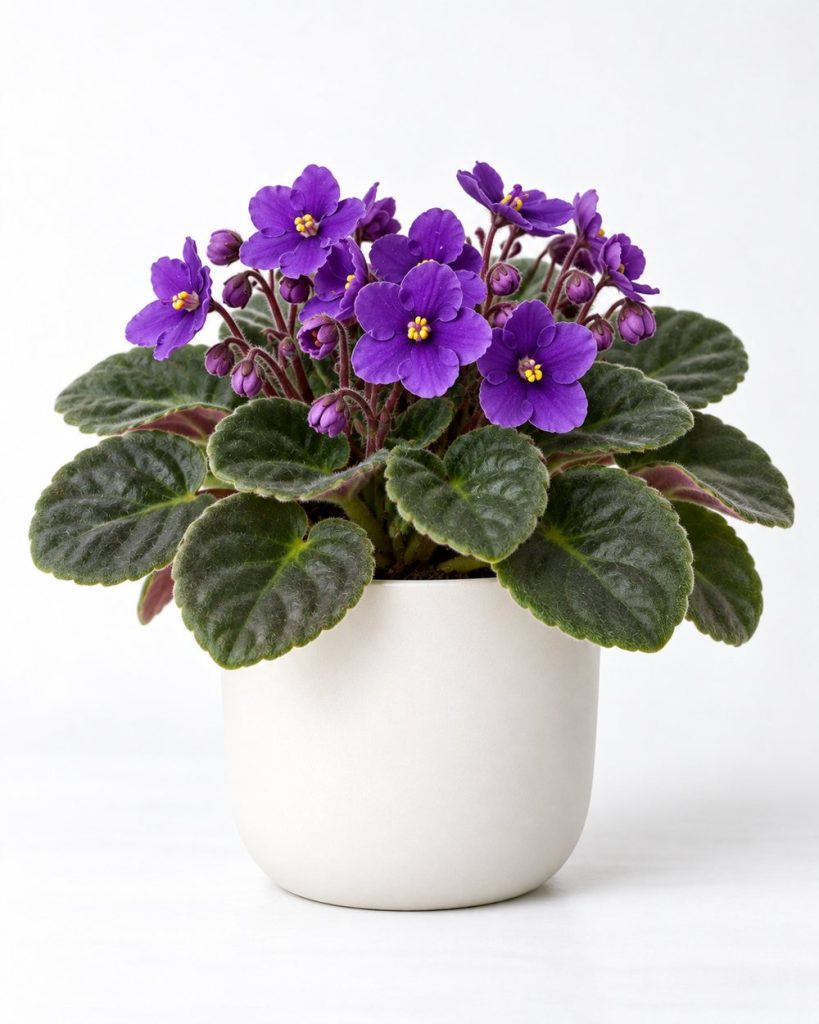
1.African Violet
Streptocarpus ionanthusNo plant here flowers for more of the year. A bright window without hot afternoon sun, or a small grow light for about 12 hours a day, keeps the clusters coming. The care is steady, not hard. Pour water on the soil or let it drink from a saucer, and keep it in a small pot. It is pet-safe.
Read the full care guide →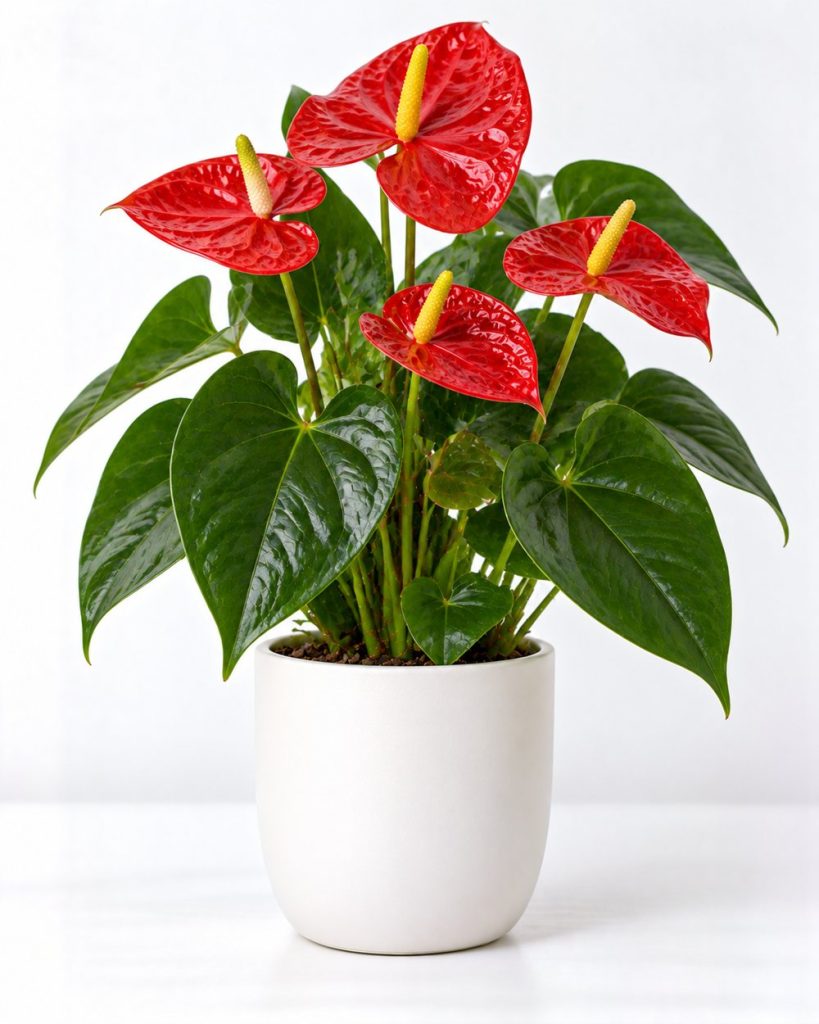
2.Anthurium
Anthurium andraeanumEach glossy heart is a tough, waxy leaf, which is why one bloom stays bright for six to eight weeks. New ones follow every few months on a healthy plant. It needs bright indirect light and humid air to keep going. The whole plant is toxic, so it is a poor fit for a home with a chewer.
Read the full care guide →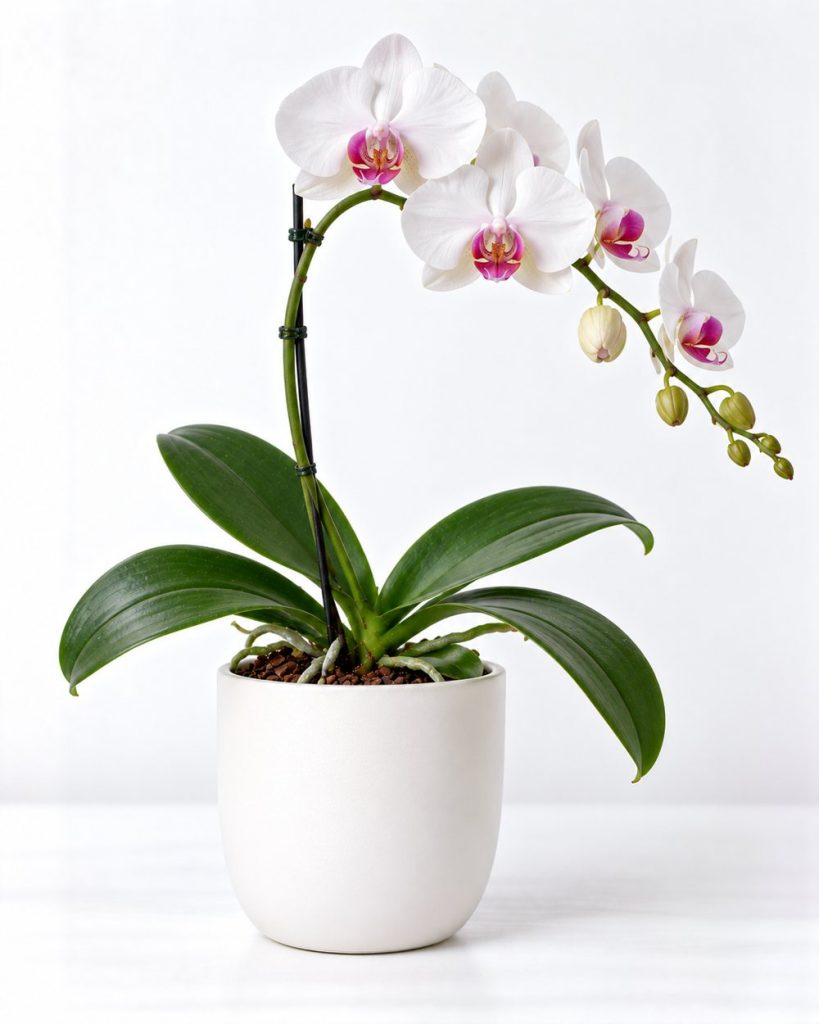
3.Moth Orchid
Phalaenopsis spp.A single spike can hold its flowers for two or three months, which beats any cut bouquet. When they fall, keep the plant. With a bright sill and a cooler fall, it often sends up a new spike. Soak the bark and let it drain fully, since soggy roots rot fast. It is pet-safe.
Read the full care guide →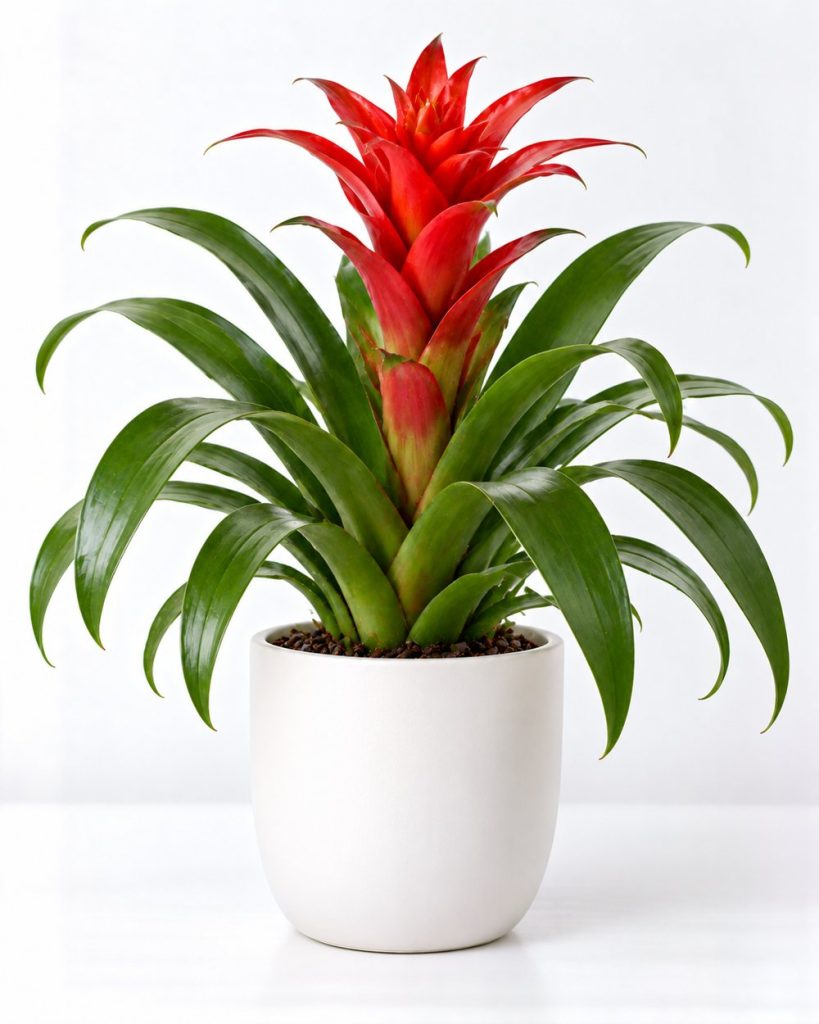
4.Bromeliad
Guzmania lingulataThink of this as the long-lasting bloom with an ending. The colored bracts stay bright for two to four months, even in medium light. Then the mother plant slowly dies. The good news is the pups at its base, which you can pot up and grow on. It is non-toxic to cats and dogs.
Read the full care guide →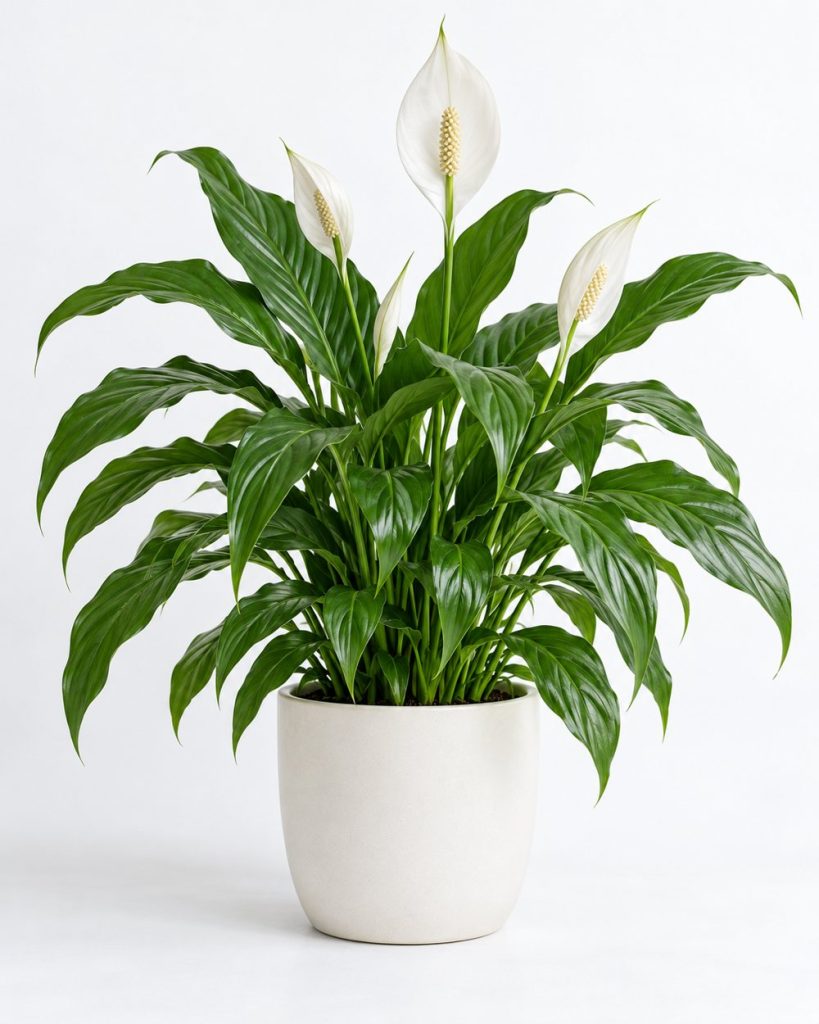
5.Peace Lily
SpathiphyllumFor a room without much sun, this plant comes closer than most to giving you flowers. It stays green in low light, but it needs medium light, such as near an east window, to bloom again. Each white flower lasts for weeks. The plant is toxic to cats and dogs, so think about where it sits.
Read the full care guide →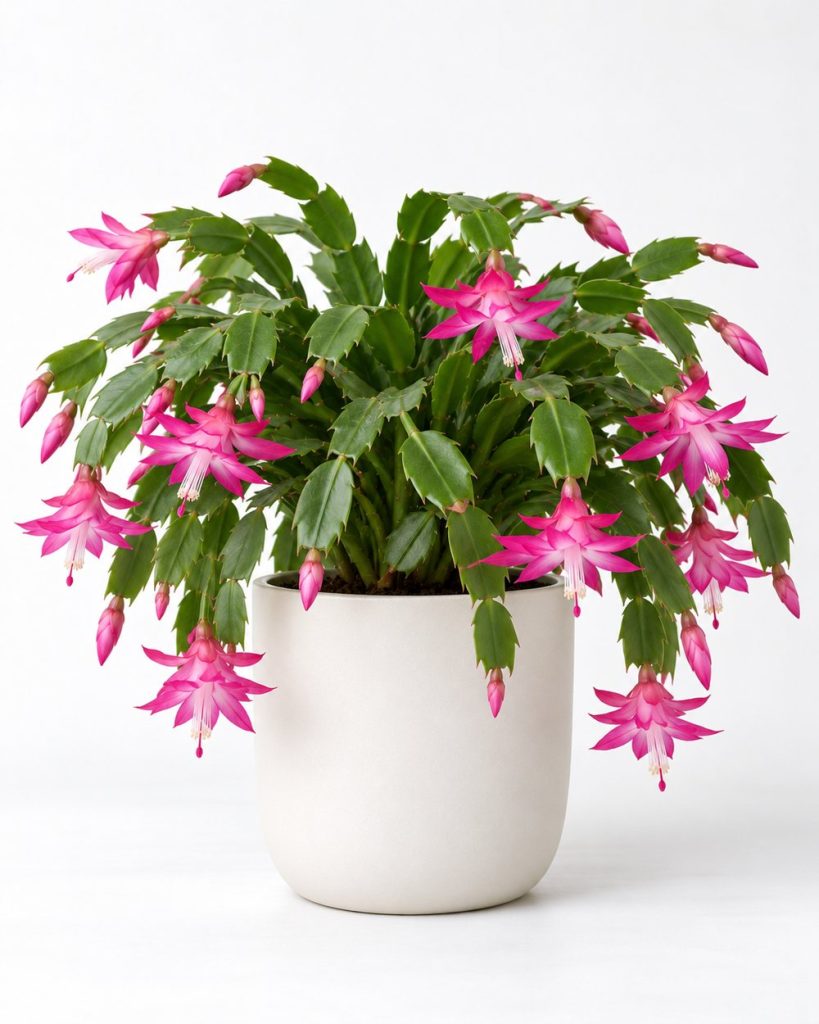
6.Christmas Cactus
Schlumbergera × buckleyiOnce a year is all you get, and darkness is what sets the buds. From early fall it needs long, unbroken nights, so a room where a lamp stays on every evening can stop the buds. Once they form, leave the pot where it is, since a move can make buds drop. It is pet-safe and can live for decades.
Read the full care guide →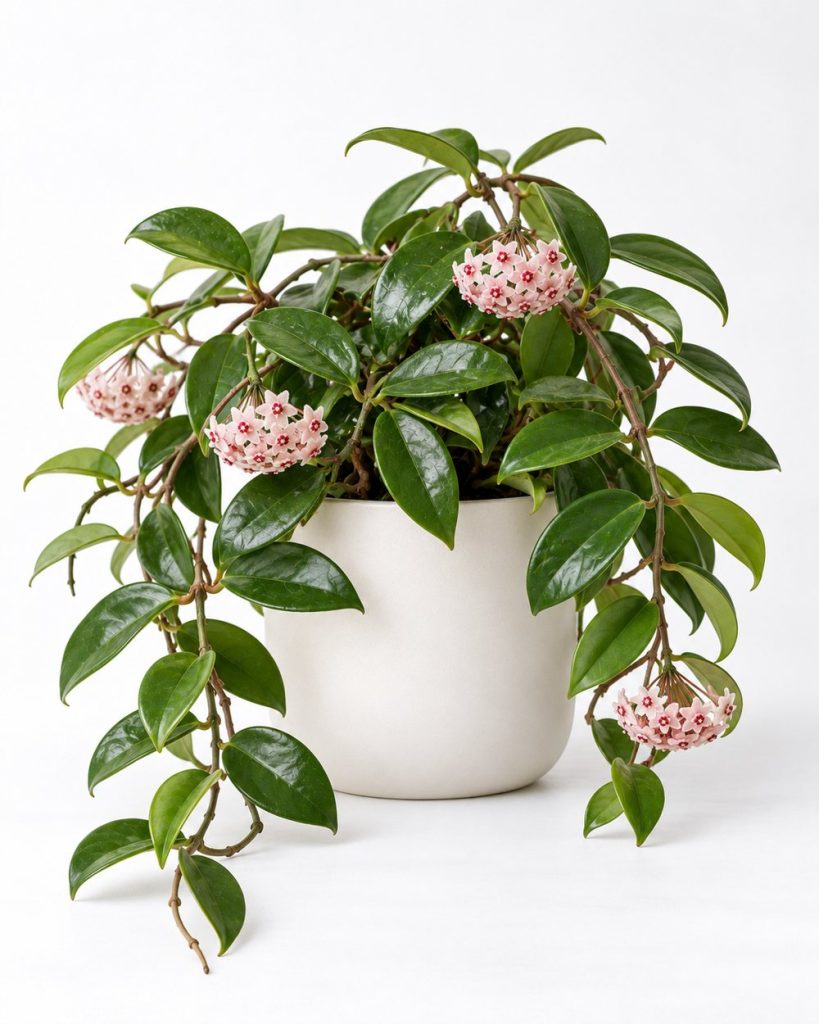
7.Hoya Carnosa
Hoya carnosaPatience is the price of the scented, waxy star clusters. Most plants wait two or three years before the first bloom, and they need bright indirect light to get there. Leave the old flower spurs in place, because they bloom again. The scent is strongest in the evening, and the nectar can drip.
Read the full care guide →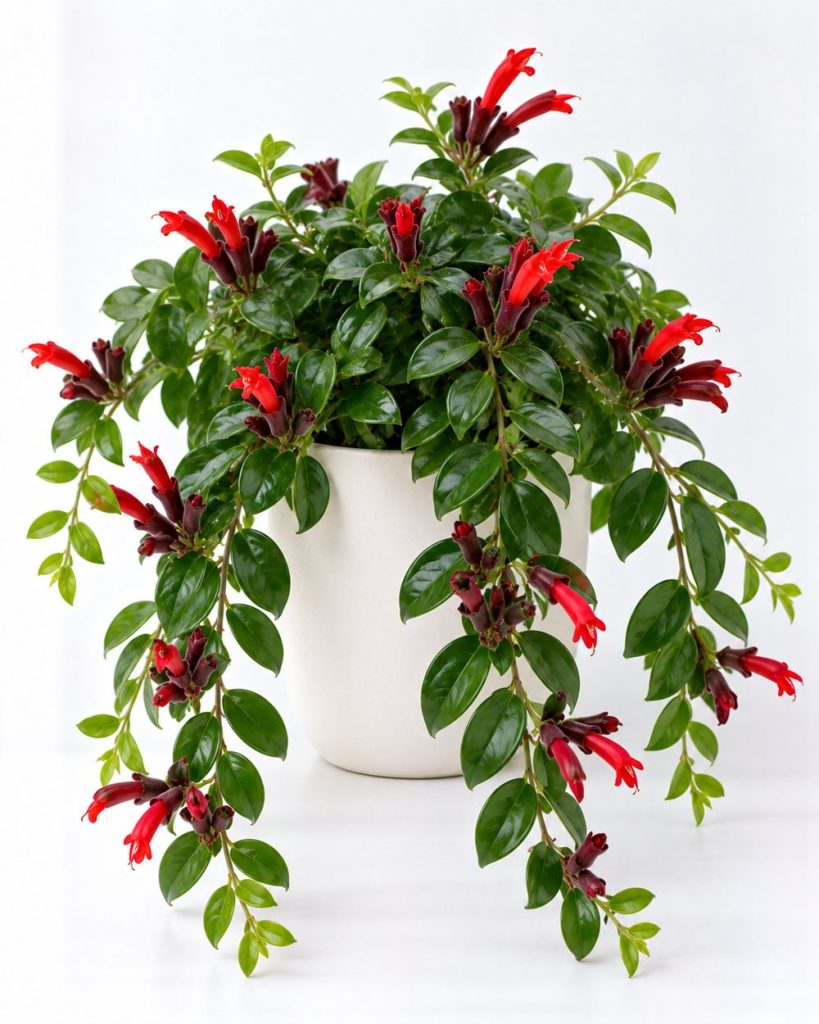
8.Lipstick Plant
Aeschynanthus radicansRed flowers push out of dark maroon tubes at the ends of trailing stems, which makes a hanging basket the natural spot. It is pet-safe. Blooms are not a sure thing. It needs bright light, warm rooms, and a cool, dry spell in winter, and a healthy plant can still skip a year.
Read the full care guide →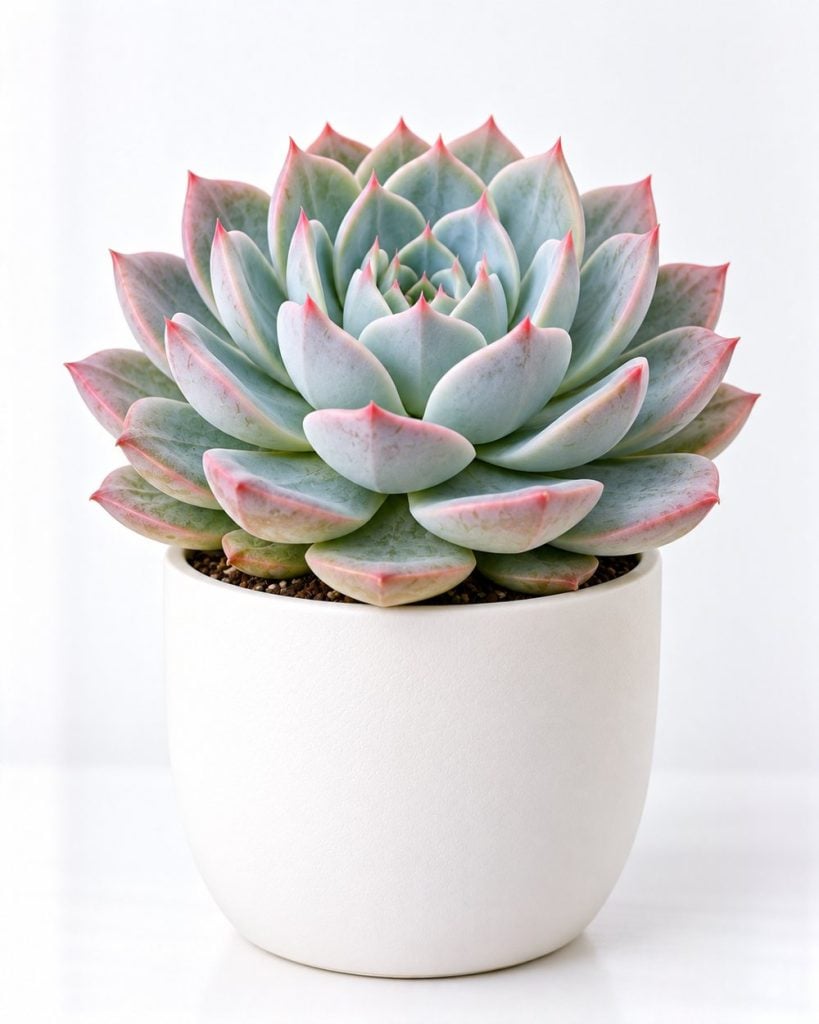
9.Echeveria
Echeveria spp.Most people grow it for the rosette, so the flowers are a bonus. In late spring or summer, a slim stem rises from the side with little bells in orange, pink, or yellow. That only happens with four to six hours of direct sun a day. On a dim desk it stretches and never blooms.
Read the full care guide →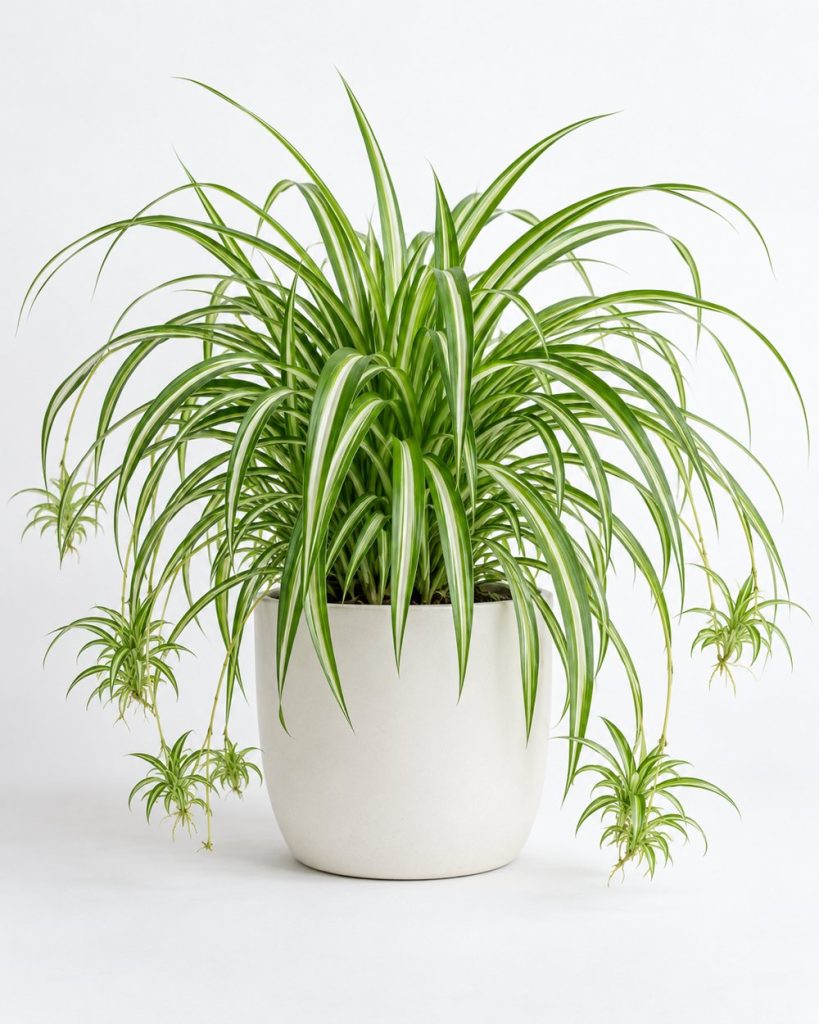
10.Spider Plant
Chlorophytum comosumThe flowers are small and white, and you might miss them. They open on the long arching stems, and then baby plants form at the tips. It flowers most in spring and summer, often once the roots fill the pot. Buy it for the leaves and the babies, with the flowers as a small extra.
Read the full care guide →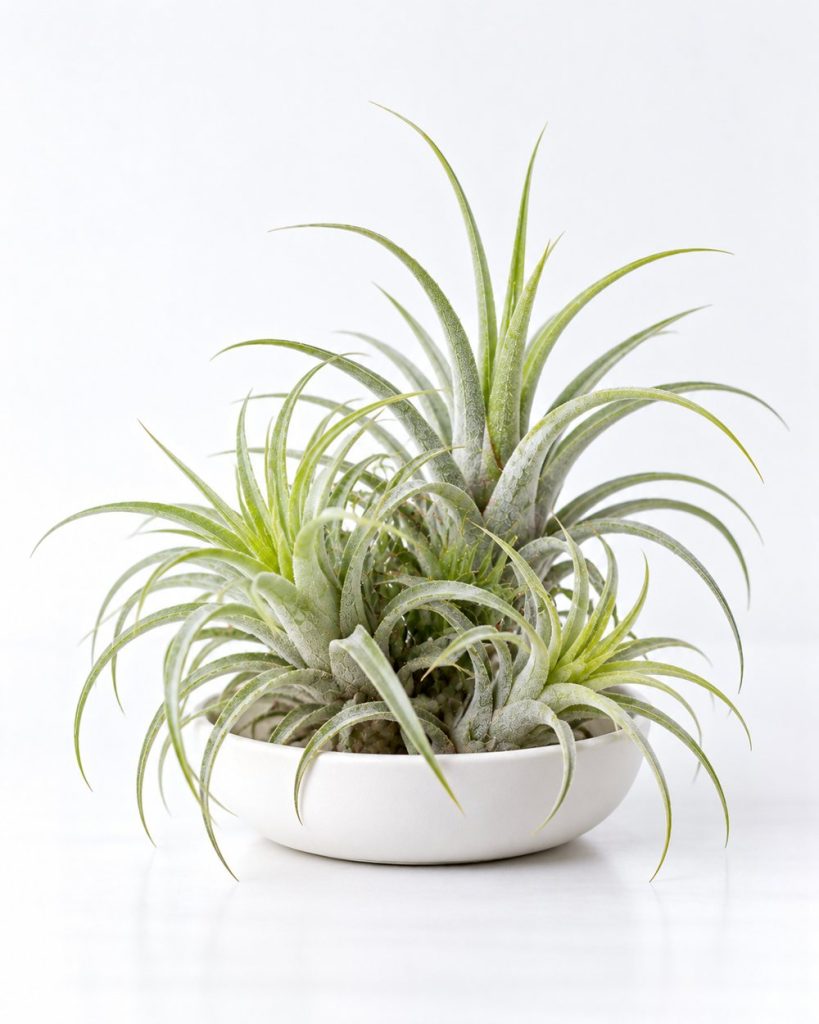
11.Air Plant
Tillandsia spp.Most air plants bloom once, with a narrow, brightly colored flower, and some kinds turn red just before it opens. After that the plant makes pups around its base and slowly fades. Getting there takes a bright spot and a real weekly soak, not a quick mist. The ASPCA does not list them, so keep them from pets.
Read the full care guide →If a plant on this list stops flowering, look at light first. Move it a few feet closer to the window, or add a small grow light, and give it a full season before you decide it is a dud. Feeding helps less than people think. Too much food often brings big leaves and fewer flowers, so use half strength and only in spring and summer.
Frequently asked questions
Which houseplant flowers for the longest?
The African violet can flower for most of the year in good light. An anthurium is close behind, since each of its waxy blooms lasts six to eight weeks and new ones keep coming.
Why won't my plant flower again?
Low light is the most common cause. Some plants also need a trigger, like the long dark nights a Christmas cactus needs or the cooler fall that helps a moth orchid. Check the note for your plant above.
Which flowering plants are safe for cats and dogs?
From this list, the ASPCA lists the African violet, moth orchid, bromeliad, Christmas cactus, hoya, lipstick plant, echeveria, and spider plant as non-toxic. The peace lily and anthurium are toxic, and air plants are not listed, so treat them with care.
Want a plant picked for you?
Take a plant quiz