Moth Orchid
Phalaenopsis spp. · also called Phalaenopsis, Moon orchid, Phal
The supermarket orchid that blooms again if you skip the ice cubes
- Light
- Bright indirect, Medium light: East window is ideal, no hot midday sun
- Water
- About once a week, soak the bark and let it drain
- Difficulty
- Moderate
- Pet safety
- Non-toxic to cats and dogs
- Size
- Small
- Height
- 1-2 ft with the flower spike
- Growth
- Slow
- Humidity
- Likes 50% or more, copes with average homes
- Temperature
- 65-80°F
- Good rooms
- Bathroom, Kitchen, Living room, Office
Most moth orchids end up in the trash the week the last flower drops. That is a shame, because the plant is far from dead. A bare stalk and two or three thick leaves are its resting state. Give it a few months on a bright sill and it will often push out a new spike.
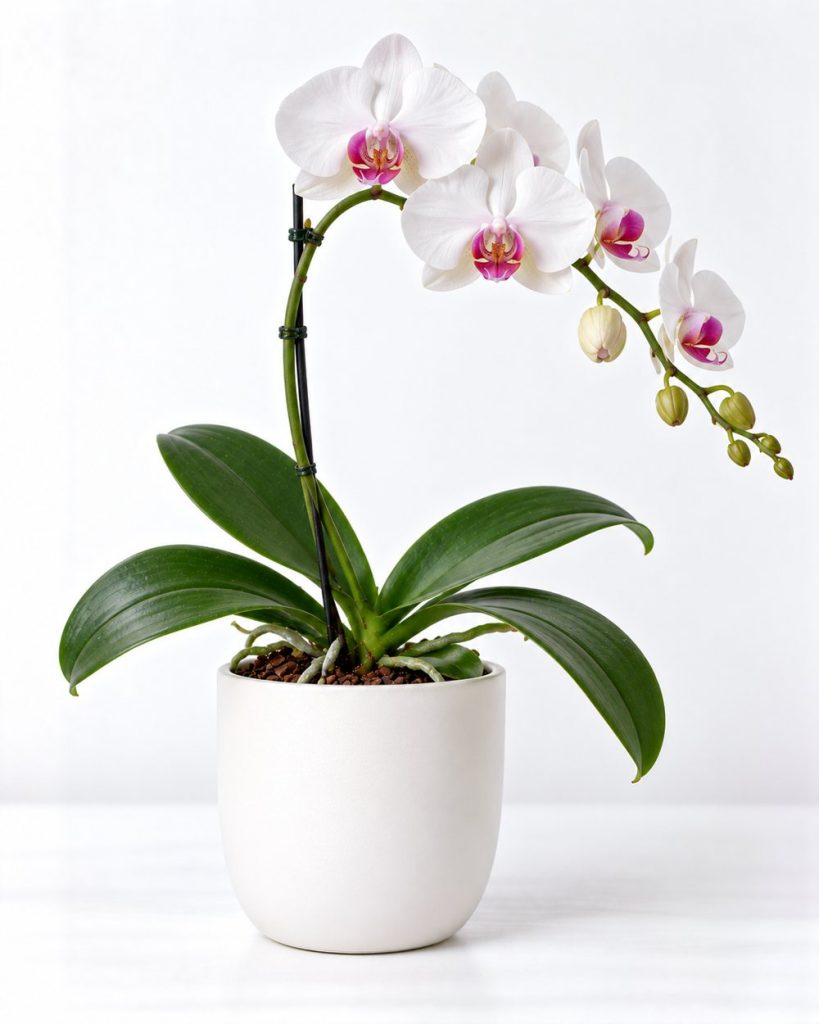
The flowers are flat and wide, shaped a bit like a moth in flight, and they come in white, pink, purple, yellow and spotted mixes. One spike can stay in bloom for two or three months. Under the leaves you will see fat silver or green roots, some climbing out of the pot. Those roots are meant to be there. In the wild this plant grips tree bark instead of sitting in soil. It stays small, rarely more than two feet tall with the spike, so it fits a kitchen sill or a desk by an east window. The ASPCA lists it as non-toxic to cats and dogs.
Here is the honest part. You have to unlearn regular houseplant habits. It grows in chunky bark, not potting soil, and it rots fast if the roots stay soaked. Getting it to rebloom often takes a cooler fall, which a warm apartment may not give you. People who like a steady routine do well with it. People who want a plant to just sit there and look green might be happier with a peace lily.
Moth Orchid care
Light
Soft morning sun is perfect, so an east window is the classic spot. A south or west window works if a sheer curtain cuts the glare. Leaves should be a medium olive green. Very dark leaves mean too little light, and yellow, hot-feeling leaves mean too much.
Watering
Water in the morning. Run lukewarm water through the pot in the sink for a minute, then let every drop drain out. In most homes that is once a week, a bit more in summer. The pot should feel light and the roots look silvery before you water again. Skip the ice cube trick. It gives too little water and chills the roots.
Soil and pot
Use orchid bark, not potting soil. The chunks let air reach the roots, which they need as much as water. A clear plastic pot with holes lets you see when the roots turn from green to silver. Pure sphagnum moss stays wet for a long time and is hard to rewet once it dries, so most people do better with bark.
Humidity and temperature
Moth orchids like humid air, around 50 percent or more. A bathroom with a window suits them, and a tray of wet pebbles helps on a dry sill. Do not let water pool in the center of the leaves overnight, because that is where crown rot starts. Dab it out with a paper towel.
Feeding
Use a balanced orchid food at half strength twice a month while the plant is making new leaves or roots. Some growers prefer a quarter strength dose with every watering instead. Flush the bark with plain water once a month so salts do not build up on the roots.
Repotting
Repot every two years, or sooner if the bark breaks down into mush. Do it after the blooms fade or when new leaves appear. Trim off any brown, hollow roots and keep the firm ones. Pick a pot only a little bigger. These plants like to feel snug.
Propagation
Home propagation is limited. Now and then a baby plant, called a keiki, grows from a node on the flower stalk. Wait until it has two or three leaves and roots about two inches long. Then cut it free and pot it in fine bark. Most people never get one, and that is normal.
Common problems
The flowers fell off. Is it dying?
No. Every bloom ends, usually after two to three months. Cut the stalk just above the first node below the old flowers, or remove it at the base if it turns brown. Keep caring for the leaves and roots and wait for a new spike.
Why are the leaves soft and wrinkled?
The plant is short on water, either because you skipped waterings or because rotten roots cannot drink. Check the roots. Firm and green means water more often, while brown and mushy means repot into fresh bark.
It has not rebloomed in a year. What now?
Many hybrids need a few weeks of cooler nights, around 55 to 60°F, in fall to start a spike. Move it near a cool window at night for a few weeks. Too little light is the other common cause.
What are these roots growing out of the pot?
Air roots. They are healthy and help the plant take in water and air. Leave them alone, and do not try to bury them, because they can rot.
Frequently asked questions
Should I cut the spike after blooming?
If it is still green, cutting above a lower node can give you a side branch of new flowers. If it has turned brown and dry, cut it off at the base.
Are moth orchids safe for cats?
The ASPCA lists them as non-toxic to cats and dogs. Chewing the leaves can still cause a mild stomach upset.
Why is it sold in moss if moss is bad?
Growers use moss because it keeps plants alive in shipping and stores. It holds too much water for most homes, so swap it for bark after the blooms are done.
Not sure this plant fits your home?
Take a plant quizSources: www.aspca.org, plants.ces.ncsu.edu