Anthurium
Anthurium andraeanum · also called Flamingo flower, Laceleaf, Painter's palette
Glossy red hearts that stay on the plant for weeks at a time
- Light
- Bright indirect: Bright indirect light, no direct afternoon sun
- Water
- Every 5-10 days, when the top inch of soil is dry
- Difficulty
- Moderate
- Pet safety
- Toxic to cats and dogs
- Size
- Small
- Height
- 12-18 in tall, about 1 ft wide
- Growth
- Moderate
- Humidity
- Wants 60% or more for best blooms
- Temperature
- 65-80°F
- Good rooms
- Bathroom, Living room, Office
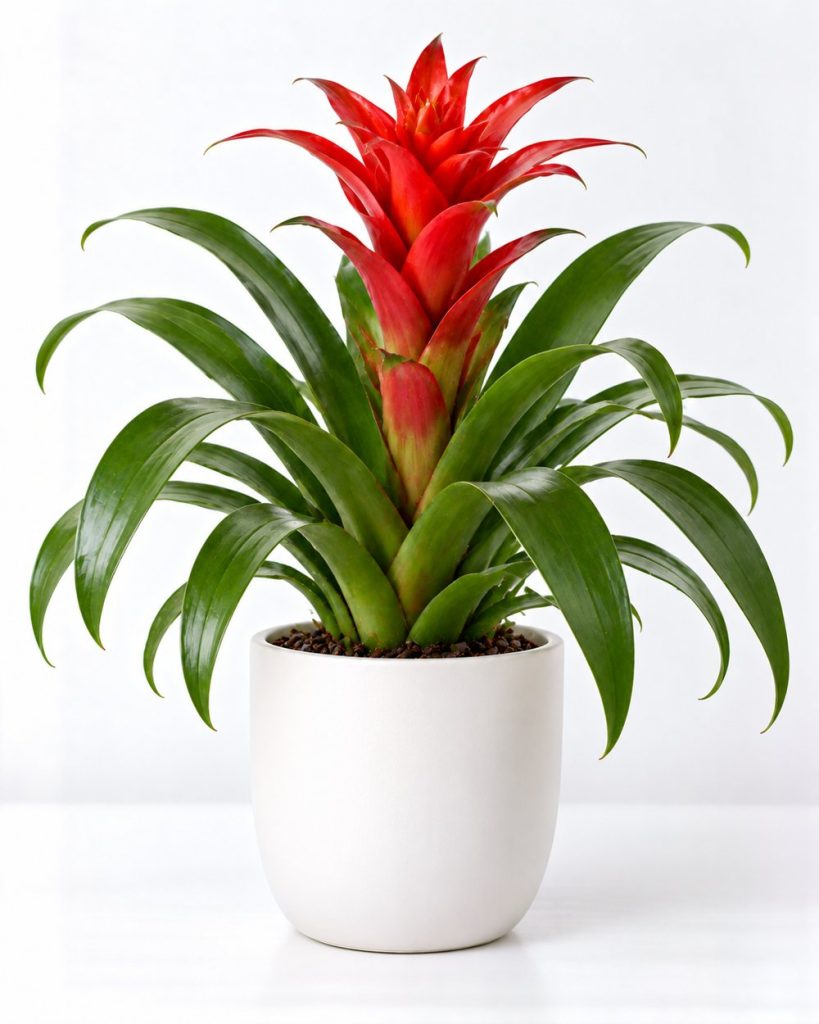
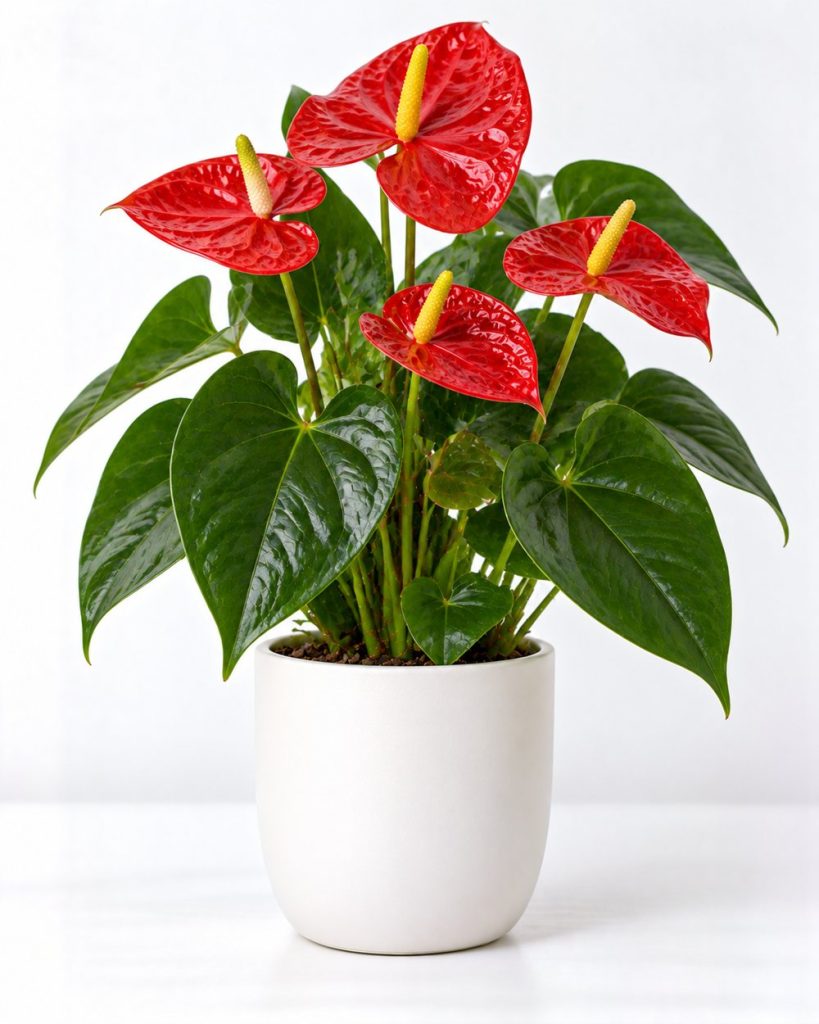
That shiny red heart is not a petal. It is a waxy leaf called a spathe, and the little tail in the middle is where the real flowers sit, too tiny to notice. Because the spathe is so tough, one bloom can stay bright for six to eight weeks. A healthy plant puts up a new one every few months, so it can look in flower almost all year.
As a houseplant it grows to about a foot or a foot and a half tall, with dark, glossy leaves shaped like arrows. Red is the classic color, but you will also find pink, white, coral and deep purple. It looks at home on a bathroom shelf with a window or a bright corner of the living room. If you want color without the fuss of cutting fresh flowers, this is a good bet. Even between blooms the dark leaves look polished enough to carry a shelf on their own.
Pets are the deal breaker. The whole plant holds needle-like crystals called calcium oxalate. A bite causes burning in the mouth, drooling and sometimes vomiting in cats and dogs. The sap can also bother your own skin when you prune it. If you share your home with a chewer, put it out of reach or choose an African violet. It also sulks in dry air and cold drafts, and it blooms less in dim rooms.
Anthurium care
Light
Blooms depend on light. Set it a few feet from a bright east or west window, or behind a sheer curtain on a south one. Direct afternoon sun burns pale patches on the leaves. In a dim room the plant stays green and healthy but stops making new hearts.
Watering
Water when the top inch of soil is dry. In most homes that falls between five and ten days, faster in a small pot near a window. Pour until water runs out the bottom and empty the saucer after ten minutes. Soil that never dries out leads to root rot, the usual way people lose this plant.
Soil and pot
The roots want air. Mix regular potting soil with orchid bark and perlite in roughly equal parts, or buy an aroid mix. Thick roots may climb above the soil line. That is fine. Just add a little more mix around them when you repot.
Humidity and temperature
Aim for 60 percent or higher if you want the leaves to stay smooth and the blooms to keep coming. A humidifier works best. A steamy bathroom with a window is the next best spot. Keep it away from heat vents, open doors in winter and air conditioners blowing straight at it.
Feeding
Anthurium blooms on and off all year in good light, so it likes a bloom fertilizer, one with more phosphorus than nitrogen. Mix it at a quarter to half strength and use it every two to three weeks from spring to fall, then monthly in winter if it is still flowering. Lots of new leaves but no new blooms often means too much nitrogen.
Repotting
Repot every two to three years in spring, or when roots circle the pot. Go up only one or two inches in width. Wear gloves, since the sap can irritate skin. Set the plant at the same depth it was before.
Propagation
Division is the simplest method. When you repot a crowded plant, pull it apart into two or three clumps, each with its own roots and a few leaves. Pot each one up and keep it a bit warmer and more humid for a few weeks while it settles in.
Common problems
Why has it stopped blooming?
Low light is the most common reason, with too much plant food a close second. Move it closer to a bright window and switch to a bloom formula at half strength.
What turns the spathes green?
Old blooms often fade to green as they age, which is normal. Cut them off at the base of the stem once they look tired.
Why are the leaves yellow with wet soil?
The roots are sitting in water too long. Let the soil dry more between waterings and check that the pot drains. If the roots smell sour, repot into a chunkier mix.
Why do the new leaves come in small and curled?
The air is too dry for the plant. Raise the humidity and keep it out of drafts.
Frequently asked questions
Is anthurium toxic to cats and dogs?
Yes. The ASPCA lists anthurium as toxic because of calcium oxalate crystals. Signs include drooling, pawing at the mouth and vomiting.
How long does one bloom last?
Usually six to eight weeks on the plant. As a cut flower in a vase it can last two or three weeks.
Can it grow in water alone?
Some shops sell it in glass with bare roots. It can live that way for a while, but it grows and blooms better in a chunky mix.
Not sure this plant fits your home?
Take a plant quizSources: www.aspca.org, plants.ces.ncsu.edu