Bromeliad
Guzmania lingulata · also called Guzmania, Scarlet star, Vase plant
Months of bright color, then a family of pups to carry on
- Light
- Bright indirect, Medium light: Medium to bright indirect, handles shade and office lights
- Water
- Keep a little water in the cup, soil barely damp
- Difficulty
- Easy
- Pet safety
- Non-toxic to cats and dogs
- Size
- Small
- Height
- 1-2 ft tall and wide
- Growth
- Slow
- Humidity
- Likes 40-60%, average homes are usually fine
- Temperature
- 60-80°F
- Good rooms
- Bathroom, Bedroom, Living room, Office
Nobody warns you about this when you buy one. A guzmania flowers once, and then the mother plant slowly dies. Before you feel cheated, know that the bloom lasts two to four months and the plant leaves behind baby plants, called pups, at its base. Keep those and the story goes on.
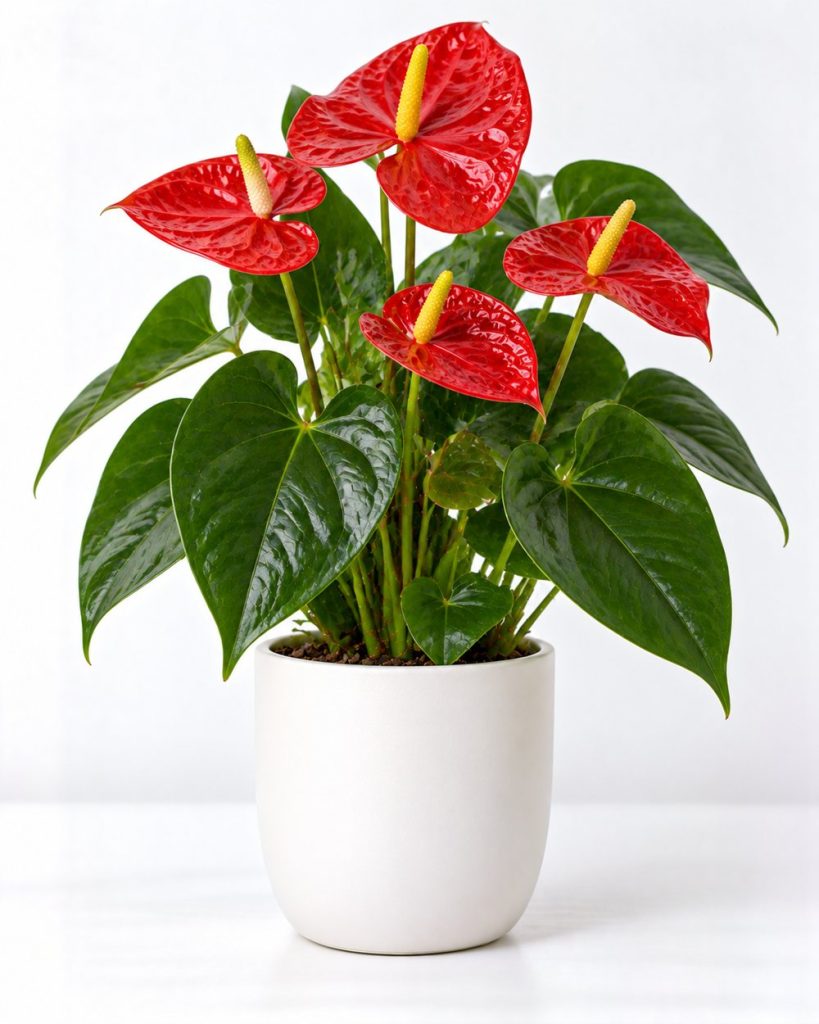
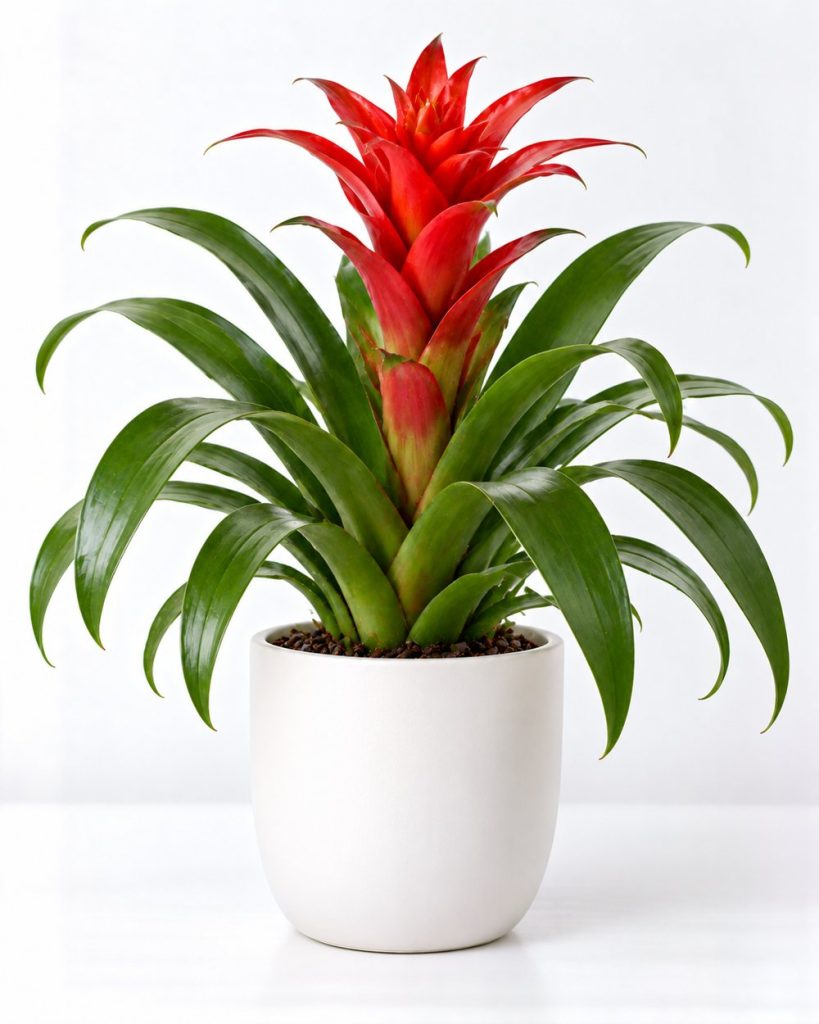
The plant is a rosette of smooth, strappy green leaves about a foot or two across. From the middle rises a star of bright bracts in red, orange, yellow, pink or purple. Those are colored leaves, not petals, which is why they hold up so long. The center of the rosette forms a little cup, and in the rainforest that cup catches rain. At home you can keep a small amount of water in it. Store plants are usually sold right at peak color, so what you see on day one is about as good as it gets, and that is a lot.
This is a good plant for a room that does not get much sun, like an office or a north-facing bedroom. It grows slowly and needs very little feeding. The ASPCA lists guzmania species as non-toxic to cats and dogs. The catch, besides the one-time bloom, is rot. Soggy soil or stale water left in the cup can turn the base brown and mushy. If you water on autopilot, set a reminder to empty and refill the cup every week or two.
Bromeliad care
Light
Medium to bright indirect light keeps the color strong for the longest time. It handles shade and fluorescent office light better than most flowering plants. Keep it out of hot direct sun, which bleaches the leaves and can scorch the bract.
Watering
Fill the central cup about a quarter full and swap the water every week or two so it never sits stale. Water the soil lightly only when it feels dry an inch down. In winter, or once the bloom fades, keep the cup nearly empty. Rainwater or filtered water is kindest if your tap water is hard.
Soil and pot
Its roots are small and mostly hold the plant in place. Use a loose orchid or bromeliad mix, or potting soil with plenty of bark mixed in. A small pot is better than a big one. Heavy, wet soil is how most of these plants rot.
Humidity and temperature
Normal room humidity works for most homes. If your air is very dry in winter, a pebble tray or a nearby humidifier helps the leaf tips stay green. A bright bathroom is a great place for it. Keep it away from heat vents, which dry out the cup and the leaf edges in a few days.
Feeding
A Guzmania in bloom is near the end of its flowering life, and food will not make the colorful center last longer. Feeding helps the pups instead. Once a month in the warm months, wet the soil or mist the leaves with a quarter-strength liquid fertilizer. Keep food out of the central cup, since leftover nutrients there can lead to rot.
Repotting
You rarely need to repot the mother plant. It will not live long enough to fill a bigger pot. The time to repot is when you move the pups into their own small containers. If the store pot is top heavy and tips over, slip it inside a heavier pot instead of moving the roots.
Propagation
Wait until the pups reach about a third to half the height of the mother. Then cut each one away with a clean knife, keeping any roots it has. Pot it in moist bromeliad mix and keep it in bright, indirect light. A pup can take two to three years to bloom.
Common problems
The colorful center is turning brown. Did I kill it?
Probably not. The bract fades naturally after a few months. Cut it off at the base and keep caring for the leaves so the pups have energy to grow.
Why does the base feel mushy?
That is rot from too much water in the soil or a dirty cup. Empty the cup, let the soil dry and check for pups you can save.
What turns the ends of the long leaves brown and dry?
Dry air, hard tap water or salts from plant food. Switch to rainwater or filtered water and trim the tips with clean scissors.
How do I get a pup to flower?
Patience, mostly. Give it bright, indirect light and steady care. Some growers put the plant in a clear bag with a ripe apple for a week, since the gas from the fruit can trigger a bloom.
Frequently asked questions
Does every bromeliad die after flowering?
Yes, each rosette blooms once. The plant keeps living through its pups, which form around the base.
Is guzmania safe for cats?
The ASPCA lists guzmania as non-toxic to cats and dogs. A cat that chews a lot of leaf may still vomit.
Should I keep water in the cup?
A little, yes, in warm months. Refresh it often and let it go almost dry in winter. Tip the plant gently over the sink to empty old water.
Not sure this plant fits your home?
Take a plant quizSources: www.aspca.org, plants.ces.ncsu.edu