Air Plant
Tillandsia spp. · also called Tillandsia, Tilly, Sky plant
No soil, no pot, just a weekly bath and a bright spot
- Light
- Bright indirect: Bright light, the sunnier the window the better
- Water
- Soak 20-30 minutes once a week, dry upside down
- Difficulty
- Moderate
- Pet safety
- Toxic to cats and dogs
- Size
- Small
- Height
- 2-12 in, depends on the type
- Growth
- Slow
- Humidity
- Average home humidity, more soaks in dry air
- Temperature
- 50-90°F
- Good rooms
- Bathroom, Kitchen, Living room, Office
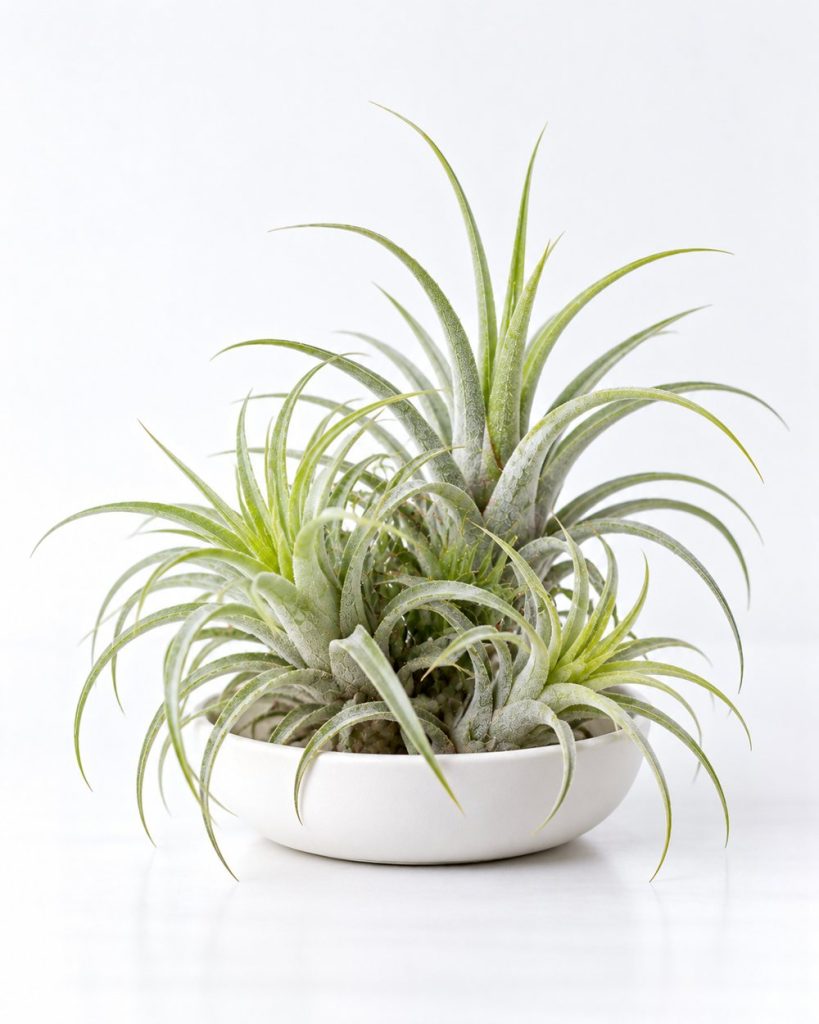
An air plant is a small rosette of silver or green leaves with no pot and no soil. It is a cousin of the pineapple and the bromeliad. In the wild it clings to branches and rocks, and it takes in water and food through tiny fuzzy scales on its leaves. The roots only act like hooks. They grab on to bark and do almost nothing else.
That makes it fun to display. You can tuck one into a seashell, glue it to a piece of driftwood or set it in a glass globe. There are hundreds of kinds. Some are thumb sized, like the common blushing one that turns red before it blooms. Others, like the big curly xerographica, grow wide enough to fill a salad plate. Most bloom once with a bright tube-shaped flower and then make little pups around the base.
The big myth is that they live on air. They do not. A quick mist now and then is not enough, and that is why so many shrivel. They need a real soak about once a week and a bright spot, often the sunniest window you have. Pets are a question mark too. The ASPCA does not list them, so we treat them as not pet safe. Cats in particular love to bat them off shelves and chew the leaves.
Air Plant care
Light
These are brighter-light plants than most people think. A spot right by an east, west or south window is good. Silver, fuzzy kinds handle more sun than smooth green ones, which prefer filtered light. In a dim room they slowly fade and stop growing. A small grow light over a shelf works well too.
Watering
Once a week, sink the plant in a bowl of room temperature water for 20 to 30 minutes. Then shake it gently and set it upside down on a towel for a few hours. Water trapped in the base is what kills it. In hot, dry weather, add a quick rinse midweek. Leaves that curl tighter than usual mean it is thirsty.
Soil and pot
Skip soil entirely. Air plants need moving air around their base. Set them on wood, stone, shells or a wire holder. Glass globes look nice but trap moisture, so leave the opening wide and take the plant out to water.
Humidity and temperature
A bathroom with a window is a happy home, since steam from the shower gives a small bonus drink. In a dry winter house with the heat running, soak a little longer or a little more often. Good airflow matters more than high humidity.
Feeding
Food is optional. Once a month in spring and summer, add a pinch of bromeliad or air plant food to the soaking water at quarter strength. Never use copper containers or food with copper in it, because copper harms these plants.
Repotting
There is no pot to change. Every few months, pull off any dry, papery lower leaves with your fingers and trim brown tips with scissors. If the plant is glued to a mount, keep the glue off the base and use only a small dab of waterproof glue.
Propagation
After blooming, most air plants grow pups around the base. Leave them until they are about a third the size of the mother. Then twist them off gently or cut them with clean scissors. You can also leave them on to grow into a round clump.
Common problems
The base turned black and the leaves fell out. Why?
That is rot from water sitting in the center. Always dry the plant upside down after a soak, and do not put it back in a closed glass container while wet.
Why are the leaves curling and crispy?
It needs more water. Give it a long soak of an hour or two, then go back to weekly soaks with an extra rinse in hot weather.
Can I water it with a spray bottle only?
Misting alone almost always leaves the plant thirsty. Use it as an extra between soaks, not as the main source of water.
Why is my red air plant turning green again?
The blush comes just before a bloom and fades once it ends. Bright light helps the color show up next time.
Frequently asked questions
Are air plants safe for cats?
The ASPCA does not list them, so we cannot call them safe. Keep them high up, both for the cat and for the plant.
How long do air plants live?
Each rosette blooms once and then slowly fades, often over a year or more. The pups take over, so a clump can last for many years.
Can I use tap water?
Most tap water is fine if you let it sit out for a few hours. Rainwater or pond water is even better. Avoid softened water, which has added salt.
Not sure this plant fits your home?
Take a plant quizSources: plants.ces.ncsu.edu, www.aspca.org