Hoya Carnosa
Hoya carnosa · also called Wax plant, Porcelain flower, Honey plant
Thick waxy leaves and star-shaped flowers that smell sweet at night
- Light
- Bright indirect, Medium light: Lives in medium light, needs bright indirect to flower
- Water
- Every 1-3 weeks, when the soil is dry most of the way
- Difficulty
- Easy
- Pet safety
- Non-toxic to cats and dogs
- Size
- Medium
- Height
- Vines to 6+ ft over many years
- Growth
- Slow
- Humidity
- Average home humidity is fine
- Temperature
- 60-85°F
- Good rooms
- Bedroom, Kitchen, Living room, Office
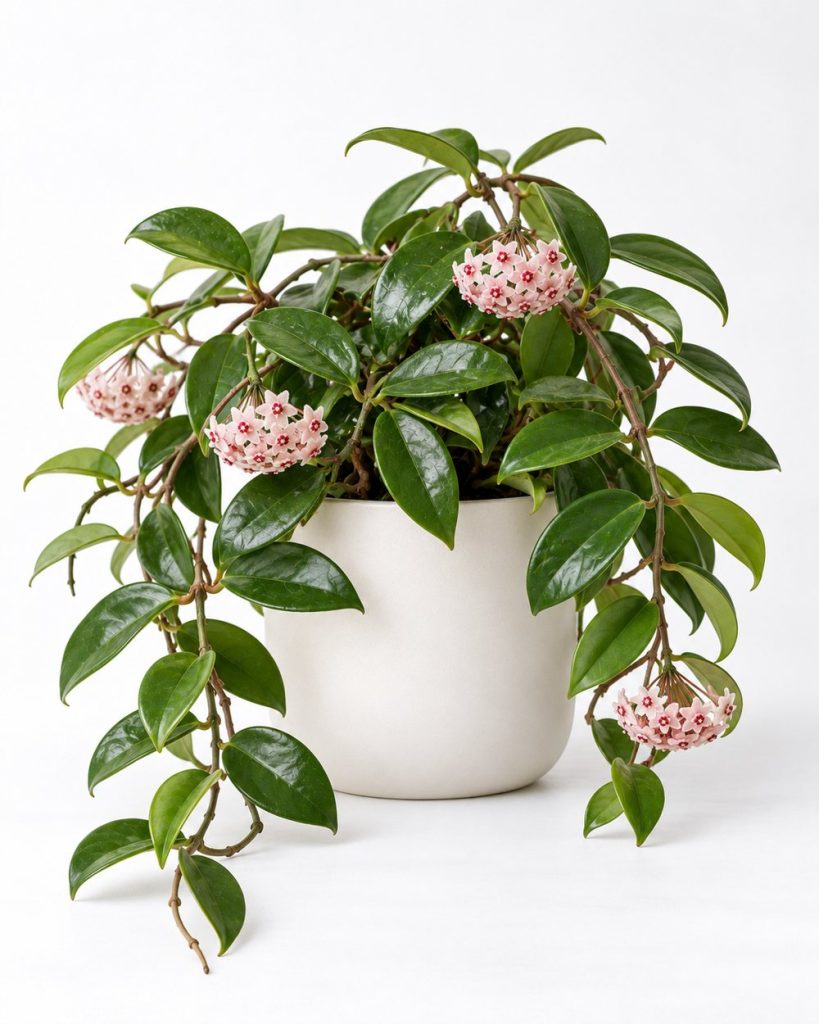
Have you ever smelled a houseplant from across the room? A blooming hoya can do that, mostly in the evening. The flowers come in round clusters of tiny stars, pale pink with a red center, and look so smooth they seem made of wax or sugar. They drip a little sweet nectar, too. The leaves are thick, oval, and firm, often green with silver flecks, on vines that trail or climb.
The ASPCA lists wax plant as non-toxic to cats, dogs, and horses, which makes it an easy choice for a pet home. Those thick leaves hold water, so it handles a missed watering better than most vines. It suits people who want a long-term plant and do not mind waiting. Train it around a hoop or let it hang in a bright window, and it can stay with you for decades.
Waiting is the downside. Hoya grows slowly, and most plants do not flower until they are two or three years old. Some take longer in lower light. When flowers do come, they grow from short woody spurs. Leave those spurs on the plant after the flowers fade, because the same spurs bloom again. Cut them off and you start the wait over. The sticky nectar can also drip onto a shelf or floor, so place it with that in mind.
Hoya Carnosa care
Light
Bright indirect light is the key to flowers. An east window is ideal, and a west or south window with a sheer curtain works too. A few hours of soft morning sun helps. In medium light it stays green and healthy but rarely blooms. Leaves that blush reddish usually mean it is getting a bit of strong sun.
Watering
Let the soil dry most of the way before watering. In summer that is often every 1-2 weeks. In winter, every 2-4 weeks. Water well and let it drain. The leaves give you a clue. When they feel slightly soft and bendy, it is ready for a drink.
Soil and pot
Hoya roots want air. Use a chunky mix, such as potting mix blended with orchid bark and perlite in about equal parts. A pot with a drainage hole is a must. It likes a snug pot, so do not rush to move it into a big one.
Humidity and temperature
Average home humidity is fine, and it does not need misting. It grows a little faster with more moisture in the air, but that is a bonus, not a must. Keep it out of cold drafts and away from radiators. It prefers rooms above about 60°F.
Feeding
Hoyas are light feeders. Give it a balanced fertilizer at half strength each month from April to August to keep new leaves coming. Once the plant is mature and you want flowers, many growers switch from late spring to a food with more phosphorus, the middle number on the label. Overfed hoyas tend to push out long bare vines and few blooms. Stop feeding when growth pauses in winter.
Repotting
Repot only every two to three years, or when roots fill the pot completely. A crowded hoya often flowers better than one with extra room. Move up just one size, in spring, and use fresh chunky mix. Water it lightly for the first week while the roots settle in.
Propagation
Cut a piece of vine with at least two nodes and a couple of leaves. Root it in water, damp moss, or moist chunky mix. Roots show up in two to six weeks. A single leaf without a node may grow roots, but it will never grow a vine.
Common problems
Why won't my hoya flower?
Most often it needs more light, more time, or a snugger pot. Also check that you did not cut off the old flower spurs.
Why are the leaves wrinkled?
Wrinkles mean the plant has been dry too long, or the roots are damaged. Water deeply. If the soil was already wet, check the roots for rot.
Why are the leaves turning yellow and soft?
Yellow, soft leaves usually come from too much water. Let the mix dry out more between drinks, and make sure the pot drains.
What are the white cottony bits on my plant?
Those are likely mealybugs, a common hoya pest. Dab them off with a cotton swab dipped in rubbing alcohol, and repeat every week until they are gone.
Frequently asked questions
Is hoya safe for cats?
The ASPCA lists wax plant as non-toxic to cats and dogs. The milky sap can bother sensitive skin, so wash your hands after pruning.
How long do the flowers last?
Each cluster lasts about one to two weeks. A happy plant can bloom several times from spring to fall.
Can I grow it on a trellis?
Yes. Wind the young vines gently around a hoop or small trellis. After a while they twine on their own.
Not sure this plant fits your home?
Take a plant quizSources: www.aspca.org, plants.ces.ncsu.edu, yardandgarden.extension.iastate.edu