Heartleaf Philodendron
Philodendron hederaceum · also called Sweetheart plant, Philodendron cordatum
Soft heart-shaped vines that grow in low light
- Light
- Low light, Medium light: Grows in low light, fuller in medium light
- Water
- Every 1-2 weeks, when the top inch or two of soil is dry
- Difficulty
- Easy
- Pet safety
- Toxic to cats and dogs
- Size
- Medium
- Height
- Vines to 4-8 ft indoors
- Growth
- Fast
- Humidity
- Average home humidity is fine
- Temperature
- 65-80°F
- Good rooms
- Bedroom, Kitchen, Living room, Office
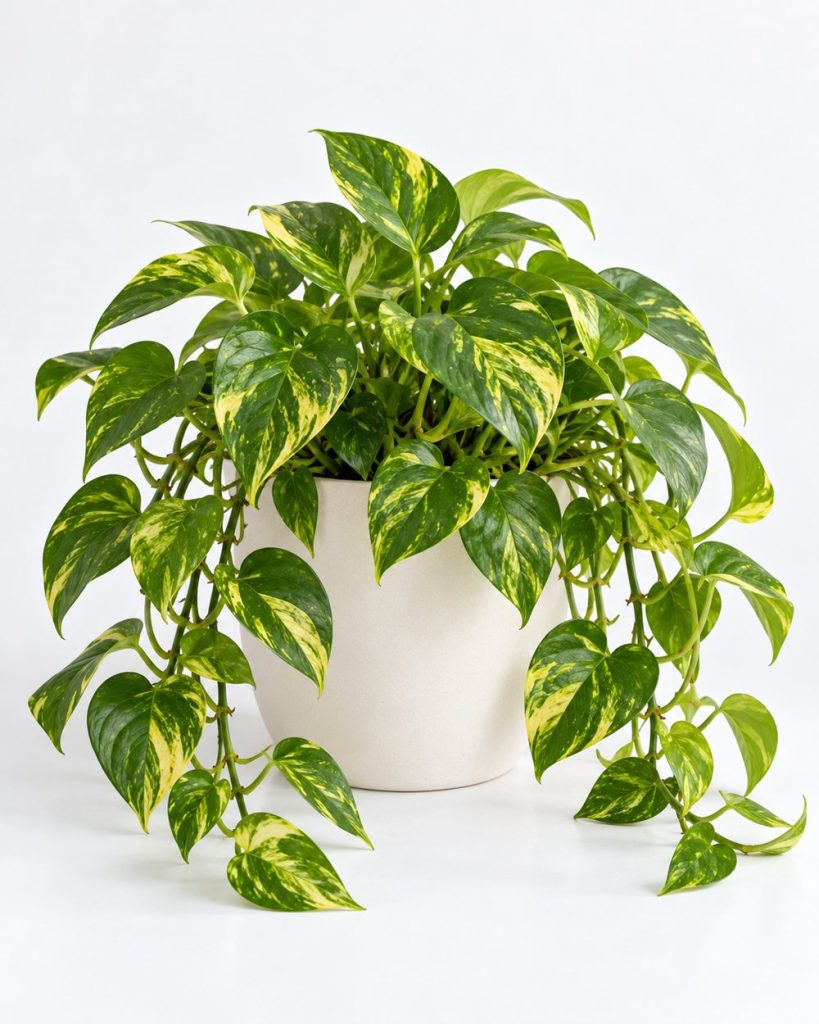
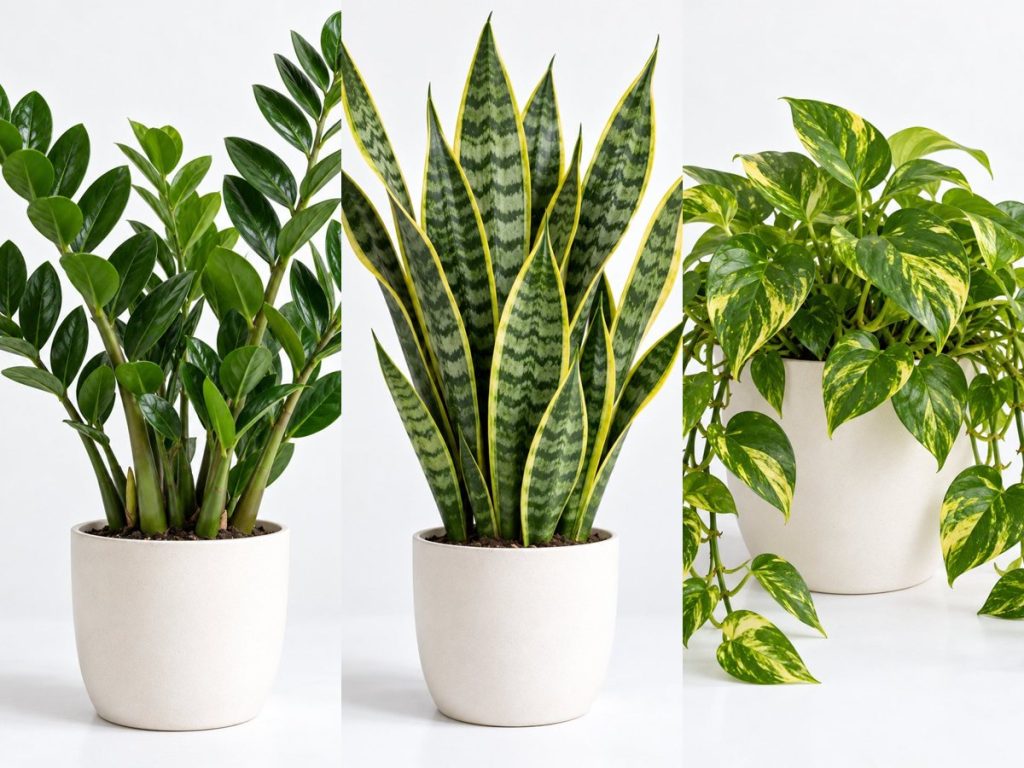
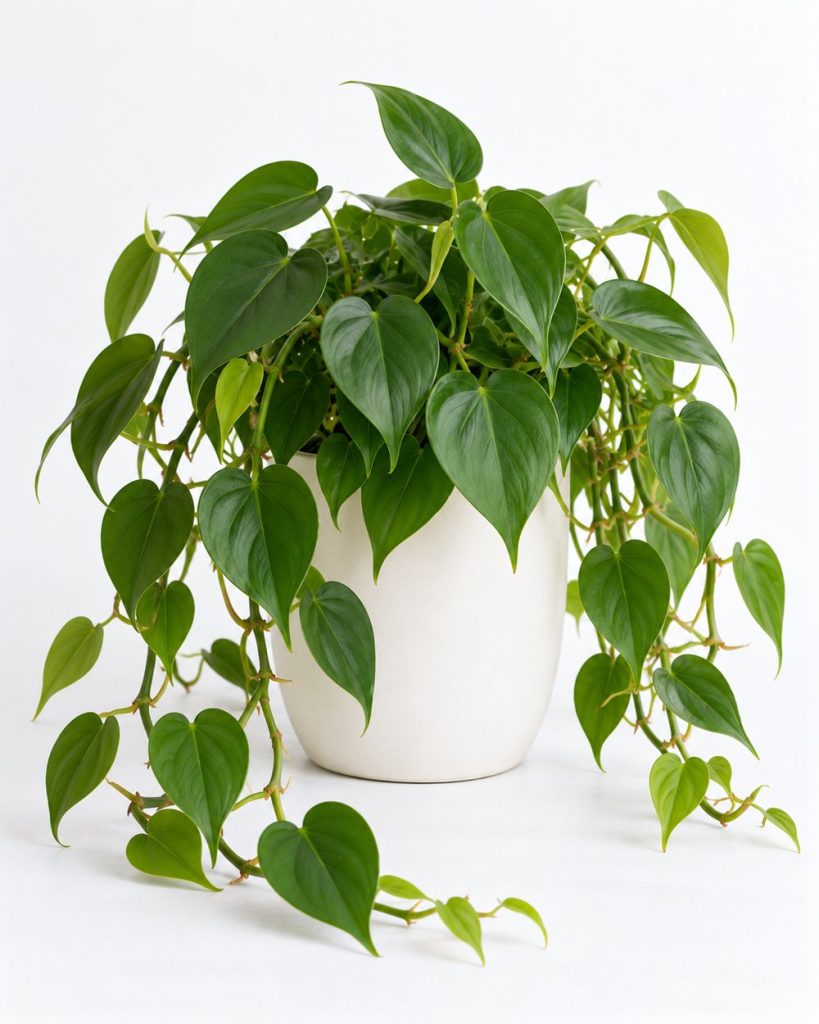
People mix this one up with pothos all the time, and fair enough. Both grow long vines of heart-shaped leaves. Look closer and the philodendron leaves are thinner, softer, and come to a longer point at the tip. New leaves often unfurl with a bronze or pink tint before turning green. The stems are thin and bend easily, so it drapes from a shelf in a soft, even curtain.
This is one of the best plants for a dim room. It keeps growing under office lights or near a north window, where many plants just stop. It also tells you when it is thirsty. The leaves go a bit limp, then perk up within a day of watering. That makes it a good first plant for someone still learning how often to water. If you like a quick win, a cutting in a glass of water roots in a couple of weeks.
The main catch is pets. It is toxic to cats and dogs, and the vines hang right at chewing height. Hang it high or skip it in a pet home. In low light the vines also get long and stringy, with small leaves far apart. A trim every few months keeps it full, and the cuttings can go back into the same pot. It drops some lower leaves with age, too.
Heartleaf Philodendron care
Light
Medium light gives the fullest growth, such as near an east window or a few feet back from a bright one. It also grows in low light and under office lights, just more slowly and with smaller leaves. Direct sun yellows and burns the thin leaves, so keep it in shade.
Watering
Water when the top inch or two of soil is dry. In most homes that is every 1-2 weeks. A slight droop is a fine reminder. Water deeply and empty the saucer. Many yellow leaves at once usually mean the soil stayed wet too long.
Soil and pot
Use a regular indoor potting mix with a little perlite or bark for air. Any pot with a drainage hole works. Hanging baskets dry out faster than pots on a shelf, so check those more often in warm months. Skip cactus mix, which dries out too fast for this vine.
Humidity and temperature
Normal room humidity is fine, and it does not need misting. Very dry air can brown the leaf edges. Keep it away from heat vents and cold windows in winter. Extra humidity helps leaves grow a little larger but is not required.
Feeding
Heartleaf philodendron tells you when it is hungry: new leaves come in small and pale, and the vine creeps along even in decent light. A balanced liquid food once a month in the growing season fixes that. In a dim room, every second month is plenty. Overfeeding shows up as curled, brown-edged leaves and a white film on the soil. Leave the bottle alone from November to February.
Repotting
Repot every year or two when roots fill the pot or poke out the hole. Move up just one size. It does not mind being a bit crowded. Spring or early summer is the easiest time. A pot that is far too big holds extra wet soil, and that invites root rot.
Propagation
Snip a piece of vine with two or three leaves and at least one node, the small bump where a leaf joins the stem. Root it in water or straight into damp mix. Roots show in about two weeks. Plant several cuttings in one pot for a fuller look.
Common problems
Why are a few leaves on the vine yellowing?
Too much water is the most common cause, mostly when lower leaves yellow first. Let the soil dry more between drinks. One old leaf yellowing now and then is normal.
Why are the vines long with small leaves?
It is reaching for more light. Move it to a brighter spot and trim the stringy vines back.
Why are the leaves curling?
Curling usually means the soil got too dry. Give it a good drink, and it should flatten out within a day or two. If the soil was wet, look at the undersides of the leaves for pests.
Why are there brown spots on the leaves?
Brown patches can come from direct sun, cold drafts, or soggy roots. Check where it sits and how wet the soil stays.
Frequently asked questions
What is the difference between this and pothos?
Philodendron leaves are thinner and softer with a longer tip. Pothos leaves are thicker and a bit waxier. Care is very similar.
Can it climb?
Yes. Give it a small pole or a trellis and pin the vines up. Climbing vines often grow larger leaves. A small moss pole looks neat in a living room corner.
Is it a good office plant?
It is one of the best. It handles ceiling lights and a missed watering well. Trim it every few months so it does not take over the desk.
Not sure this plant fits your home?
Take a plant quizSources: www.aspca.org, plants.ces.ncsu.edu