Lipstick Plant
Aeschynanthus radicans · also called Lipstick vine, Aeschynanthus, Basket vine
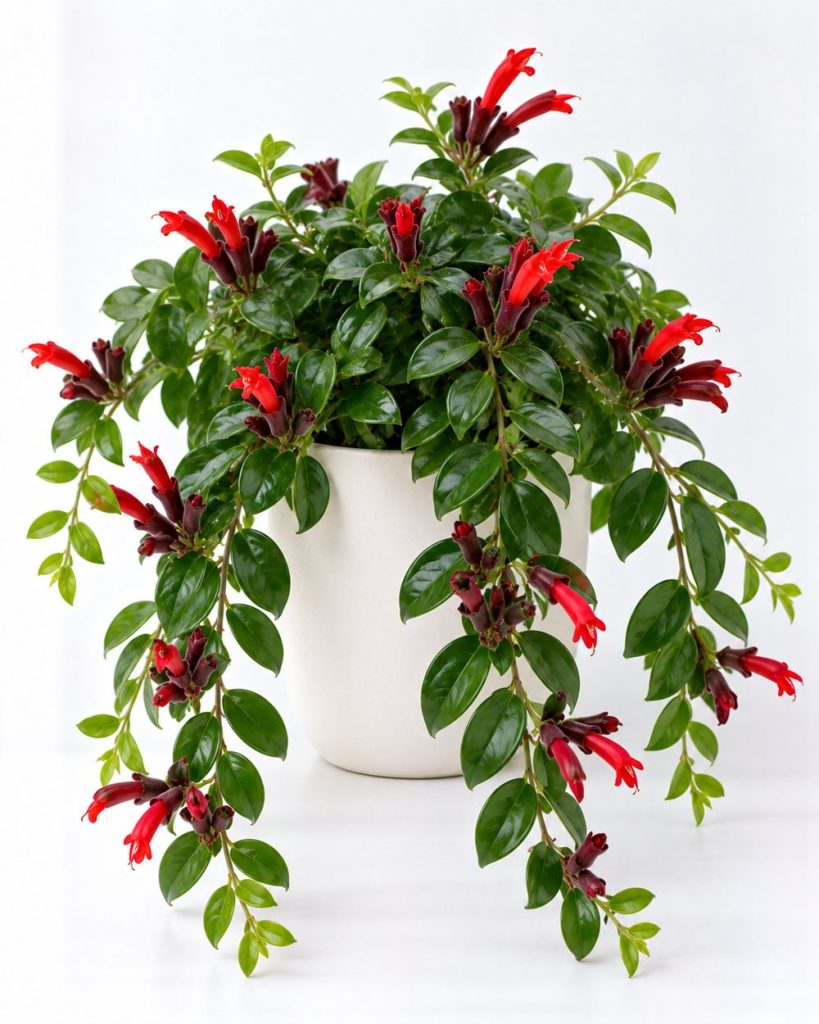
A hanging vine with red flowers poking out of dark tubes
- Light
- Bright indirect: Bright indirect light, no hot afternoon sun
- Water
- Every 1-2 weeks, when the top inch is dry
- Difficulty
- Moderate
- Pet safety
- Non-toxic to cats and dogs
- Size
- Medium
- Height
- Trails 2-3 ft
- Growth
- Moderate
- Humidity
- Likes 50-60%, with some airflow
- Temperature
- 65-80°F, not below 50°F
- Good rooms
- Bathroom, Kitchen, Living room
The name makes sense the first time you see a bud. A dark maroon tube holds a red flower that slowly pushes out of the top, just like a lipstick twisting up. The flowers open scarlet with a yellow throat and come in clusters at the ends of the stems.
It is a trailing vine with waxy, dark green leaves, and the stems spill two or three feet over the edge of a pot. A hanging basket by a bright window shows it off best. Some kinds have curly leaves, like 'Rasta', or orange flowers, like 'Tangerine'. The ASPCA lists lipstick plant as non-toxic to cats and dogs. That is handy, because the dangling stems are just the right height for a curious cat. Even out of bloom, the glossy leaves on long, arching stems make a nice green curtain.
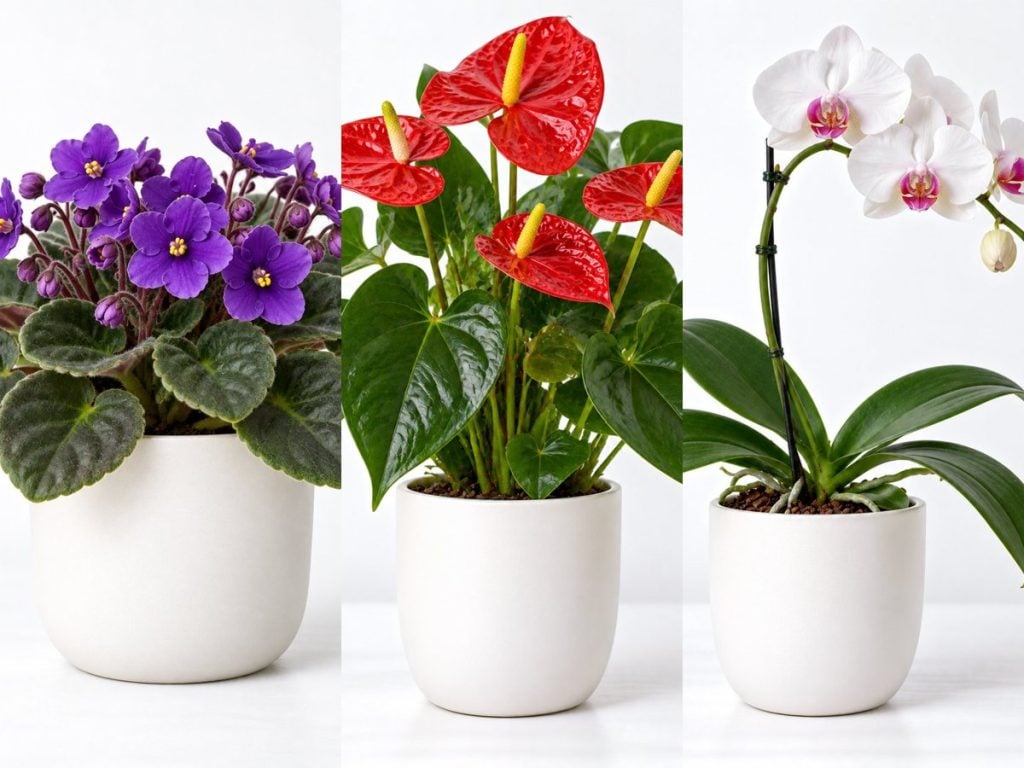
Blooms are the tricky part. A plant can look perfectly healthy and still refuse to flower for a year. It needs bright, indirect light, steady warmth and a cooler, drier rest in winter to bloom well. Leaves drop if the room falls below about 50°F, so a drafty window in January is a risk. One more small thing: the flowers have a faint, odd smell that a few people notice up close. If you want reliable color with less effort, an anthurium is easier to get blooming.
Lipstick Plant care
Light
Hang it near an east or west window where it gets bright light most of the day. A little morning sun is welcome. Strong afternoon sun yellows and scorches the leaves. In a dim room the stems grow long and bare between leaves and it rarely flowers.
Watering
Let the top inch of soil dry, then water well. That is often every one to two weeks. In winter, let it dry a little more between drinks. Its roots are fine and rot easily, so a basket should never feel heavy and wet for days.
Soil and pot
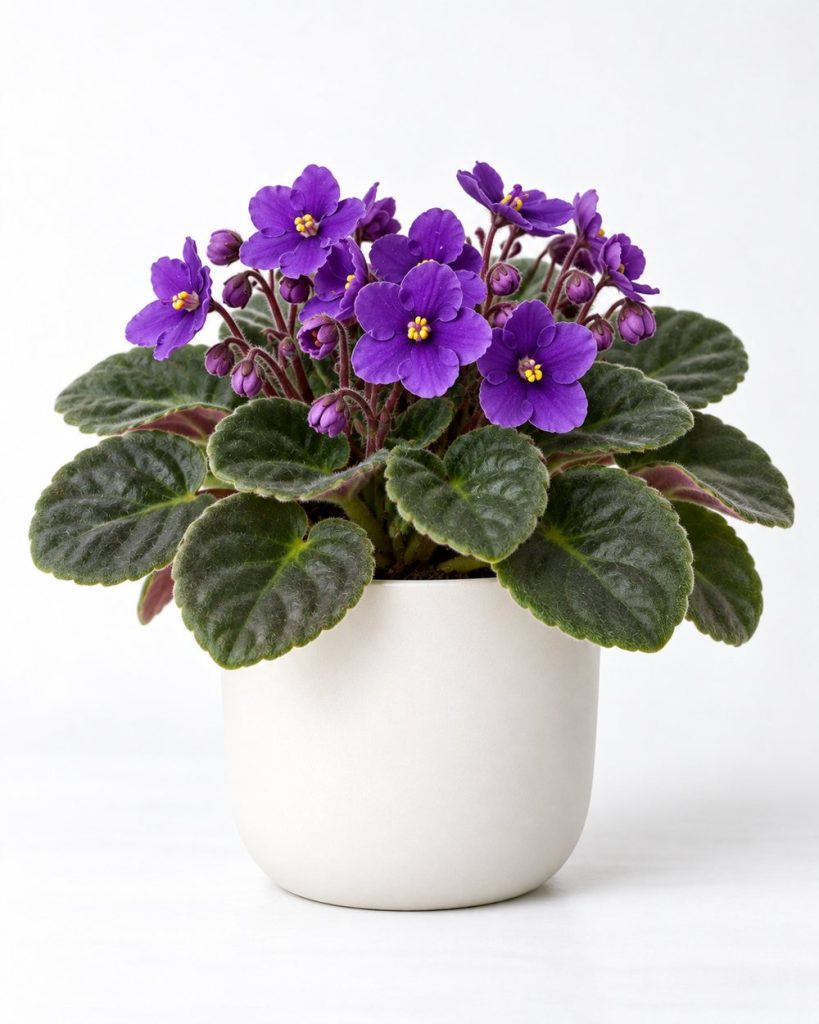
Use a light, airy mix. African violet mix with extra perlite, or potting soil mixed with orchid bark, both work. In nature it often grows on trees, so the roots want air. A basket with good drainage is better than a deep pot.
Humidity and temperature
It likes humid air, around 50 to 60 percent, so a bright bathroom suits it. Airflow matters too. Damp, still air can cause leaf spots and gray mold. Water the soil, not the leaves, and keep the leaves from resting on wet soil.
Feeding
Feed every two to four weeks from spring through summer with a diluted liquid food for flowering plants or orchids. Stop in late fall. A short winter rest, a bit cooler and drier, helps set flower buds for spring. Too much nitrogen gives you a leafy vine with very few buds.
Repotting
It likes being a little root bound and often blooms better that way. Repot every two or three years in spring, going up just one size. Prune long, bare stems after flowering to keep the plant full. Hang the basket where you can reach it, since you will check the soil often.
Propagation
Stem cuttings root easily. Cut a soft tip about four to six inches long with a few leaf joints, and remove the lower leaves. Root it in water or in a mix of perlite and vermiculite. Roots form in about two weeks. Plant several cuttings in one basket for a fuller look.
Common problems
Why won't it bloom?
Not enough light is the usual cause. Move it closer to a bright window and give it a cooler, drier winter rest. Pruning right after it flowers also helps.
Why are the leaves dropping all at once?
Cold is the most likely reason, especially below 50°F or near a drafty window. Sudden changes and very wet soil can also cause leaf drop.
What is the cottony stuff in the leaf joints?
Mealybugs. Dab them off with a cotton swab dipped in rubbing alcohol and check again every few days.
Why are the stems long with few leaves?
The vine is reaching for light. Trim it back by a third and move it somewhere brighter.
Frequently asked questions
Is lipstick plant toxic to cats?
No. The ASPCA lists it as non-toxic to cats and dogs.
When does it flower?
Mostly from spring to fall, sometimes in waves of a few weeks each. Young plants may need a year or two in a bright spot before the first buds show up.
Can I grow it in a pot instead of a basket?
Yes. Set the pot on a high shelf or plant stand so the stems can hang down. Kept short with pruning, it also makes a bushy tabletop plant.
Not sure this plant fits your home?
Take a plant quizSources: www.aspca.org, plants.ces.ncsu.edu