Christmas Cactus
Schlumbergera × buckleyi · also called Holiday cactus, Thanksgiving cactus, Schlumbergera
A long-lived cactus that blooms in winter if its nights are dark
- Light
- Bright indirect, Medium light: Bright indirect for blooms, fine in medium light
- Water
- Every 1-2 weeks, when the top inch of soil is dry
- Difficulty
- Easy
- Pet safety
- Non-toxic to cats and dogs
- Size
- Small
- Height
- 6-12 in tall, arching 1-2 ft wide
- Growth
- Moderate
- Humidity
- Average home humidity is fine
- Temperature
- 60-75°F
- Good rooms
- Bedroom, Kitchen, Living room, Office
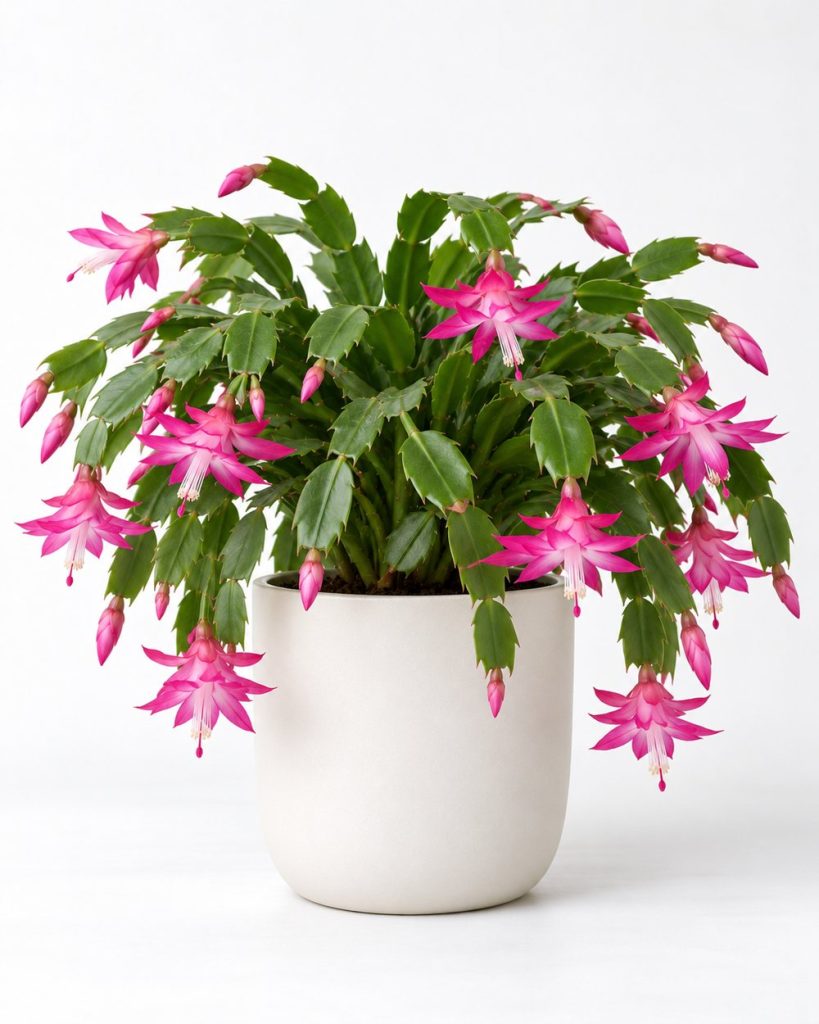
Odds are your Christmas cactus is a Thanksgiving cactus. Stores sell both under the same name. Look at the flat stem pieces. If the edges have pointed teeth, it is the Thanksgiving type, Schlumbergera truncata, which tends to bloom in November. If the edges are smooth and rounded, it is the true Christmas type, which blooms closer to late December. Care is the same for both, and so is the main trick to getting flowers.
This is not a desert cactus. In the wild it grows on tree branches and mossy rocks in Brazilian mountain forests, so it likes softer light and more water than the spiky kinds. It suits people who enjoy a yearly payoff. Plants live for decades and often get passed down in families. The ASPCA lists it as non-toxic to cats, dogs, and horses, which helps if you want a holiday plant that is safe around pets.
The catch is that blooms need dark nights. From early fall it wants about 12 to 14 hours of real darkness each night, or nights around 50 to 55°F. A lamp switched on every evening in the same room can be enough to stop flowers. Once buds form, it also hates change. Move it, let it dry out hard, or set it by a heater, and the buds can drop before they open. Pick its winter spot in October and leave it there.
Christmas Cactus care
Light
Bright indirect light keeps it full and helps flowers form. An east window is ideal. A north window works but may give fewer blooms. Strong summer sun through a south or west window can turn the stems red or yellow, so set it back a few feet or use a sheer curtain.
Watering
Water when the top inch of soil is dry, often every 1-2 weeks. It needs a bit more while it is in bud and flower. After blooming, let it rest and water a little less for a month or two. Never leave it in a wet saucer, since the roots rot easily.
Soil and pot
Use a light, fast-draining mix. Regular potting mix blended with perlite or orchid bark works well, and so does cactus mix with some added potting soil. A pot with a drainage hole is a must. Plastic or clay both work.
Humidity and temperature
Average home humidity is fine. It enjoys a little more, which is why a bright kitchen can suit it. Keep it away from heat vents and fireplaces, most of all when it has buds, since warm, dry air speeds up bud drop.
Feeding
Despite the name, this is a forest cactus, and it eats more than a desert one. Feed every two to four weeks from spring through late summer with a balanced houseplant fertilizer at half strength. Some growers add a teaspoon of Epsom salt per gallon of water once a month. Stop all feeding by September so the plant can set buds, and do not feed while it blooms.
Repotting
It flowers best when slightly root bound, so repot only every three years or so. Do it in spring, after flowering ends. Move up just one size and use fresh, light mix. A clay pot dries a little faster, which helps if you tend to water often. Wait about a week before you water heavily.
Propagation
Twist off a piece with two or three stem segments in late spring. Let it dry for a day, then push the bottom segment into damp mix about a quarter of its length. Roots form in two to three weeks. Plant a few pieces together for a fuller pot.
Common problems
Why did all the buds drop?
Bud drop usually follows a move, a draft, a warm room, or a dry spell. Keep it in one spot, out of drafts, with evenly damp soil.
Why won't my holiday cactus bloom?
It is likely getting light at night or staying too warm. Give it long dark nights and cooler temperatures for about six weeks from early fall.
Why are the stems limp and wrinkled?
That can mean it is too dry, but it also happens when roots rot in wet soil. Check the soil first, before you water.
Why are the stems turning red?
Too much sun, cold, or dry soil can cause a red tint. Move it to softer light and keep watering steady.
Frequently asked questions
Is Christmas cactus safe for pets?
The ASPCA lists it as non-toxic to cats, dogs, and horses. A pet that eats a lot may still get an upset stomach.
Should it spend the summer outdoors?
Yes, in a shady spot once nights stay above 50°F. Bring it in before frost. The cool fall nights outside can help it set buds.
How long does it live?
With basic care, many plants live for decades. Some grow huge and get handed down from parent to child.
Not sure this plant fits your home?
Take a plant quizSources: www.aspca.org, gardeningsolutions.ifas.ufl.edu, extension.wsu.edu