Rubber Plant
Ficus elastica · also called Rubber tree, Rubber fig
Thick shiny leaves on a tree you can keep at any height
- Light
- Bright indirect, Medium light: Needs medium to bright light, dark types handle less
- Water
- Every 1-2 weeks, when the top 1-2 inches of soil are dry
- Difficulty
- Moderate
- Pet safety
- Toxic to cats and dogs
- Size
- Large
- Height
- 3-10 ft indoors, easy to keep shorter
- Growth
- Moderate
- Humidity
- Average home humidity is fine
- Temperature
- 60-80°F
- Good rooms
- Bedroom, Living room, Office
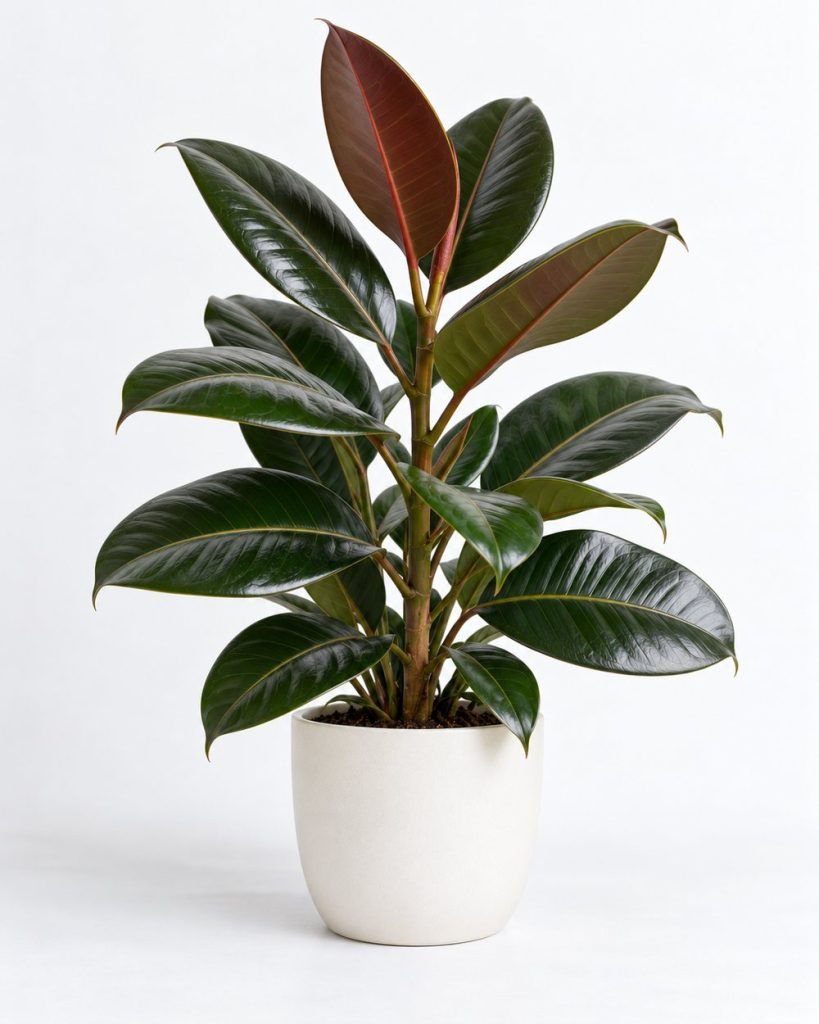
Wipe one leaf of a rubber plant with a damp cloth and you will see why people buy it. The leaves are thick and smooth, with a shine like polished leather. Dark burgundy types look almost black in the evening. Pink and cream types have soft patches of color. New leaves arrive wrapped in a red or pink sheath that falls off once the leaf opens, which is fun to watch.
It makes sense for anyone who wants a tree in the corner but has heard scary things about the fiddle-leaf fig. The rubber plant is a close cousin and much less fussy. It copes with normal home air and with a missed watering. In bright light it can grow a few feet a year. You can also keep it short. Cut the top off and it branches into a fuller shape.
Its downsides are real, though. It dislikes being moved, so a change of room can make it drop a few lower leaves while it adjusts. In a dim spot it grows tall and thin with big gaps between leaves. The milky sap that leaks from cuts can irritate skin, so wear gloves when you prune and keep a towel handy. The sap and leaves are also toxic to cats and dogs, so a pet that chews plants is a poor match.
Rubber Plant care
Light
Give it bright indirect light, such as a spot near an east window or a few feet back from a south or west one. A little gentle morning sun is fine. Dark leaf types cope with medium light better than pink or cream ones, which fade in dim rooms.
Watering
Water well when the top inch or two of soil feels dry, then let it drain. In most homes that comes to every 1-2 weeks in summer and less in winter. Both soggy soil and long dry spells lead to dropped leaves, so aim for steady habits.
Soil and pot
A regular indoor potting mix with some perlite or bark mixed in drains well enough. Pick a heavy pot with a drainage hole, since a tall plant tips easily. Plastic pots are lighter but hold water longer, so check them before you water.
Humidity and temperature
It is not fussy about humidity and handles the dry air in most homes. Keep it away from heat vents and cold doors, since sudden drafts can make leaves drop. Dust the big leaves every few weeks so they keep their shine.
Feeding
Rubber plants want steady but modest food. Try a balanced liquid fertilizer, the kind with three equal numbers on the label, once a month from spring into early fall. Pale, small new leaves in a bright spot can mean it needs feeding. Brown leaf tips after a dose mean it got too much. Stop when growth stalls in late fall, and do not feed a plant that is busy dropping leaves after a move.
Repotting
Repot every two or three years in spring, going up only one pot size. A rubber plant that is a bit snug stays more compact. For very large plants, scrape off the top inch of old soil and add fresh mix instead of repotting.
Propagation
Take a tip cutting about 6 inches long with a few leaves. Let the sap stop dripping, then root it in water or damp mix in a warm, bright spot. Roots take three to six weeks. Air layering works too, but it takes more steps.
Common problems
Why is my rubber plant dropping leaves?
Moving it, a cold draft, or a big change in watering are the usual causes. Pick a spot and leave it there. Check the soil before you water instead of following a fixed schedule.
Why is it tall and bare at the bottom?
Low light makes it stretch, and old lower leaves drop with age. Move it brighter and cut the top to make it branch lower down.
Why is the new leaf sheath red?
That is normal. The colored sheath protects each new leaf and falls away once the leaf unrolls.
Why did the colors on my variegated plant fade?
Pink and cream types need more light to keep their color. Move them closer to a window without hot direct sun.
Frequently asked questions
How do I make a rubber plant bushier?
Cut off the top few inches of the main stem in spring. Side shoots usually grow from just below the cut within a few weeks.
Is a rubber plant easier than a fiddle-leaf fig?
In most homes, yes. It handles dry air and small mistakes better, though it still wants good light.
Can my rubber plant spend the summer on a balcony?
Yes, in bright shade once nights stay above 55°F. Bring it in early, and expect a few leaves to drop after the move.
Not sure this plant fits your home?
Take a plant quizSources: plants.ces.ncsu.edu, hgic.clemson.edu, www.ag.ndsu.edu