Monstera
Monstera deliciosa · also called Swiss cheese plant, Split-leaf philodendron
Big split leaves for a bright room with space to spare
- Light
- Bright indirect, Medium light: Lives in medium light, splits best in bright indirect
- Water
- Every 1-2 weeks, when the top 2-3 inches of soil are dry
- Difficulty
- Easy
- Pet safety
- Toxic to cats and dogs
- Size
- Large
- Height
- 6-8 ft indoors with support
- Growth
- Moderate
- Humidity
- Average humidity is fine, more is welcome
- Temperature
- 60-85°F
- Good rooms
- Bedroom, Living room, Office
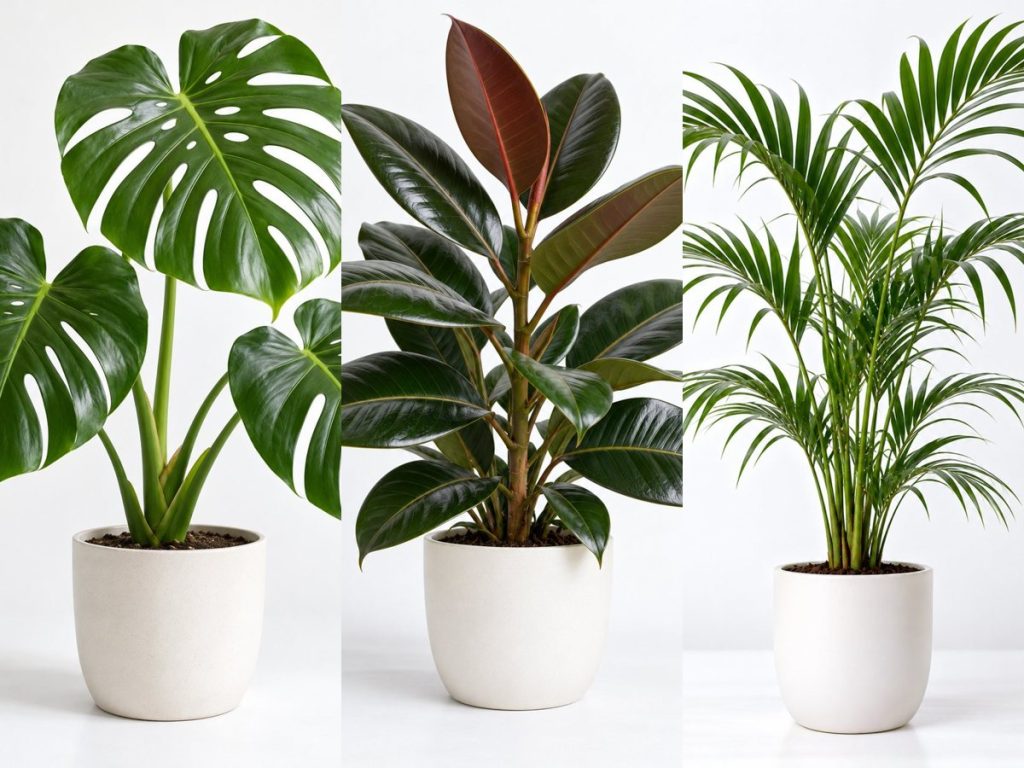
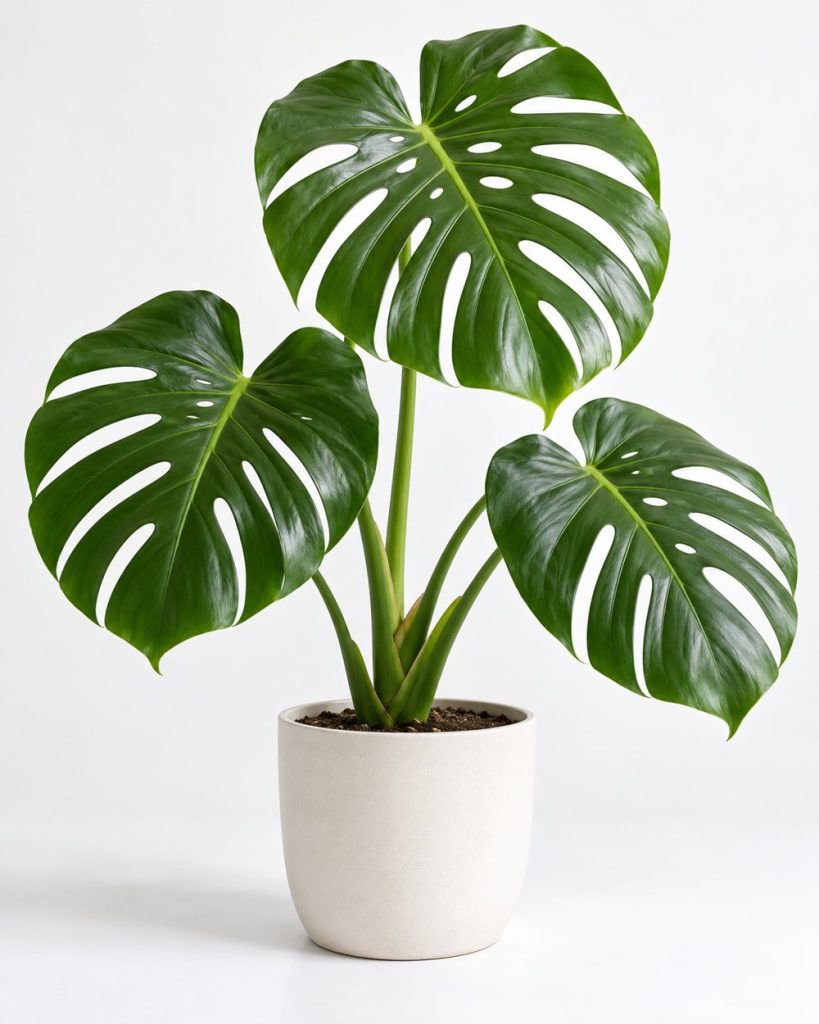
Those famous holes do not show up right away. A young monstera grows plain, heart-shaped leaves, and the splits and holes start once the plant is older and gets enough light. Each new leaf opens bigger than the one before, until a single leaf can be wider than a dinner plate. Wild plants climb trees in Central America. In a living room the plant still wants to climb, so it leans and sprawls unless you give it a pole.
This is a good pick if you have a bright room and want one plant that fills a corner on its own. It is forgiving about water and grows at a steady pace you can watch through spring and summer. Most people do well with a drink every week or two, once the top few inches of soil are dry. It also handles normal room air better than its jungle look suggests.
The problem is size. A monstera does not stay the cute plant you carried home. Over a few years it can reach 6 to 8 feet and spread just as wide, with long aerial roots poking out in every direction. Picture it eating half your sofa. You will need a stake, a big pot, and the space to step around it. It is also toxic to cats and dogs, so a pet that chews leaves is a poor match.
Monstera care
Light
Bright indirect light is what makes the big split leaves. Set it a few feet from an east, west, or south window, out of the hottest midday rays. It will live in medium light, but new leaves come in smaller with fewer holes. If the stems stretch long and lean hard, it wants a brighter spot.
Watering
Let the top 2 or 3 inches dry, then water until it drains out the bottom. In summer and good light that may be weekly. In winter or a dimmer room, every two weeks or more. Yellow lower leaves and wet soil mean you should back off for a while.
Soil and pot
Use a chunky mix that lets air reach the roots. Regular potting mix with orchid bark and perlite works well, about two parts mix to one part each of the others. A heavy pot with a drainage hole keeps a tall plant from tipping.
Humidity and temperature
Normal room humidity is fine for most homes. Very dry winter air can brown the leaf edges, so keep it away from heat vents. Wipe the big leaves with a damp cloth now and then. Dust dulls them and blocks light.
Feeding
A monstera putting out a new leaf every few weeks is a hungry plant. During the warm months, give it a balanced fertilizer every second or third week, mixed at half the package rate. A formula a little higher in nitrogen supports all that leaf growth. Ease off in October and stop by winter. If you see a crust on the soil or burnt leaf edges, flush the pot in the shower.
Repotting
Young plants may need a bigger pot every year. Once it is large, every two years is enough, and you can just add fresh soil on top in between. Go up a couple of inches in width. Add a moss pole or stake at the same time, so you do not tear roots later.
Propagation
Cut a piece of stem with at least one node, the bump where a leaf and an aerial root grow from. A leaf alone will not grow a new plant. Root it in water or damp mix in a warm spot. New roots show in a few weeks, and a new leaf follows later.
Common problems
Why do my new leaves have no holes?
Young plants and plants in low light make solid leaves. Give it more light and some time. Support on a pole also helps older plants make bigger, split leaves.
What are the long brown roots growing out of the stem?
Those are aerial roots. In the wild they grab onto trees. Tuck them into the pot, guide them onto a pole, or trim a few if they bother you.
Why are the bottom leaves of my monstera yellow?
Yellow lower leaves usually mean the soil stays wet too long. Let it dry more between waterings and make sure the pot drains well.
Why are there brown, crispy patches?
This can be sunburn from hot direct sun through glass, or very dry soil. Move it back from the window and water a bit sooner.
Frequently asked questions
How big does a monstera get indoors?
Most reach 6 to 8 feet with support, and they spread wide too. You can prune long stems to keep it smaller.
Does it need a moss pole?
It does not need one to live. A pole keeps it upright and tidy, and climbing plants tend to grow bigger leaves.
Can I trim a monstera?
Yes. Cut just above a node with clean shears. The plant often branches there, and you can root the piece you cut.
Not sure this plant fits your home?
Take a plant quizSources: www.aspca.org, plants.ces.ncsu.edu