Fiddle-Leaf Fig
Ficus lyrata · also called Fiddle fig, Banjo fig
The famous tree that wants bright light and a steady routine
- Light
- Bright indirect: Needs lots of bright light, some morning sun is fine
- Water
- Every 1-2 weeks, when the top 2 inches of soil are dry
- Difficulty
- Hard
- Pet safety
- Toxic to cats and dogs
- Size
- Large
- Height
- 4-10 ft indoors
- Growth
- Moderate
- Humidity
- Average humidity, away from drafts
- Temperature
- 60-80°F
- Good rooms
- Living room, Office
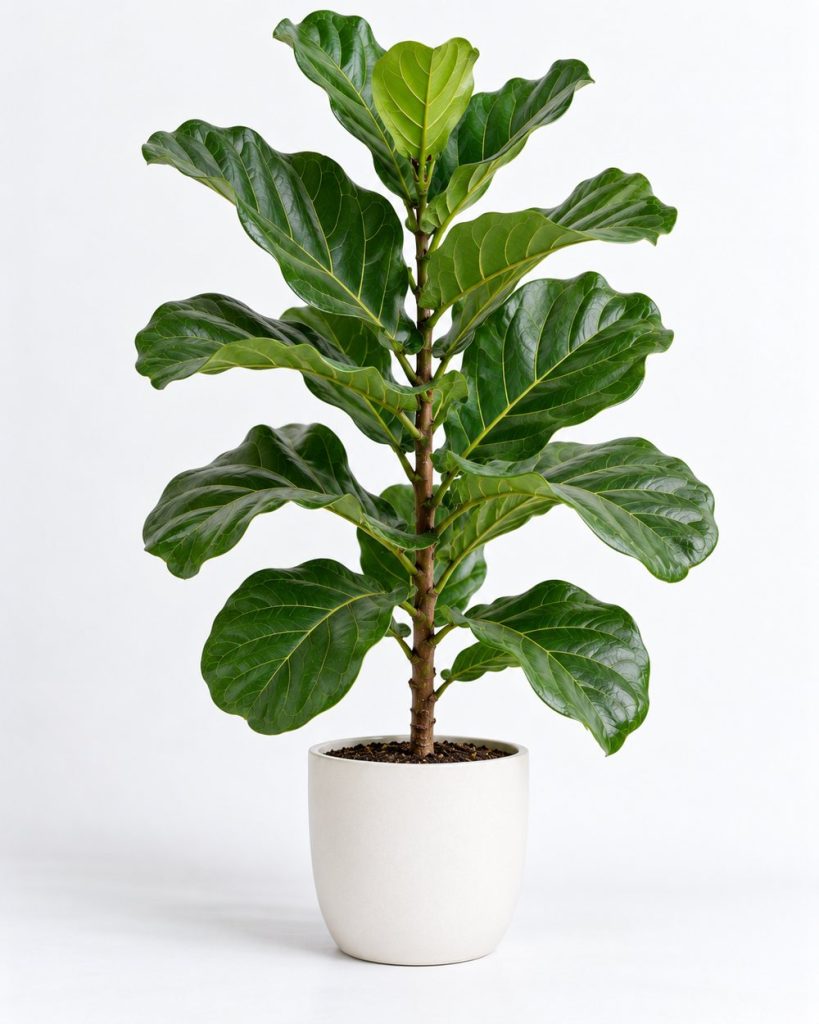
Be honest with yourself before you buy this one. The fiddle-leaf fig is the tree from every design magazine, with huge, wavy leaves shaped a bit like a violin. It can grow 6 feet or taller indoors. When it is happy, a single plant fills a room. When it is not, it lets you know by dropping leaves onto the floor, often the big ones you liked most.
It suits a person with one very bright spot and the patience to leave the plant alone in it. Think a few feet from a large east or south window, with no heater blowing on it. It likes the same water routine every time and a room that stays about the same temperature all year. Most people who succeed with it found one good spot and stopped moving it around.
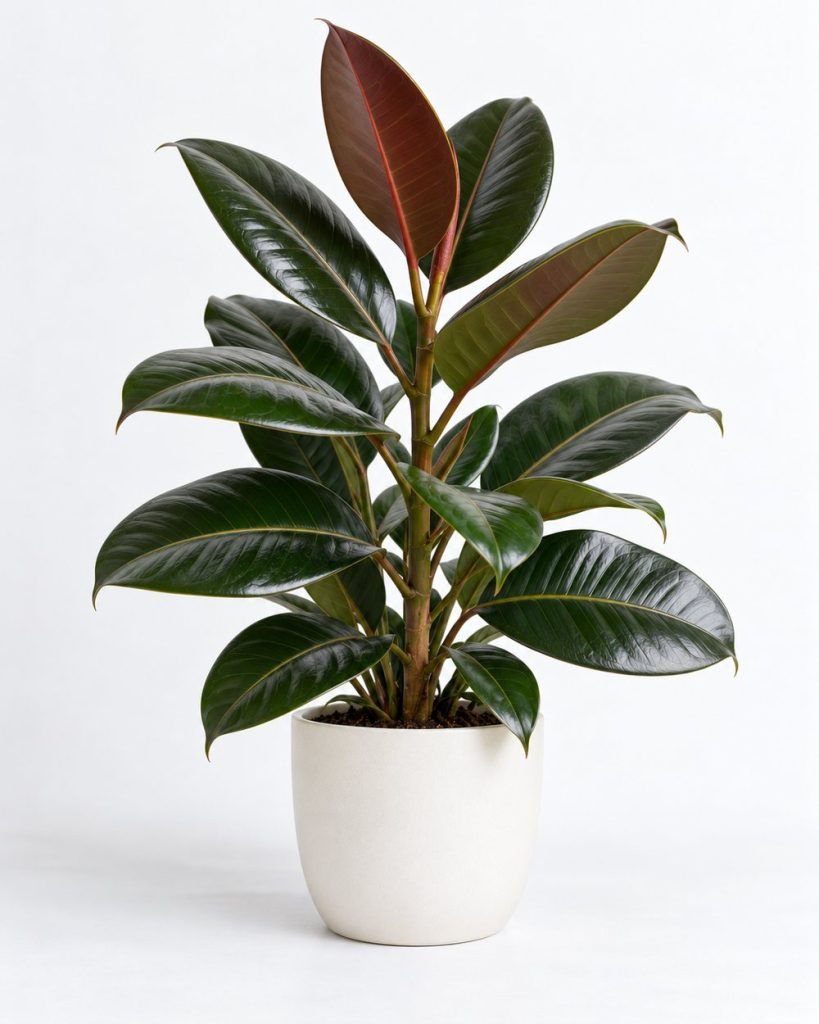
The weak spots are many, which is why it is rated Hard here. It sulks after a move, even from the store to your home, and can shed leaves for weeks. Brown patches show up from too much water, too little water, or cold glass. Low light makes it weak and leggy. The sap can irritate skin, and the plant is toxic to cats and dogs if chewed. If you want this look with fewer tantrums, a rubber plant is the calmer cousin.
Fiddle-Leaf Fig care
Light
This tree needs more light than most homes give it. Place it within a few feet of a big east or south window. A few hours of gentle morning sun helps. Harsh afternoon sun through glass can burn leaves, so a sheer curtain helps on a west window. Turn it a little every few weeks so it grows straight.
Watering
Water deeply when the top 2 inches of soil are dry, then let all the extra drain out. That is often every 1-2 weeks. Keep the same habit all year and adjust only for winter, when it drinks less. Both soggy roots and bone-dry soil lead to brown spots and dropped leaves.
Soil and pot
Use a well-draining potting mix with some bark and perlite mixed in. The pot must have a drainage hole. Avoid a pot much wider than the root ball, since extra soil stays wet. A pot on a plant stand with wheels makes cleaning easier without a full move.
Humidity and temperature
Average home humidity is fine. Drafts are the bigger issue. Keep it away from heat vents, air conditioners, and doors that open to cold air. Wipe the leaves with a damp cloth every few weeks, since dust on those big leaves blocks light.
Feeding
Fiddle-leaf figs are heavy feeders while they grow. Many owners use a fertilizer made for them, often labeled 3-1-2, mixed weak and given with every watering in spring and summer. A regular balanced food once a month works too. If new leaves come in pale despite good light, it is probably hungry. Hold back for a few weeks after repotting, moving, or a leaf-drop spell, and stop entirely in winter.
Repotting
Repot every two years or so in spring, only one size up. It often drops a leaf or two after repotting, so do not panic. For very tall plants, swap out the top few inches of soil instead. Water well after and keep it in the same spot.
Propagation
Take a tip cutting about a foot long with two or three leaves. Let the sap stop, then root it in water or damp mix in a warm, bright place. Roots take four to eight weeks. Air layering is another option for a tall, bare stem.
Common problems
Why is my fiddle-leaf fig dropping leaves?
The usual causes are a recent move, a cold draft, or uneven watering. Keep it in one bright spot and water only when the top inches are dry. A few lower leaves lost now and then is normal.
What causes brown spots in the middle of leaves?
Dark brown spots that spread from the center often mean soggy roots. Let the soil dry more and check that the pot drains.
Why do the edges of my fig leaves crisp up?
Crispy edges point to dry soil left too long or hot dry air. Water a little sooner and move it away from heaters.
Why is it leaning?
It grows toward the window. Turn the pot a quarter turn every few weeks so all sides get light.
Frequently asked questions
Should I buy a big one or a small one?
A small plant is cheaper and often adjusts better to your home. A big one gives you the look right away but may drop more leaves at first.
How do I make it branch?
Cut off the top few inches of the main stem in spring. New branches often grow from just below the cut.
Can it live in a dim corner?
Not for long. In low light it drops leaves and slowly declines. Pick a different plant for a dark corner.
Not sure this plant fits your home?
Take a plant quizSources: plants.ces.ncsu.edu, extension.illinois.edu, libanswers.nybg.org