Bird of Paradise
Strelitzia nicolai · also called White bird of paradise, Giant bird of paradise, Strelitzia
Huge paddle leaves for a big room with a big, sunny window
- Light
- Bright indirect, Full sun: Needs bright light with some direct sun
- Water
- Every 1-2 weeks, when the top 2-3 inches of soil are dry
- Difficulty
- Moderate
- Pet safety
- Toxic to cats and dogs
- Size
- Large
- Height
- 4-8 ft indoors
- Growth
- Moderate
- Humidity
- Average humidity, more helps the leaves
- Temperature
- 65-85°F
- Good rooms
- Living room, Office
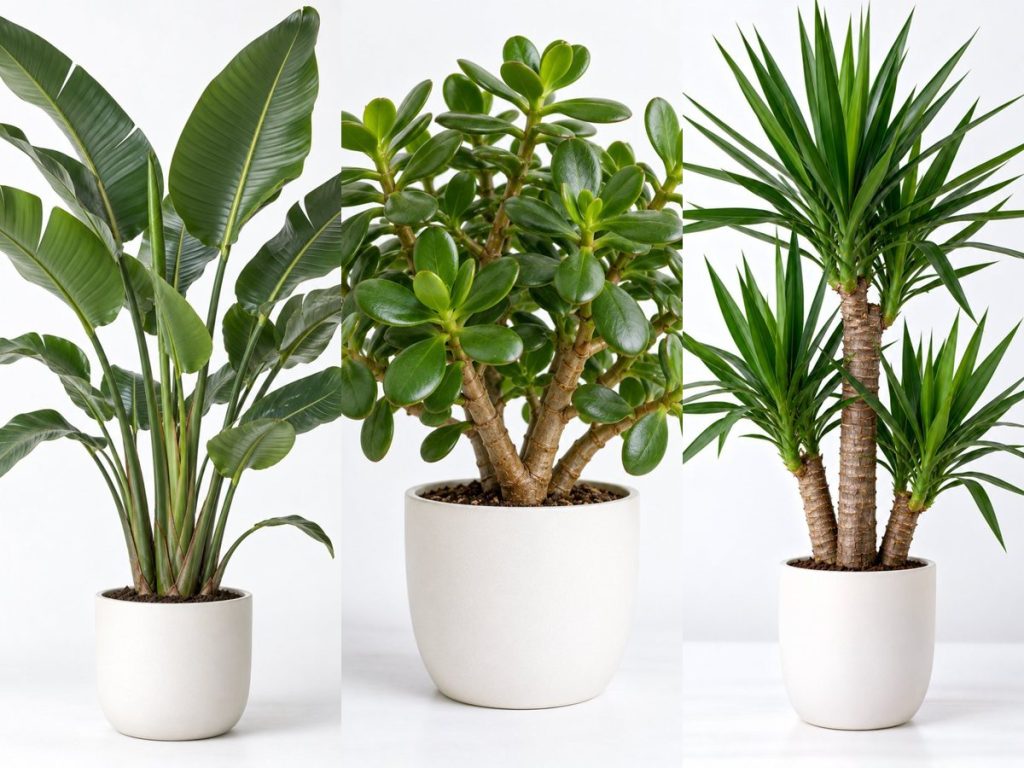
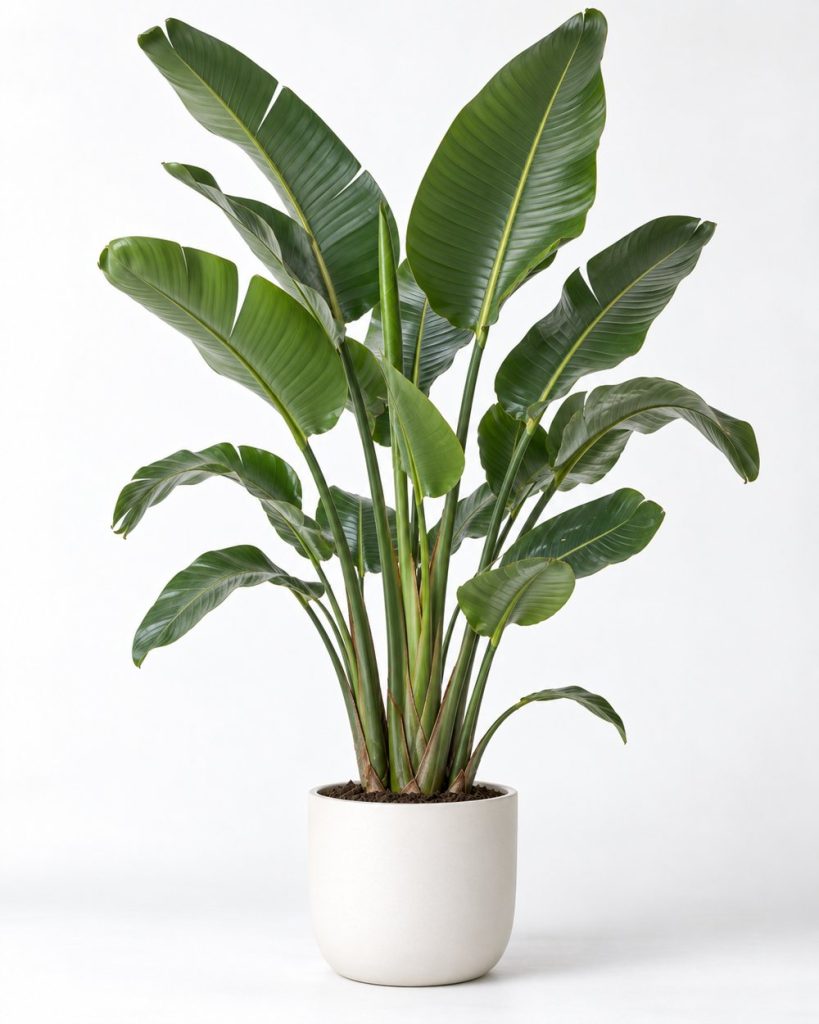
If your living room has a big sunny window and an empty corner, this plant was made for it. The bird of paradise sold as a houseplant is most often Strelitzia nicolai, the giant white kind. It grows large, paddle-shaped leaves on long stalks that fan out from the base. A healthy plant can top 6 feet indoors and makes a room feel like a warm-weather hotel lobby.
Its smaller cousin, Strelitzia reginae, is the one with the famous orange and blue flowers. It stays nearer 3 to 5 feet and needs even more sun to bloom. Indoors, neither one flowers often, so buy either plant for the leaves and count any flowers as a bonus. Both grow at a fair pace in the right light, adding a new leaf every month or so in summer.
There are three real downsides. First, light. This plant wants the brightest spot in your home, with some direct sun, and it stalls in medium light. Second, the leaves split. In the wild, wind tears them, and indoors they still split along the veins from age, bumps, or dry air. That is normal, but it disappoints people who want perfect leaves. Third, the ASPCA lists bird of paradise as toxic to cats and dogs. The effects are usually a mild stomach upset, mostly from the seeds and fruit.
Bird of Paradise care
Light
Give it your brightest window. Several hours of direct sun a day, or very bright light all day, keep it growing. A south or west window is ideal. Move it into strong sun slowly over a week or two, or the leaves can scorch. In lower light it lives but stops putting out new leaves.
Watering
Water when the top 2 to 3 inches of soil are dry. In a sunny summer spot that may be every week. In winter it can stretch to two or three weeks. Water deeply until it drains. The thick roots store water, so it handles a short dry spell better than soggy soil.
Soil and pot
Use a rich potting mix with some bark or perlite for drainage. It is a heavy plant, so choose a sturdy, wide pot with a drainage hole. A weighty clay or ceramic pot helps keep a tall plant from tipping over.
Humidity and temperature
Average home humidity is fine, though more moisture helps keep the leaf edges from browning. Wipe the big leaves with a damp cloth every month or so to clear dust. Keep it out of cold drafts and away from rooms that drop below about 60°F.
Feeding
A big bird of paradise in a sunny window is one of the hungrier houseplants. Feed it every two weeks in spring and summer with a balanced liquid fertilizer, or press slow-release granules into the soil in March. Large leaves need nitrogen, so pale new leaves can mean it is underfed. Salts build up in big pots, so water heavily and let it drain every few months. Rest it in winter.
Repotting
Repot every two years or so in spring, going up an inch or two in pot size. It handles a crowded pot well, and the orange type may flower better when snug. Big plants are heavy and awkward, so get help when you lift one.
Propagation
Division is the home method. When you repot, look for a side shoot with its own roots. Cut it free with a clean, sharp knife and pot it on its own. Seeds also work, but they are slow and take years to make a sizable plant.
Common problems
Why are the leaves splitting?
Splits are natural and help the leaves handle wind. Dry air, bumps, and moving the plant make them more common. Nothing heals them, but new leaves start out whole.
Why are the leaves curling inward?
Curled leaves often mean thirst or very dry air. Check the soil and water deeply if it is dry.
Why are the leaf edges turning brown?
Dry air, sun scorch after a fast move, or salty soil are the usual causes. Flush the soil with plain water and adjust the spot.
Why isn't it growing?
It needs more light. Move it as close to a sunny window as you can, and feed it in spring and summer.
Frequently asked questions
Will my bird of paradise flower indoors?
Sometimes, but rarely. The orange type has the best chance, with lots of sun and a plant that is several years old.
Can I cut off split leaves?
Yes. Cut old or badly torn leaves at the base of the stalk. Leave as many healthy leaves as you can.
Is it safe for pets?
No. The ASPCA lists bird of paradise as toxic to cats and dogs, though the effects are usually mild.
Not sure this plant fits your home?
Take a plant quizSources: www.aspca.org, plants.ces.ncsu.edu