Areca Palm
Dypsis lutescens · also called Butterfly palm, Golden cane palm
A pet-safe palm with feathery fronds for a bright room
- Light
- Bright indirect, Medium light: Bright indirect is best, copes with medium light
- Water
- About every 1-2 weeks, when the top inch of soil is dry
- Difficulty
- Moderate
- Pet safety
- Non-toxic to cats and dogs
- Size
- Large
- Height
- 4-8 ft indoors
- Growth
- Moderate
- Humidity
- Average humidity, more helps the tips
- Temperature
- 65-80°F
- Good rooms
- Bedroom, Living room, Office
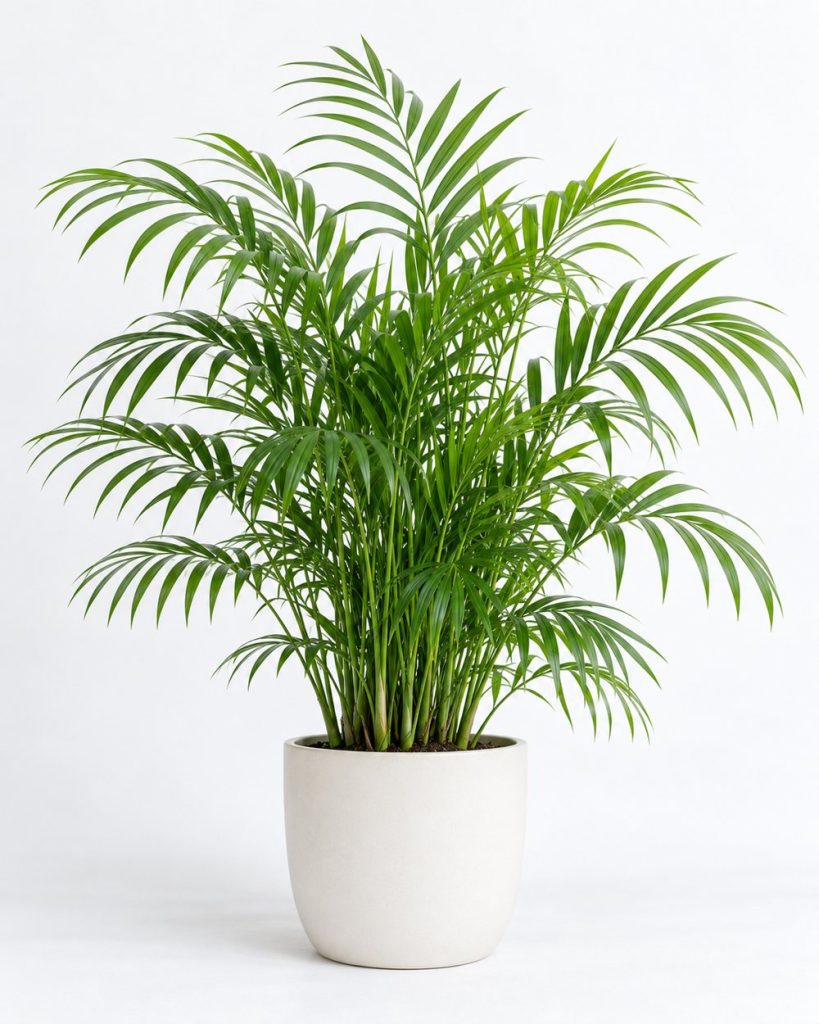
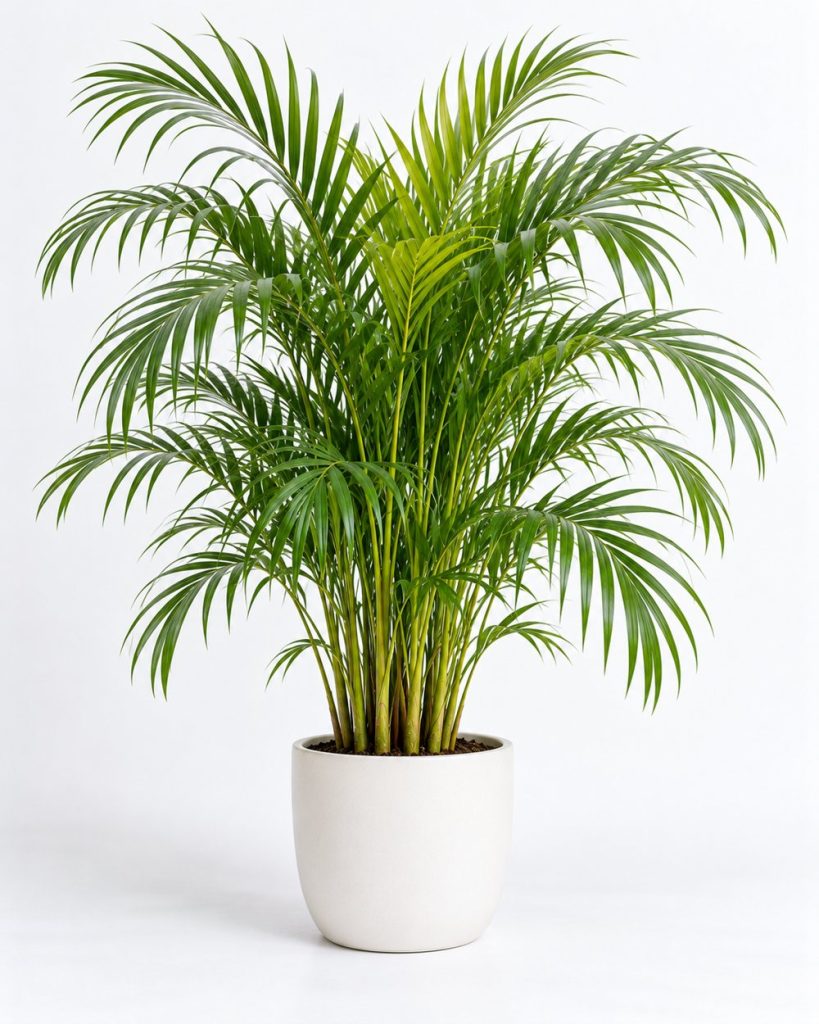
Areca palm gives you the beach-house look without the beach. It grows in a clump of thin, yellow-green canes, each topped with long, arching fronds that move when someone walks past. A full one can stand 6 feet or more indoors and fill a corner with soft, airy green. It looks lighter than a big leafy plant, so it suits a room where you want height without a heavy block of leaves.
If you share your home with cats or dogs, this is one of the better tall plants for you. The ASPCA lists it as non-toxic to cats, dogs, and horses. It also suits people who have a bright spot near a big window but do not want the fuss of a fiddle-leaf fig. Most people water it once a week or so in summer and a little less in winter.
Now the downsides. Areca palms want more light than many shoppers expect, and they slowly fade in a dim corner. The frond tips brown easily from dry air, tap water salts, or uneven watering. Spider mites love them in winter. Big plants also cost a lot, and they are slow to grow into that size again at home. Older canes yellow and die off now and then, so you will be trimming it a few times a year.
Areca Palm care
Light
Put it near a bright window where it gets lots of light but little hot direct sun. An east window is ideal. A sheer curtain softens a south or west one. In medium light it holds on but grows slowly and may lose its lower fronds.
Watering
Water when the top inch of soil is dry, often once a week in summer and every two weeks in winter. Pour slowly until it drains. Do not let the pot sit in a full saucer. If your tap water is hard, rainwater or filtered water helps keep the tips green.
Soil and pot
A regular potting mix with some perlite or bark for drainage works well. Use a pot with a drainage hole. A tall palm in a light pot tips over easily, so a heavier pot or a few stones in the bottom of a cover pot helps.
Humidity and temperature
It enjoys more humidity than most homes have in winter. Brown tips are the first sign the air is too dry. Group it with other plants, run a humidifier, or shower the fronds now and then. Keep it away from heat vents.
Feeding
Arecas do best with a palm fertilizer, which adds magnesium and iron that regular plant food can lack. Feed once in early spring and again in summer with a slow-release type, or monthly with a weak liquid one. Yellowing new fronds in good light often point to a missing nutrient. Do not feed in winter. Palms are sensitive to salt, so flush the soil with plain water a few times a year.
Repotting
It likes a slightly snug pot and only needs repotting every two or three years. Go up one size and keep the canes at the same depth. Palm roots break easily, so ease it out of the pot gently and do not pull the clump apart.
Propagation
Most people do not propagate it at home. You cannot root a cutting from a palm. A large clump can be divided in spring, but the pieces often sulk for months. Buying a new small plant is simpler. Seed is how growers do it, and it takes years to reach a decent size.
Common problems
Why are the frond tips brown?
Dry air, hard tap water, or uneven watering are the usual causes. Trim the brown bits with clean scissors, following the leaf shape, and fix the cause so new fronds stay green.
Why are some canes turning yellow?
Older canes yellow and die off with age, which is normal. If many go yellow at once, check for soggy soil or too much sun.
What are the fine webs and speckles?
That is spider mites, which like dry winter air. Rinse the plant in the shower and repeat every few days. Insecticidal soap helps with bad cases.
Why does my palm look thin?
Low light causes this most often. Move it to a brighter spot and give it a season to fill out. Several thin canes per pot are normal, so look at the fronds, not the stems.
Frequently asked questions
Is areca palm safe for dogs?
The ASPCA lists it as non-toxic to dogs, cats, and horses. Eating lots of any plant can still cause a little vomiting. Hang on to the ASPCA hotline number anyway, just in case.
How tall does it get indoors?
Most reach 4 to 8 feet over several years. Outdoors in warm places it grows much taller.
Can I remove a cane that has gone brown?
Yes. Cut old or dead canes at soil level with clean pruners. Leave healthy canes alone, since each grows from one tip and will not regrow if topped.
Not sure this plant fits your home?
Take a plant quizSources: www.aspca.org, plants.ces.ncsu.edu