Umbrella Plant
Heptapleurum arboricola · also called Schefflera, Dwarf umbrella tree, Schefflera arboricola
Glossy leaf wheels on a sturdy little tree that forgives a lot
- Light
- Bright indirect, Medium light: Medium to bright indirect, a sheer curtain softens hot sun
- Water
- Every 1-2 weeks, when the top 2 inches of soil feel dry
- Difficulty
- Easy
- Pet safety
- Toxic to cats and dogs
- Size
- Large
- Height
- 4-6 ft in a pot, easy to keep shorter
- Growth
- Moderate
- Humidity
- Average home air is fine, more helps
- Temperature
- 60-80°F
- Good rooms
- Bedroom, Living room, Office
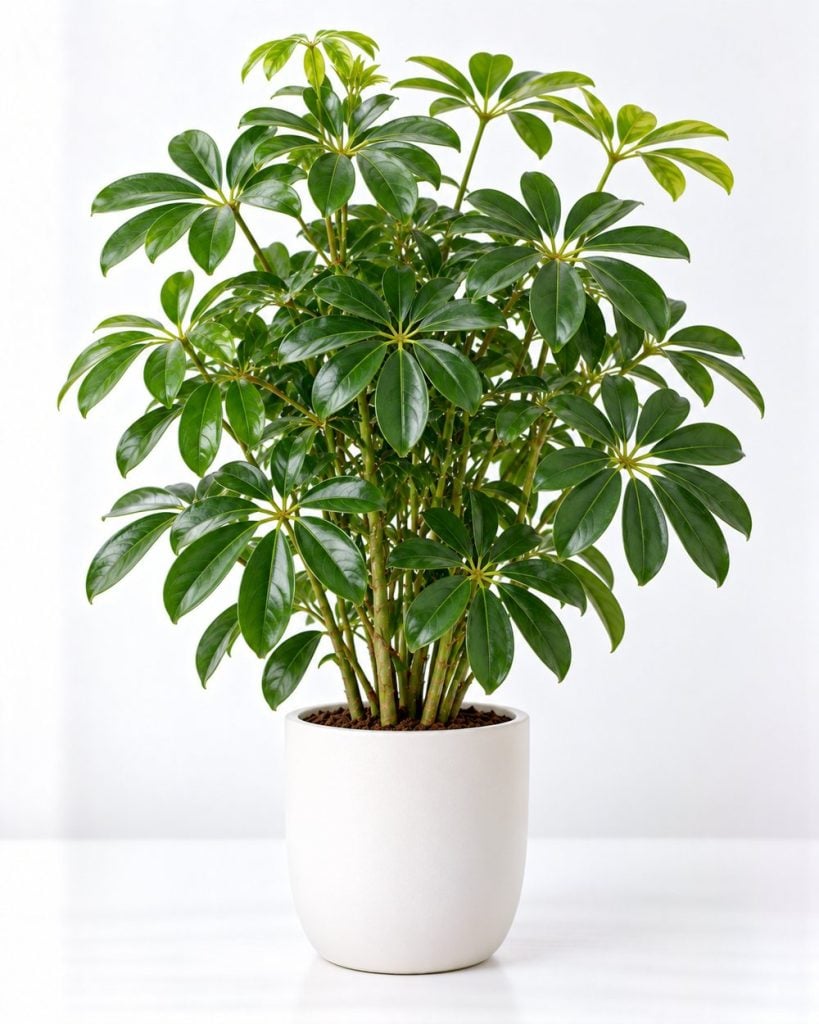
Look down on an umbrella plant from above and each leaf looks like a tiny umbrella, or the spokes of a wheel. Seven to nine glossy leaflets fan out from the tip of one stalk. Stack a few dozen of those on woody stems and you get a bushy small tree that fills a corner without much effort from you. Some kinds are plain dark green. Others are splashed with yellow or cream.
This is a plant for people who want something tree-shaped but feel nervous about figs. It handles medium light, a missed watering, and normal room air better than most indoor trees. In a decent spot it grows steadily and reaches 4 to 6 feet in a pot. If it gets too tall, you cut it back, and it branches out below the cut. That makes it easy to hold at the size you want. Most shops still sell it as Schefflera arboricola. Botanists now place it in a group called Heptapleurum, so you may see both names.
Its weak points are pets and pests. The leaves hold calcium oxalate crystals, tiny needle-like bits that burn the mouth of a cat or dog that bites in. Its tight clusters of leaves also give spider mites and scale a good place to hide, so peek under the leaves when you water. Then there is the shedding. Move it to a new room or let it sit soggy and it may drop a pile of leaflets. Most of the time, it grows them back.
Umbrella Plant care
Light
Medium to bright indirect light keeps it full. An east window is great, or a few feet back from a south or west one. Hot afternoon sun through glass can scorch the leaves, so a sheer curtain helps there. Variegated kinds need the brighter end of the range to keep their yellow.
Watering
Let the top 2 inches of soil dry, then water until it drains from the bottom. That is often every week or two, less in winter. Too much and too little both end the same way, with dropped leaves, so feel the soil before you guess. A pot left sitting in a full saucer causes a lot of trouble.
Soil and pot
Use a regular potting mix with some perlite or bark for drainage. Any pot with a hole works. Plastic stays damp longer than clay, which matters if you tend to overwater. A sturdy, wide pot keeps a tall plant steady.
Humidity and temperature
Normal room humidity suits most homes. It grows a little better with more moisture in the air, and very dry air invites spider mites. A pebble tray or a humidifier in winter is a nice extra, not a must. Rinse the leaves in the shower now and then to clear off dust.
Feeding
Umbrella plants grow in spurts from spring to early fall, and that is when to feed. A balanced liquid fertilizer at half strength every three to four weeks keeps the leaflets glossy. In medium light, stretch that to every six weeks. Leaf drop right after feeding usually means the soil was dry, so always water before you feed.
Repotting
Repot every two years or so in spring, when roots crowd the pot or circle the bottom. Go one size up. If you want to keep it small, trim the outer roots a little and put it back in the same pot with fresh mix.
Propagation
Take a 4 to 6 inch stem tip with a few leaves. Pull off the lowest leaf, then set the cutting in water or damp potting mix. Keep it warm and in bright, indirect light. Roots form in about a month. Spring pruning gives you cuttings and a bushier parent at the same time.
Common problems
It dropped a pile of leaves after I brought it home. Is it dying?
Probably not. A change in light or temperature often makes it shed. Keep the care steady, do not move it again, and new leaves should follow in a few weeks.
What is the fine webbing under the leaves?
Webbing and dull, speckled leaves are signs of spider mites, pests almost too small to see. Rinse the plant well and wipe the leaf undersides. Repeat every few days for two weeks.
How do I fix a tall plant that is bare at the bottom?
Low light makes it stretch, and older lower leaves fall off. Move it brighter and cut the tallest stems back by about a third. It will push out new branches below each cut.
Where are these black spots coming from?
Dark, soft spots often follow soggy soil or a cold draft. Let the soil dry more between drinks and move it away from chilly windows. Pick off the worst leaves.
Frequently asked questions
How do I make it bushier?
Pinch or cut the stem tips in spring. Each cut usually sends out two or more new shoots. Turning the pot every week or so also keeps the growth even.
Is it the same as the big umbrella tree?
Close, but no. The larger umbrella tree is a cousin with much bigger leaves that can reach the ceiling. This one has smaller leaves and stays easier to keep compact.
Can it grow in an office?
Yes, if there is a window nearby or bright overhead light most of the day. It copes well with office air and a missed watering over a long weekend.
Not sure this plant fits your home?
Take a plant quizSources: www.aspca.org, plants.ces.ncsu.edu