Corn Plant
Dracaena fragrans · also called Mass cane, Cornstalk dracaena, Dracaena massangeana
Tall woody canes with striped leaves for an empty corner
- Light
- Bright indirect, Medium light: Medium to bright filtered light, no hot sun
- Water
- Every 1-3 weeks, when the top inch or two is dry
- Difficulty
- Easy
- Pet safety
- Toxic to cats and dogs
- Size
- Large
- Height
- Often 4-6 ft indoors over many years
- Growth
- Slow
- Humidity
- Average home humidity is fine
- Temperature
- 60-80°F
- Good rooms
- Bedroom, Entryway, Living room, Office
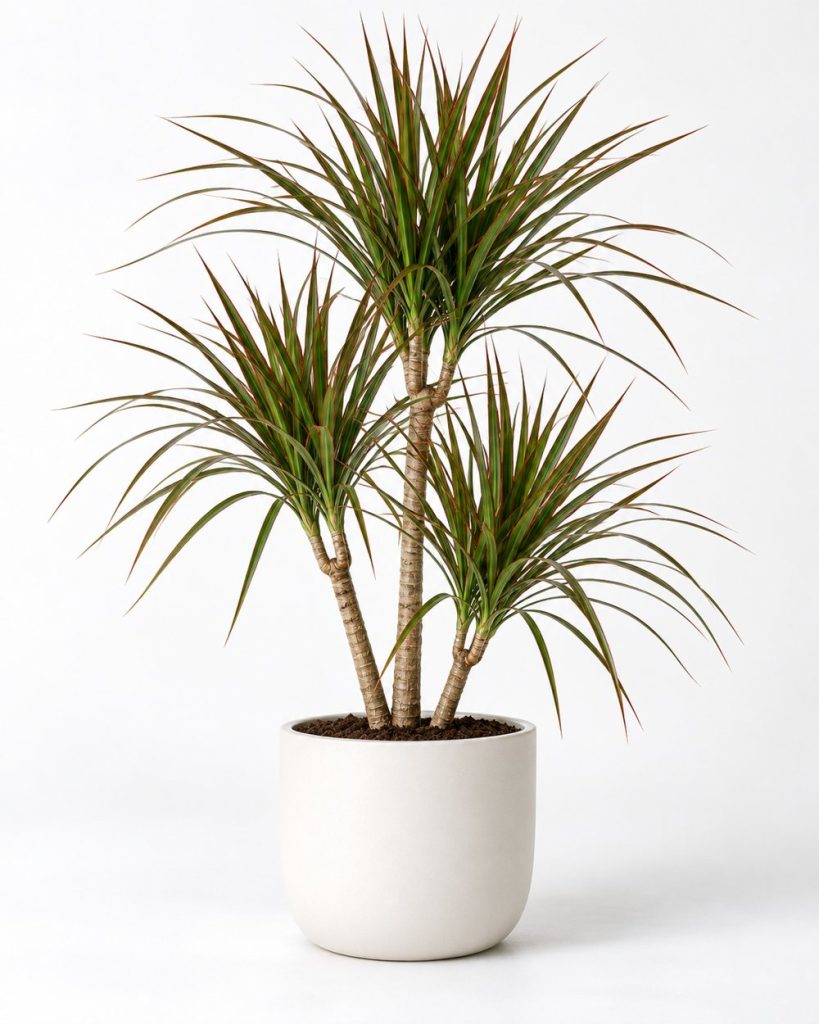
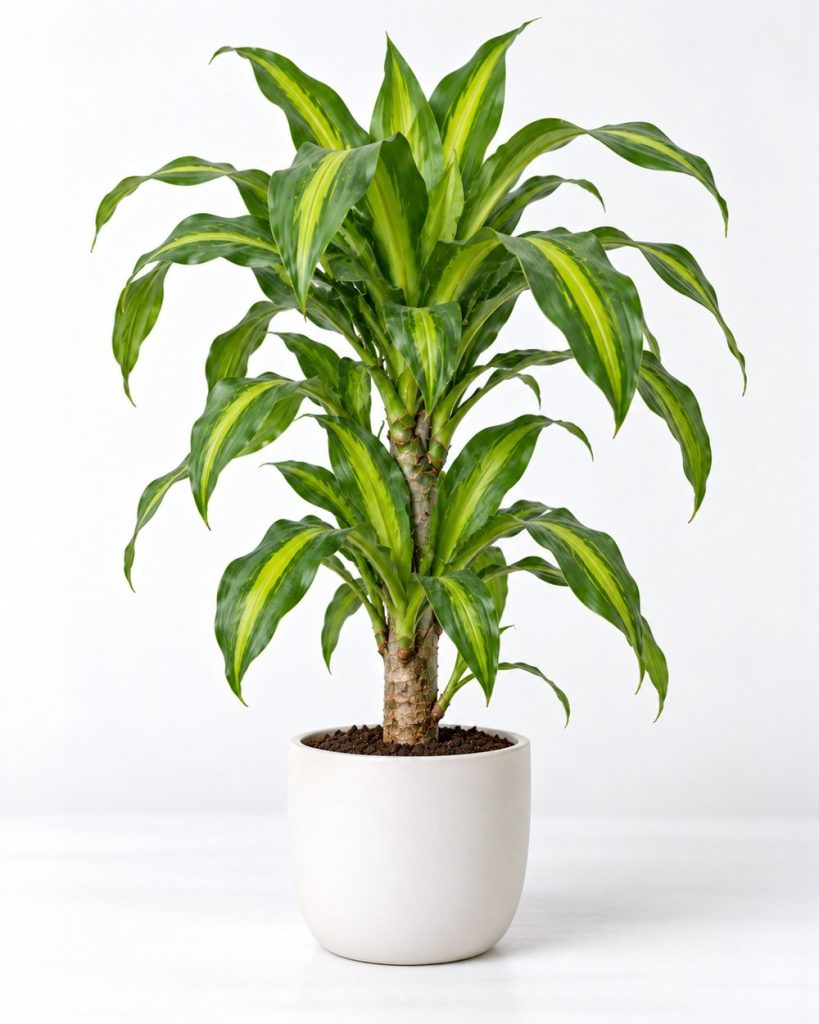
Some corners need height more than they need a fancy leaf. That is where corn plant earns its spot. It grows from a thick, woody cane topped with sprays of long, arching leaves that look a lot like the leaves on a corn stalk. Many are striped with a yellow or lime band down the middle. Shops often sell two or three canes of different heights in one pot, so you get a layered look right away. Each cane only grows leaves from the top, so the bare trunk is part of the look.
It is slow and steady. A big one can sit in the same spot for years, getting a few inches taller each season, which suits an office, a living room corner, or a bedroom that only gets filtered light. Once in a long while an older plant sends up a stalk of small white flowers that smell sweet and strong at night. Indoors this is rare, so treat it as a bonus.
Brown leaf tips are the classic complaint. Corn plant reacts to fluoride and salt build-up in the soil, and some tap water carries both. Using filtered water or rainwater and flushing the pot now and then keeps the tips cleaner. It is also toxic to cats and dogs. A chewed leaf often means vomiting and drooling, and cats can get dilated pupils, so put it where pets cannot graze.
Corn Plant care
Light
Medium to bright filtered light keeps the stripes strong and the leaves wide. A spot a few feet from an east or north window works in most homes. Direct sun through glass scorches the leaves. In low light it survives, but new leaves come in narrower and the stripes can fade.
Watering
Water when the top inch or two of soil is dry, which may be every week in summer and every two to three weeks in winter. Pour slowly so the whole root ball gets wet, then let it drain. Canes left standing in a full saucer rot from the bottom.
Soil and pot
A standard potting mix with some perlite works well. Large plants dry out unevenly in huge pots, so do not jump too many sizes. Clay or other heavy pots help tall canes stay upright. If the mix stays wet for more than a week after watering, it is too dense or the pot is too big.
Humidity and temperature
Normal home humidity is fine. Very dry winter air can add to the brown tips, so a pebble tray or a humidifier in the room helps a little. Keep it away from heater vents and doors that let in cold air, since leaves can spot after a chill.
Feeding
Corn plant grows slowly and needs only a little food. Two or three light doses between April and August, using an all-purpose liquid fertilizer at quarter strength, cover a whole year. Dracaenas are touchy about fluoride and salts, and brown leaf tips are the usual sign. Every few months, let plain water run through the pot to wash those salts out.
Repotting
Corn plant grows slowly and only needs a new pot every two to three years. Spring is best. Choose a pot just 2 inches wider than the old one. For big floor plants, replacing the top couple of inches of soil each spring is an easier middle step.
Propagation
Cut the leafy top off a tall cane, with a few inches of stem, and root it in water or moist mix. The old cane often sprouts new shoots below the cut. You can also cut a bare cane into pieces a few inches long and set them upright in damp mix, top end up.
Common problems
How do I stop the leaf tips from browning?
Switch to filtered, distilled, or rain water, and flush the pot every few months. Trim the brown tips with clean scissors, following the leaf's natural point.
Why are the stripes on the leaves fading?
This is a light issue. Move it closer to a bright window but out of direct sun. Old leaves will not change, but new ones should come in with better color.
Why are many lower leaves turning yellow at once?
One or two at the bottom is normal aging. A lot at once points to soggy soil or a cold draft, so check both.
Are the white cottony spots on the leaves a problem?
Yes, those are likely mealybugs. They hide where leaves join the cane. Dab them with rubbing alcohol on a cotton swab and check again every few days.
Frequently asked questions
Is corn plant the same as mass cane?
Yes. Mass cane is a common shop name for the striped type of Dracaena fragrans. Janet Craig is another type, with plain dark green leaves.
How tall does corn plant grow indoors?
Most reach 4 to 6 feet indoors over many years, and cutting the canes back keeps them shorter. Outdoors in the tropics it grows far taller.
Should I wipe the leaves?
Yes, every month or so. Dust blocks light on those long leaves, and a damp cloth makes them look fresh again. Skip leaf shine products.
Not sure this plant fits your home?
Take a plant quizSources: www.aspca.org, plants.ces.ncsu.edu