Dumb Cane
Dieffenbachia spp. · also called Dieffenbachia, Leopard lily
Big spotted leaves on thick canes, with a sap to respect
- Light
- Bright indirect, Medium light: Bright filtered light is best, copes with medium
- Water
- Every 1-2 weeks, when the top inch of soil is dry
- Difficulty
- Easy
- Pet safety
- Toxic to cats and dogs
- Size
- Large
- Height
- 3-6 ft tall indoors
- Growth
- Moderate
- Humidity
- Average home humidity is fine
- Temperature
- 60-75°F
- Good rooms
- Entryway, Living room, Office
The name is a warning, not a joke. Dumb cane got it because chewing a leaf can make the mouth and throat swell so badly that talking becomes hard. That is the first thing to know about this plant, and it shapes where you put it. Keep it away from toddlers and from any pet that chews, and wash your hands after you cut it.
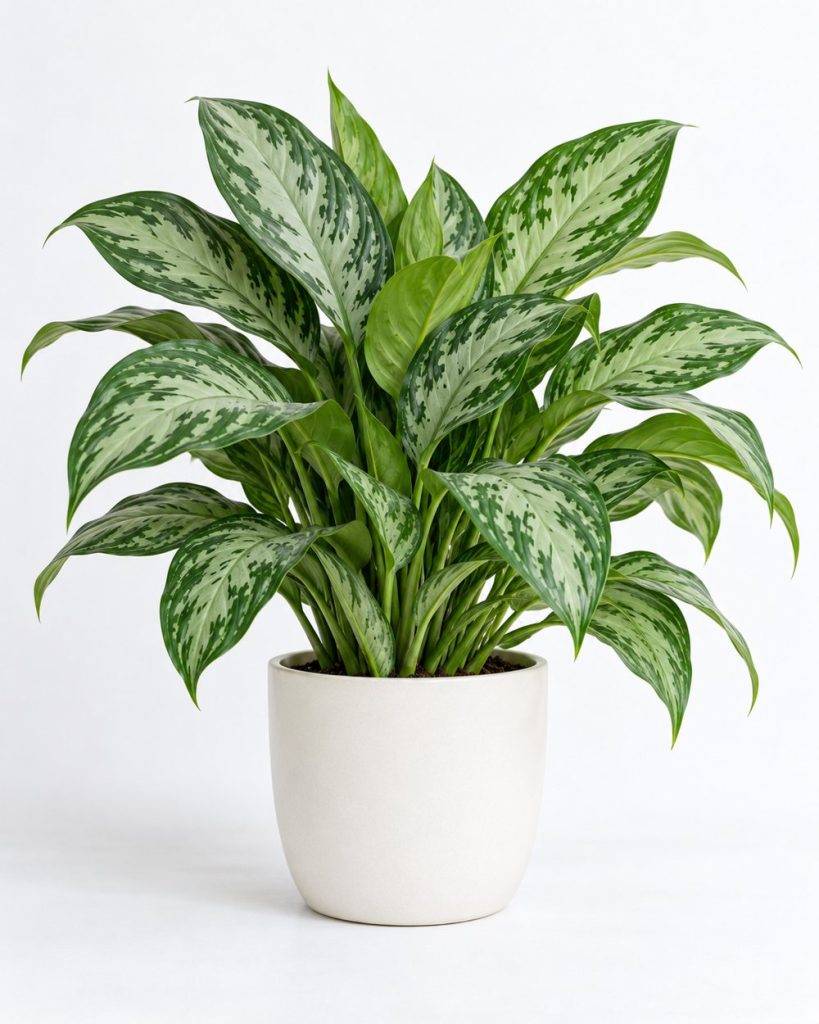
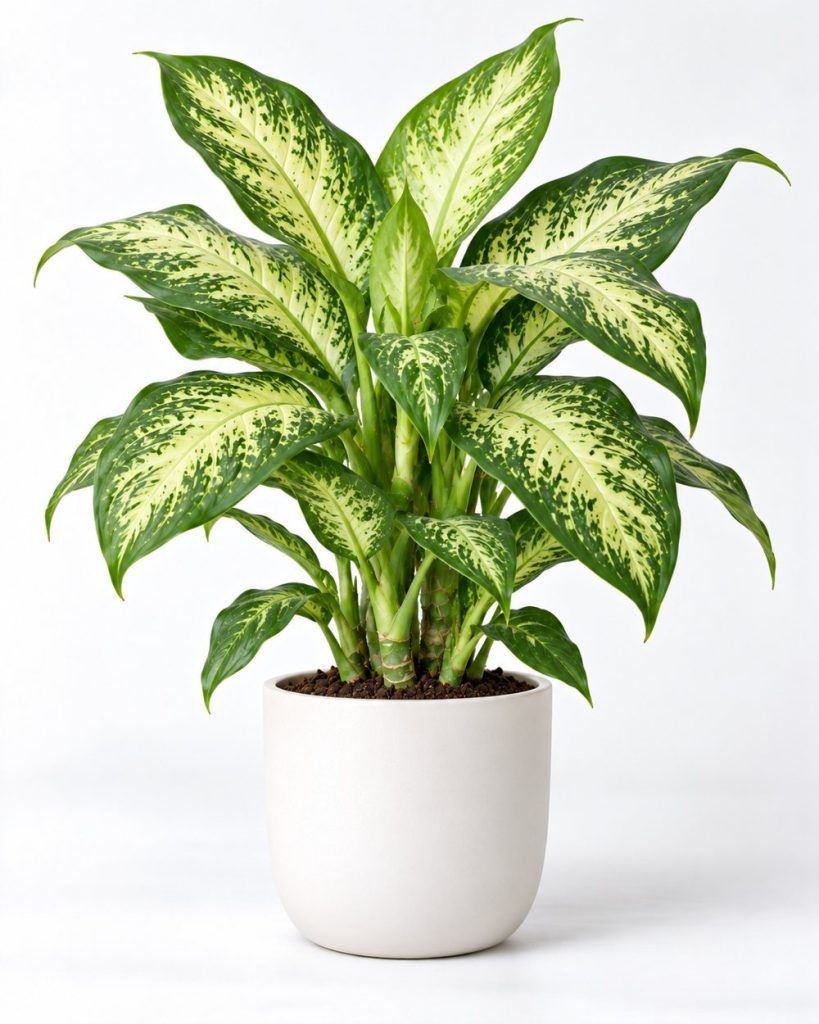
With that settled, it is a striking plant. Big oval leaves, up to a foot and a half long on older plants, are splashed with cream, white, or pale green. They grow from thick, upright stems that look a bit like sugar cane. The canes stay fairly upright, so the plant takes up less floor space than its leaf size suggests. Most plants reach 3 to 6 feet over time, so it works as a floor plant in a living room corner, an office, or a bright entryway.
It grows quickly in good light and puts out a new leaf every few weeks in summer. The trade-off is that the bottom leaves drop as it grows, and an older plant can end up with a bare stem and a tuft of leaves on top. That is normal and fixable. Cut the stem back to about 6 inches and it will sprout again below the cut. The piece you removed can become a new plant.
Dumb Cane care
Light
Bright, filtered light gives the best color and the fastest growth. In winter, when the sun is weaker, a spot closer to the window helps. It will put up with lower light, but it slows down and the stems lean hard toward the glass. Turn the pot now and then to keep it upright.
Watering
Water deeply, then wait until the top inch of soil is dry before the next drink. In a warm room in summer that may be weekly. In winter it can be every ten days or more. Root rot from wet soil is the most common way these plants die, so do not keep it soggy.
Soil and pot
Pick a regular potting mix that drains fast, with some perlite added if it feels heavy. The pot must have a hole. Big plants get top-heavy, so a wide, heavy pot keeps the whole thing from tipping when someone brushes past it.
Humidity and temperature
Normal room humidity suits most dumb canes. What they dislike is cold. Keep them in rooms above 60°F and away from doors that open onto winter air. A sudden chill can make leaves droop or turn yellow along the edges.
Feeding
Dumb cane is a big, leafy plant and likes regular meals in the warm months. Every two weeks from March to September, water first, then pour on a foliage fertilizer mixed at half rate. Burnt-looking margins on the lower leaves usually point to too much. Rinse the pot with plain water for a full minute and skip the next two doses.
Repotting
Repot in spring when roots fill the pot or water runs straight through. Go up 1 to 2 inches in width. Wear gloves for this job. The sap irritates skin, and it is very easy to rub your eyes without thinking.
Propagation
You can root the top of a stem in water or damp mix. You can also cut the bare cane into pieces a few inches long, each with a node, and lay them half buried in moist soil. New shoots appear from the nodes. Air layering works on tall plants too. Spring and early summer are best.
Common problems
Why does my dumb cane keep losing its lower leaves?
A leaf or two from the bottom now and then is just age. A steady stream of yellow lower leaves points to overwatering, cold drafts, or a plant that needs feeding. Check the soil first.
What causes brown, crispy leaf edges?
Too much plant food is a common cause, along with letting the soil go bone dry. Flush the pot with plain water and keep watering more even.
Why is the base of the stem soft?
A soft, dark stem near the soil is stem or root rot. Cut off a healthy top section and root it, since the rotten part rarely recovers.
Why are the leaves curling under at the edges?
Low light, cold air, or too much plant food can all cause curling. Think about what changed recently, such as a move or a new feeding routine, and undo it.
Frequently asked questions
What should I do if my dog chews a leaf?
Rinse its mouth with water if you can, and call your vet or the ASPCA Poison Control line at (888) 426-4435. Signs like drooling and pawing at the mouth often start fast.
How tall will it get indoors?
Most reach 3 to 6 feet over several years. Compact varieties stay smaller, so check the tag if space is tight.
Can I grow it in a room with no direct sun?
Yes, as long as the room is fairly bright. It just grows slower and leans toward the light.
Not sure this plant fits your home?
Take a plant quizSources: www.aspca.org, hgic.clemson.edu