Ficus Audrey
Ficus benghalensis 'Audrey' · also called Audrey ficus, Bengal fig, Banyan fig
A soft-leaved fig with velvet stems and fewer tantrums
- Light
- Bright indirect, Medium light: Bright indirect is best, copes with medium light
- Water
- Every 1-2 weeks, when the top 2-3 inches are dry
- Difficulty
- Moderate
- Pet safety
- Toxic to cats and dogs
- Size
- Large
- Height
- Often 3-6 ft indoors, given time
- Growth
- Moderate
- Humidity
- Average is fine, 50% or more is better
- Temperature
- 65-80°F
- Good rooms
- Bedroom, Living room, Office
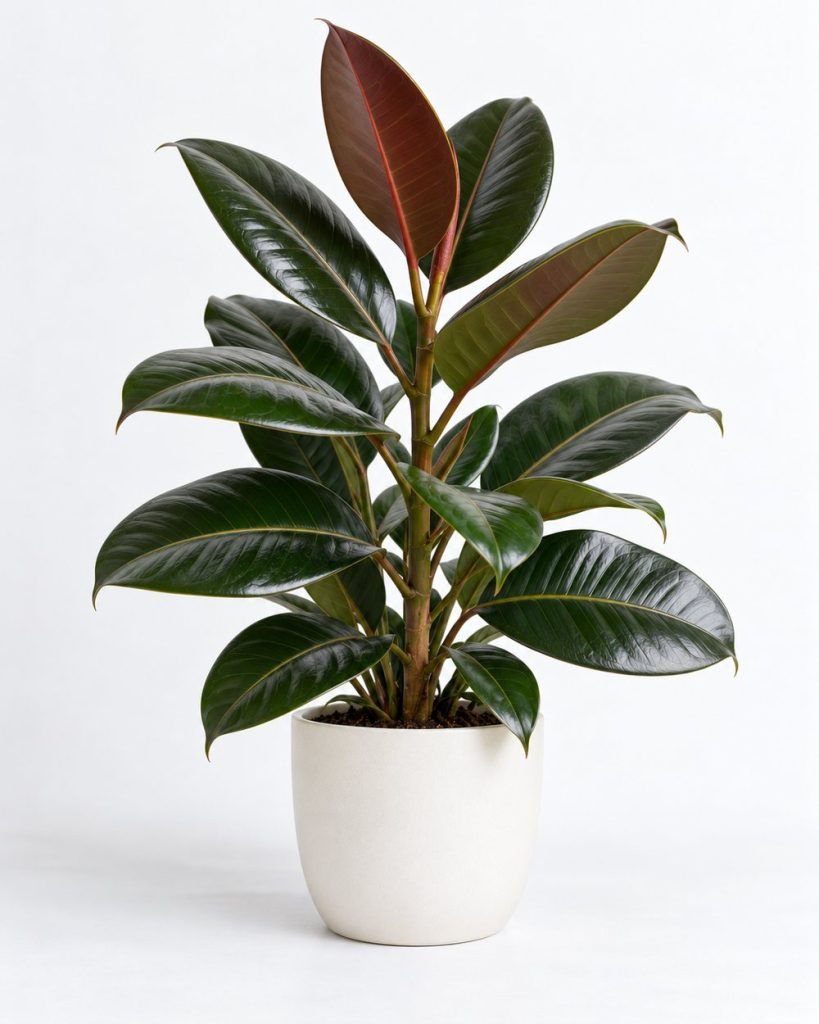
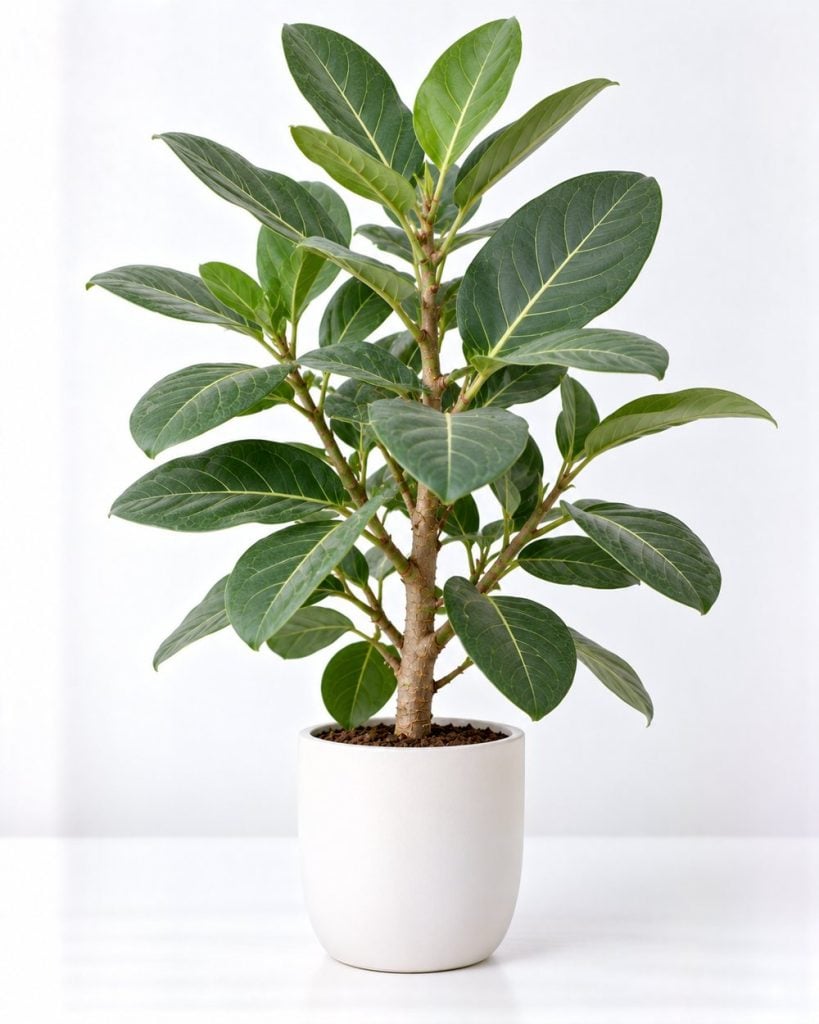
Plenty of people buy a Ficus Audrey after a fiddle-leaf fig has let them down. It is a fair swap. Audrey has large oval leaves, about the size of your hand, in a soft matte green with pale cream veins. The young stems are pale and slightly fuzzy, like suede. Over time it grows into a clean, upright tree with a single trunk, which suits a modern living room.
It comes from the banyan, a giant tree from India and Pakistan known for dropping roots from its branches. You will not get that drama indoors. In a pot it grows into a small tree, often 3 to 6 feet tall after a few years in good light. Compared with the fiddle-leaf, it handles a missed watering better, and its leaves tend to stay cleaner. It is still a fig, though, so it wants steady light and hates being moved around.
Now the honest part. It is toxic to cats and dogs, and the milky sap can irritate your skin when you prune it, so wear gloves. It can be pricey and harder to find than other figs. And it needs real light. Tuck it in a dim corner and it will sit there, drop a leaf here and there, and slowly thin out. Choose a spot near a bright window first, then buy the plant.
Ficus Audrey care
Light
Bright indirect light is the goal. A spot a few feet from a south, east, or west window works well. A little gentle morning sun is fine once it is used to its spot. In medium light it lives, but it grows slowly and leans. A grow light helps in a darker room.
Watering
Feel the soil first. When the top 2 to 3 inches are dry, water slowly until it runs out the bottom, then tip out the saucer. In most homes that lands around every one to two weeks, longer in winter. It forgives a short dry spell better than wet feet.
Soil and pot
Use a chunky, well-draining mix. Regular potting mix with a third perlite or orchid bark is a good blend. Use a pot with a hole. Figs left in wet, dense soil get root rot, which first shows up as falling leaves.
Humidity and temperature
Normal home humidity is usually fine. It does better at around 50 percent, so a humidifier helps through a dry winter. Keep it well away from heat vents and drafty doors, which chill the plant and dry out the leaves.
Feeding
Audrey tends to grow in flushes, a burst of new leaves and then a pause. Time your feeding to those bursts. When you see a fresh leaf unfurling, give a half-strength dose of a fertilizer made for figs or leafy plants, roughly every four weeks through the warm months. Pale, small new leaves in summer can mean it is hungry. Let it rest from October to March.
Repotting
Repot every two years in spring, one pot size up. It does not mind being a little snug. Wear gloves for this job, because broken roots and stems leak the sticky white sap. Choose a heavy pot as it grows taller, so a bumped tree does not tip and snap a branch.
Propagation
Cut a 6 inch stem tip with a few leaves, let the sap stop running, and put it in water or damp mix. Keep it warm and bright. Roots take a few weeks. Bigger plants can also be air layered. You nick a stem, wrap it in damp moss until roots grow, then cut below them.
Common problems
Leaves dropped a week after I moved it. Why?
Figs react to changes in light, temperature, or drafts by shedding. Pick a good spot and leave it there. Steady care usually stops the drop within a few weeks.
What are the light brown, dry patches on the leaves?
Dry, tan patches often mean the soil got too dry between waterings. Check the soil more often in summer. The marked leaves will not heal, but new ones will be clean.
Why are the new leaves smaller than the old ones?
Small new leaves usually point to low light or a hungry plant in summer. Move it closer to a window and feed it in the growing season. Size often improves on the next flush.
Some leaves have splits and cracks. What causes that?
Cracks usually come from very dry air, often in winter when the heat is on. Run a humidifier nearby. Damaged leaves stay marked, so judge your fix by the new ones.
Frequently asked questions
Is Ficus Audrey easier than a fiddle-leaf fig?
For most people, a bit. It tends to drop fewer leaves and copes better with an uneven watering routine. It still needs bright light and a stable spot.
Will it grow aerial roots like a banyan?
A mature plant may send out a few thin roots from the stems. Indoors this is rare and harmless. Tuck them into the soil or trim them off.
How do I get a fuller, branching Audrey?
Cut the top of the main stem in spring, just above a leaf. It often branches below the cut. Only do this on a healthy plant that is growing well.
Not sure this plant fits your home?
Take a plant quizSources: plants.ces.ncsu.edu, www.aspca.org