13 Best Trailing and Hanging Plants
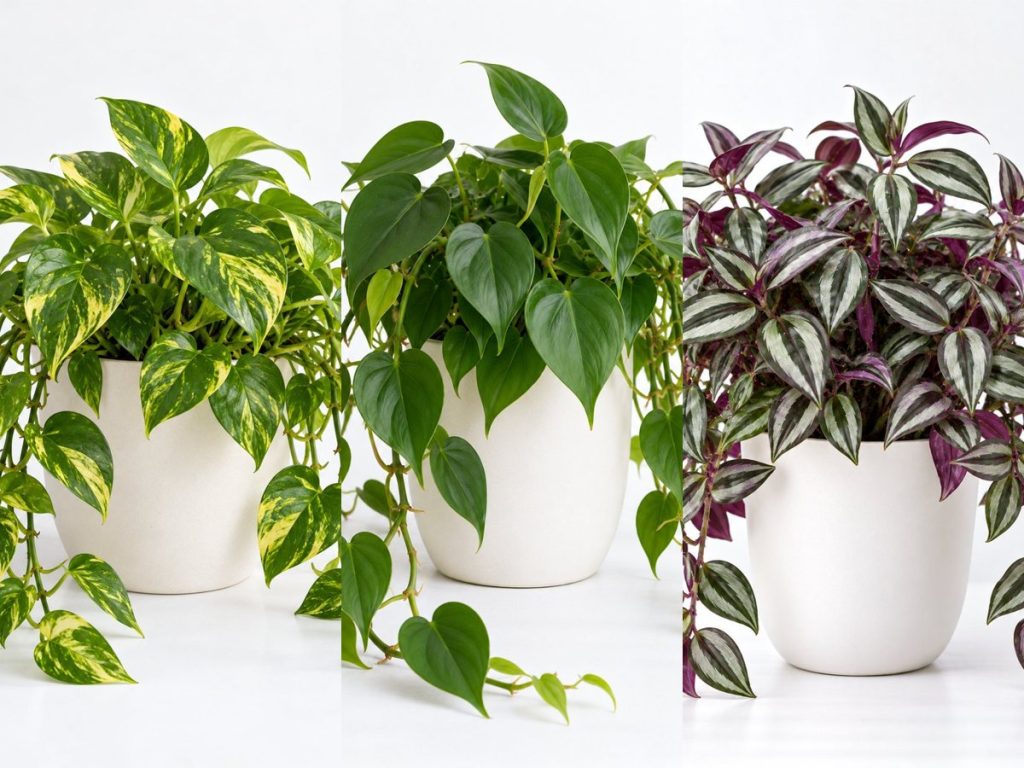
In a small home, the best plant spot is often above your head. The top of a bookcase, a high shelf, a hook in the ceiling. Trailing and hanging plants use that empty space and leave your floor and counters free. They also soften hard lines, like the edge of a shelf or a bare window frame.
Hanging plants have their own quirks, though. Warm air rises, so a pot near the ceiling dries out faster than one on the floor. You also cannot see the soil, which makes it easy to forget. A pot you can lift down, or a watering can with a long spout, makes life easier. Before you hang anything big, check that the hook goes into a ceiling beam. A pot full of wet soil weighs a lot more than it did at the store.
How we picked: Most plants here are marked trailing in our profiles, plus the Boston fern, which has been a classic hanging basket plant for generations.
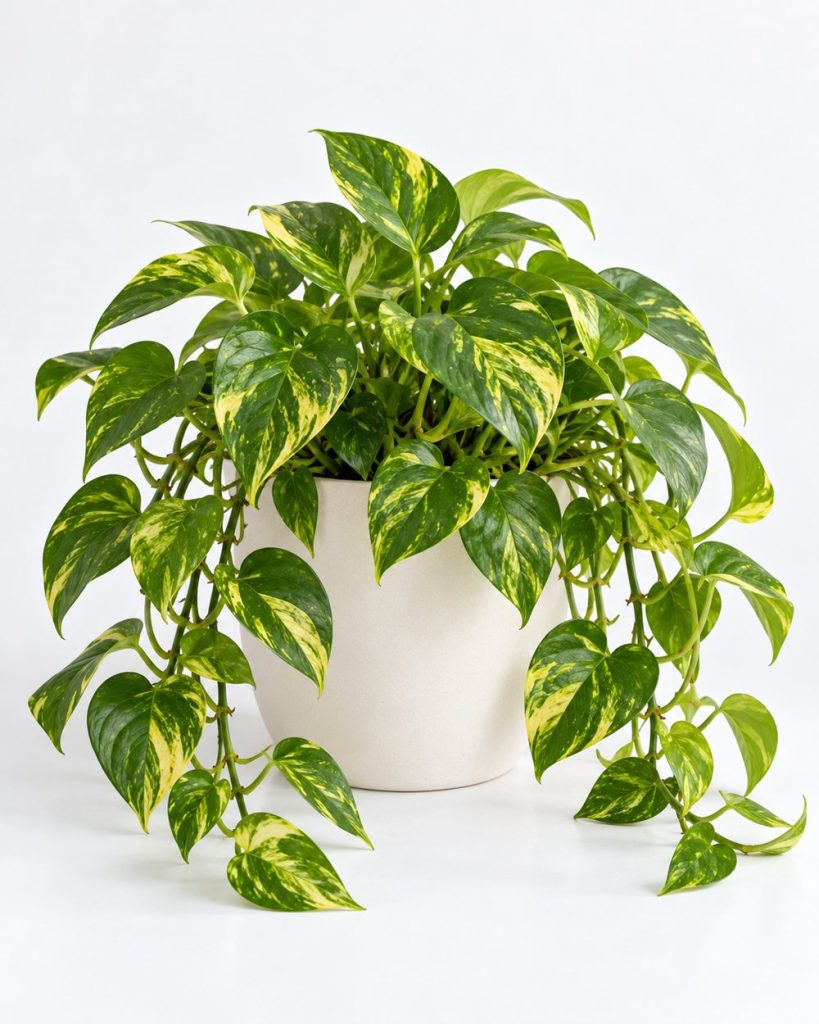
1.Pothos
Epipremnum aureumThe easiest vine to start with, and the fastest. In good light the vines can hang several feet within a year or two. Pinch the tips now and then so the top of the pot fills out. It is toxic to cats and dogs, so hang it beyond the reach of a climbing cat.
Read the full care guide →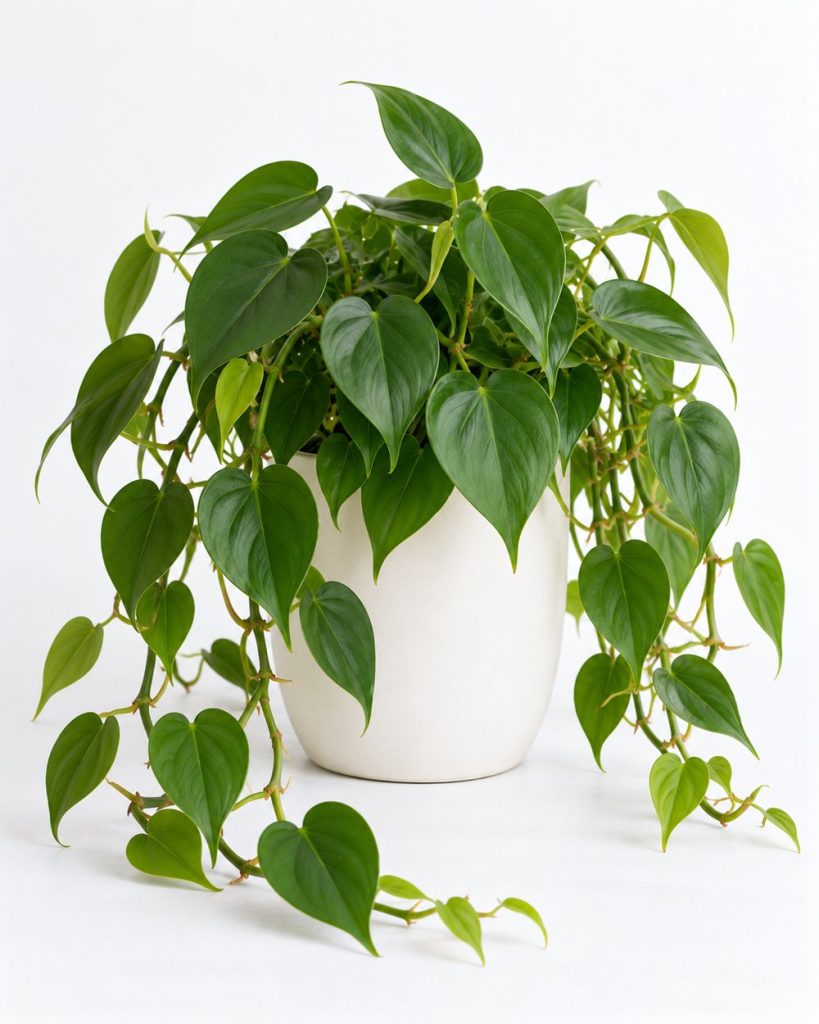
2.Heartleaf Philodendron
Philodendron hederaceumIts thin, bendy stems fall in a softer, straighter curtain than pothos, which suits a bookshelf edge. It keeps growing in lower light than most vines. The vines get stringy if left alone, though, so plan on a trim every few months. It is toxic to pets.
Read the full care guide →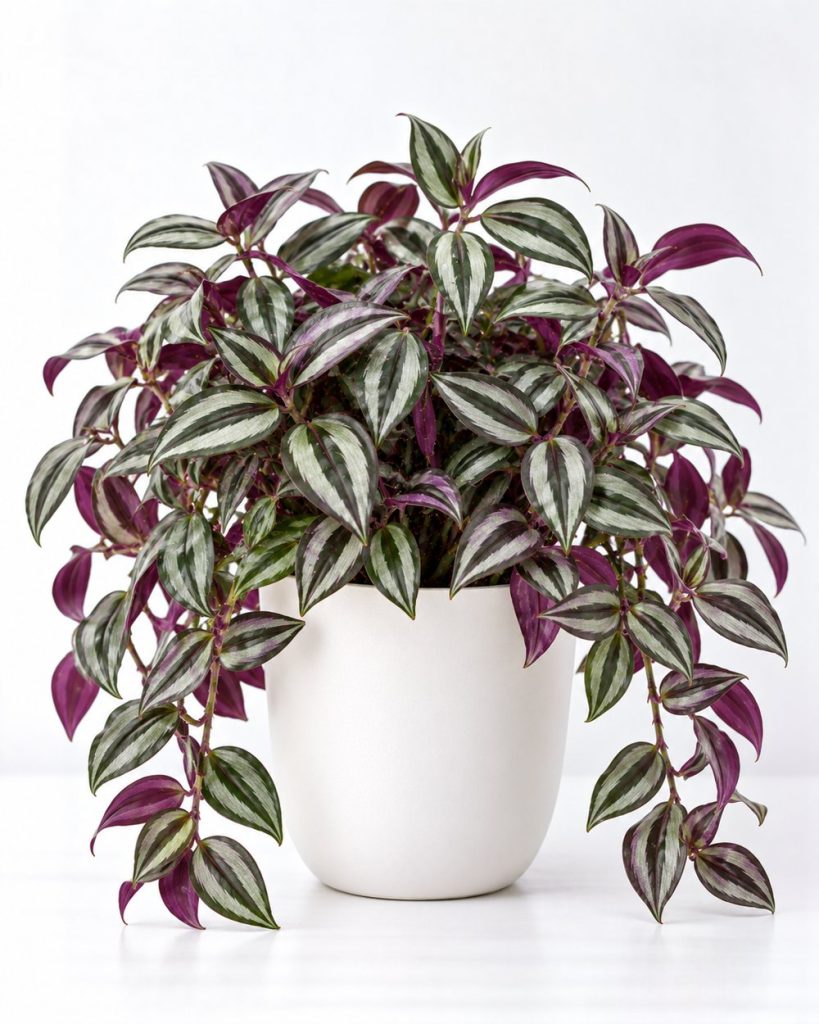
3.Inch Plant
Tradescantia zebrinaSilver and purple stripes on fast vines make this the most colorful trailer here. It roots wherever a stem touches soil, so pinching and tucking the cuttings back in keeps the pot full. In low light the stems stretch and the color fades. Its sap can make a pet's skin red and itchy.
Read the full care guide →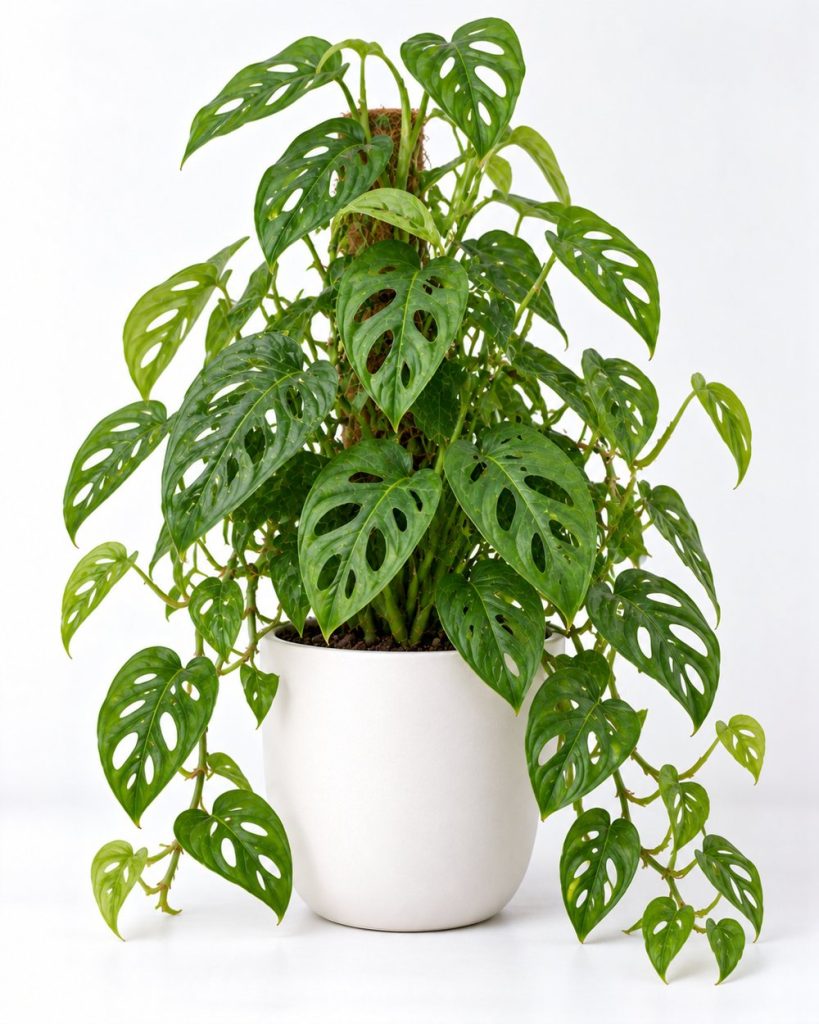
4.Swiss Cheese Vine
Monstera adansoniiHand-sized leaves full of holes can trail from a high shelf or climb a pole, and this vine grows fast either way. Bright indirect light gives the most holes. It likes 50 percent humidity or more, which a heated living room rarely gives in winter. Like monstera, it is toxic to cats and dogs.
Read the full care guide →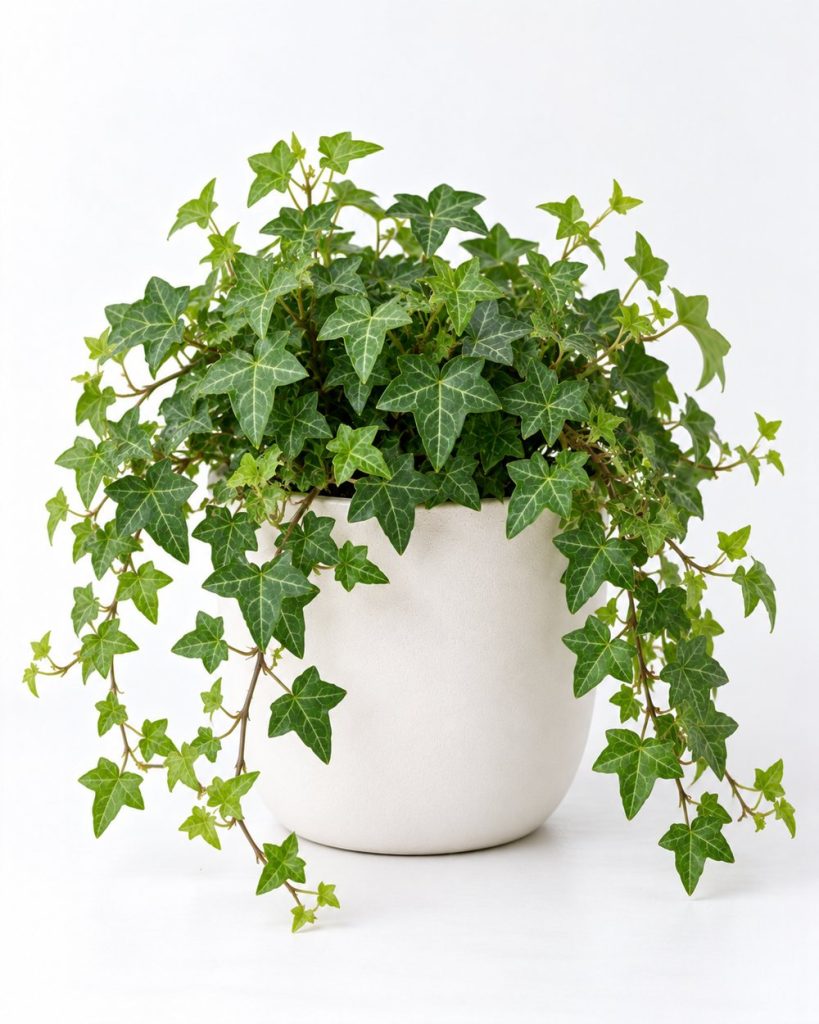
5.English Ivy
Hedera helixA cool room, a hanging basket, and medium to bright light suit this classic vine. Warm, dry air is its enemy, since it brings spider mites. Rinse the leaves in the shower now and then. In dim light it grows thin and patchy. The leaves contain saponins and are toxic to cats and dogs.
Read the full care guide →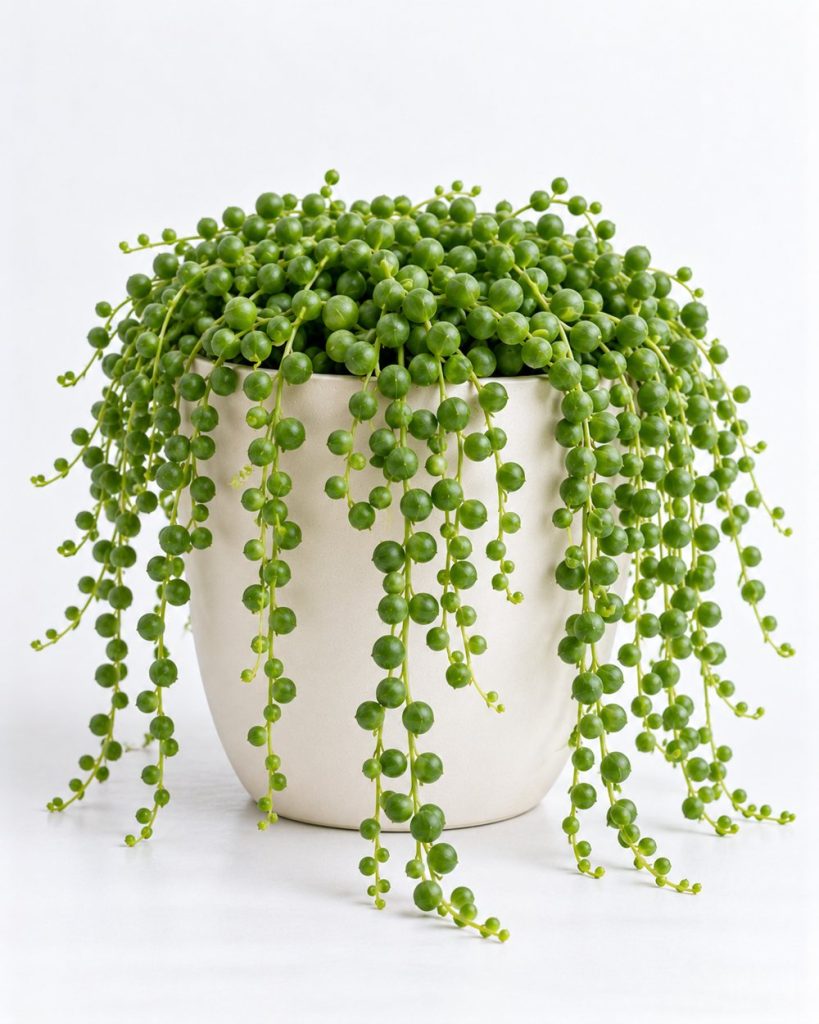
6.String of Pearls
Curio rowleyanusFew plants look as striking spilling over a hanging pot, with bead strands that reach 2 to 3 feet. It needs very bright light and a light hand with water, and it is rated Hard for a reason. Rot at the base can kill it before the strands show any trouble.
Read the full care guide →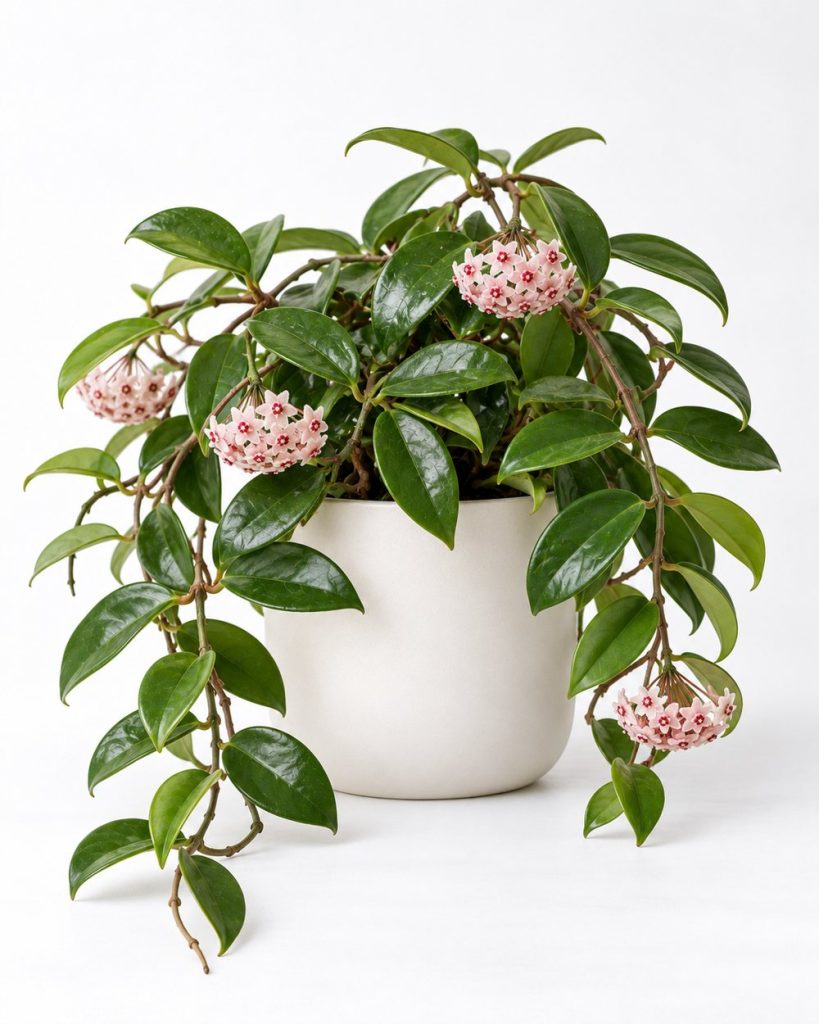
7.Hoya Carnosa
Hoya carnosaA slow vine that rewards patience. Hang it in a bright window and, after a few years, it may bloom in scented star clusters. Keep the old flower spurs on the plant, since they bloom again. Mind what sits below a hanging hoya, because the nectar drips.
Read the full care guide →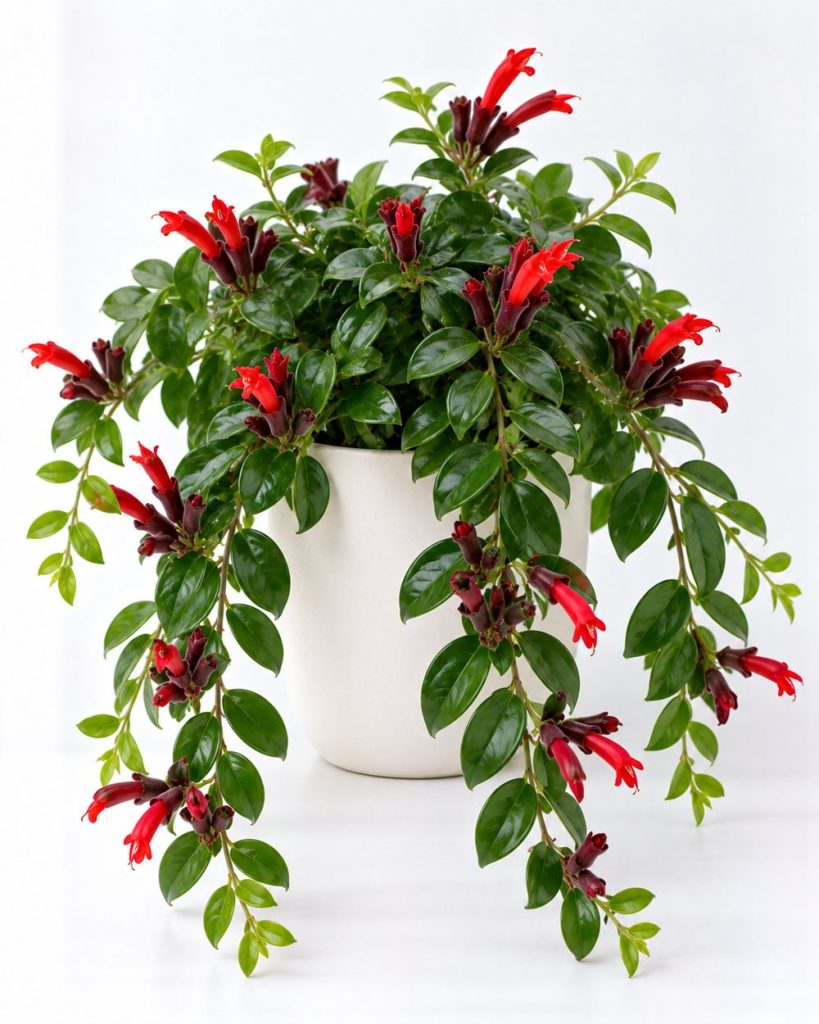
8.Lipstick Plant
Aeschynanthus radicansRed flowers poke from dark tubes at the tips of stems that spill 2 to 3 feet, which is why baskets suit it. It is pet-safe, handy since the stems hang at cat height. Getting blooms can take patience. It needs bright light and a cooler, drier winter rest, and it drops leaves below about 50°F.
Read the full care guide →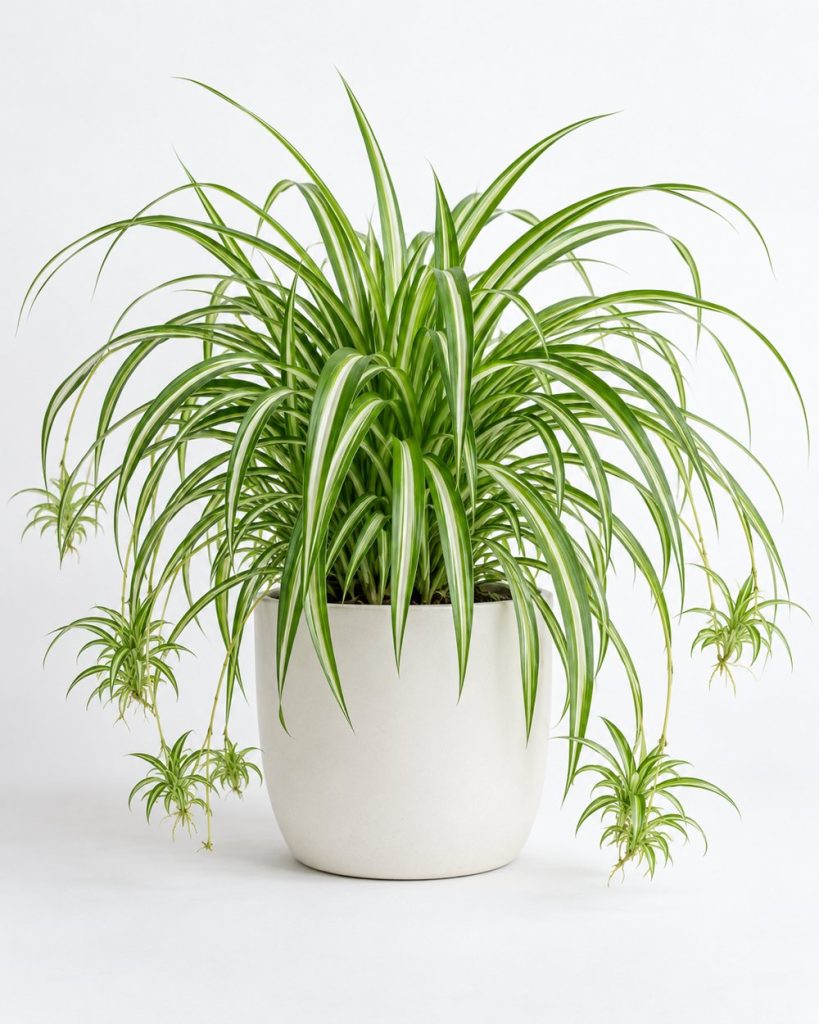
9.Spider Plant
Chlorophytum comosumIts arching leaves and dangling babies look best from below, so a hanging pot shows it off. It is pet-safe and grows fast. Hanging pots dry out quickly, though, and dry soil gives this plant brown tips. Check it every week.
Read the full care guide →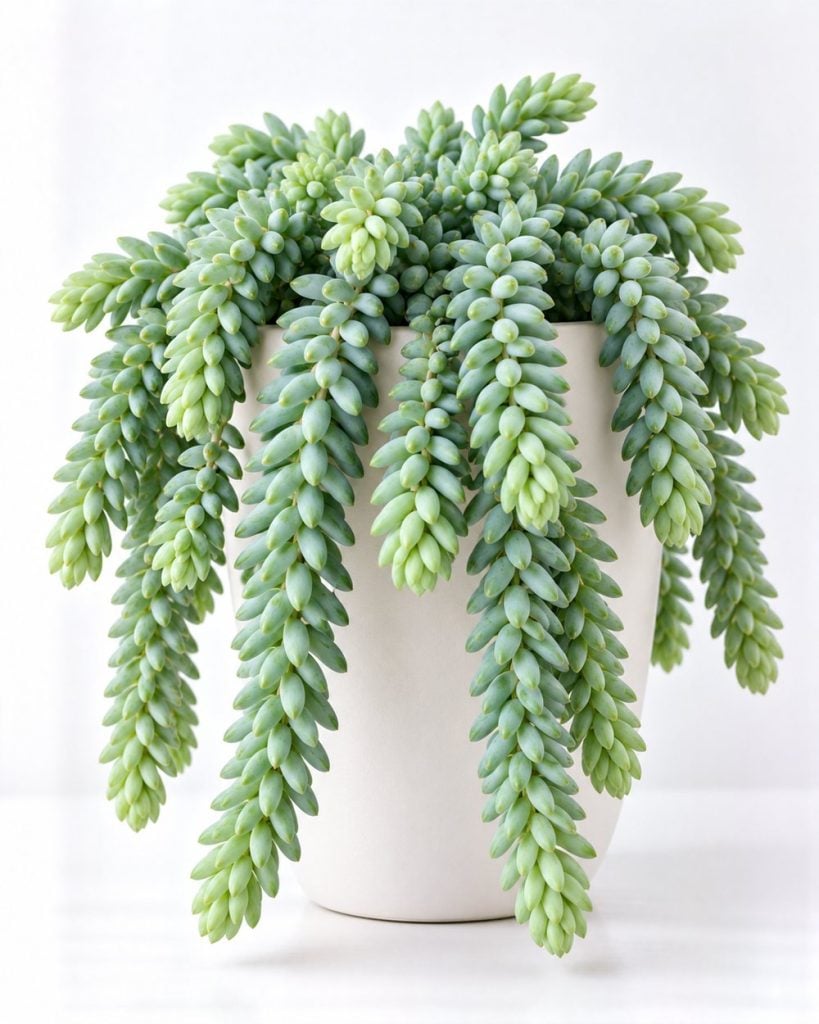
10.Burro's Tail
Sedum morganianumChunky blue-green tails hang 1 to 3 feet from a sunny hook. It is non-toxic to cats and dogs and drinks only every few weeks. The catch is handling. The beads fall off at a touch, so pick its spot before you hang it and then leave it be.
Read the full care guide →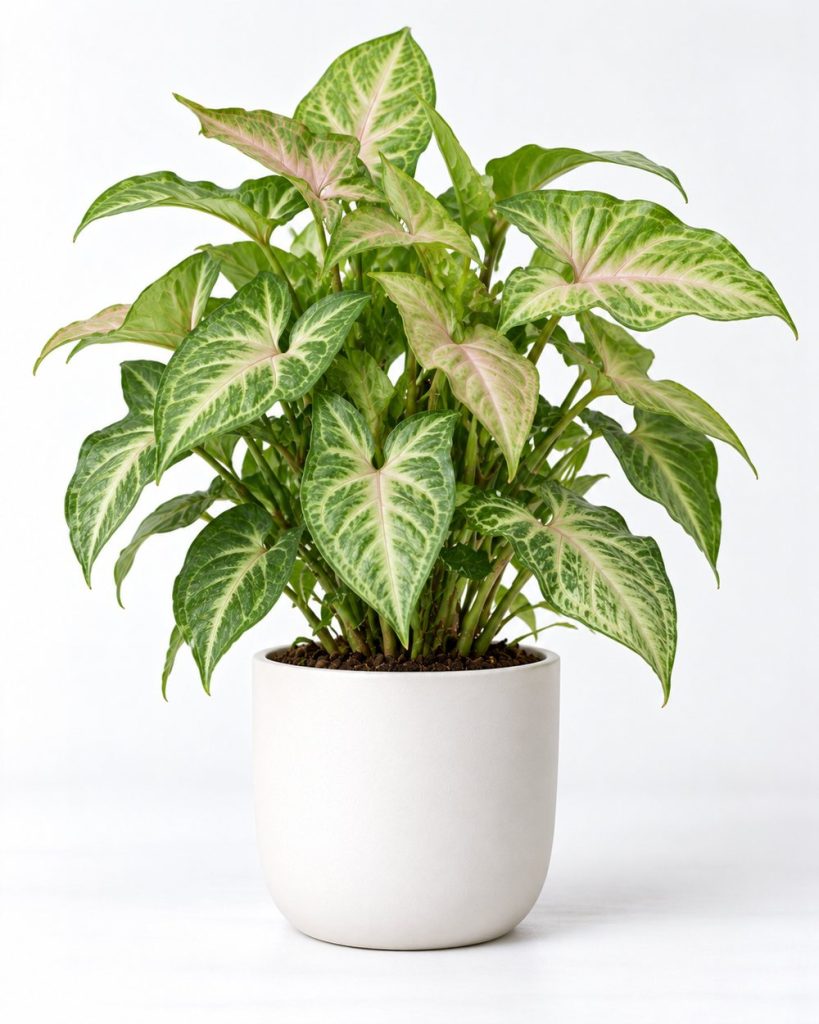
11.Arrowhead Plant
Syngonium podophyllumYoung plants grow as a bushy clump, and the trailing comes later, as the stems lengthen and spill. Medium to bright indirect light keeps the pink or cream colors. Direct afternoon sun burns them. If you prefer a bush, trim it back. Chewing any part burns a pet's mouth, so hang it high.
Read the full care guide →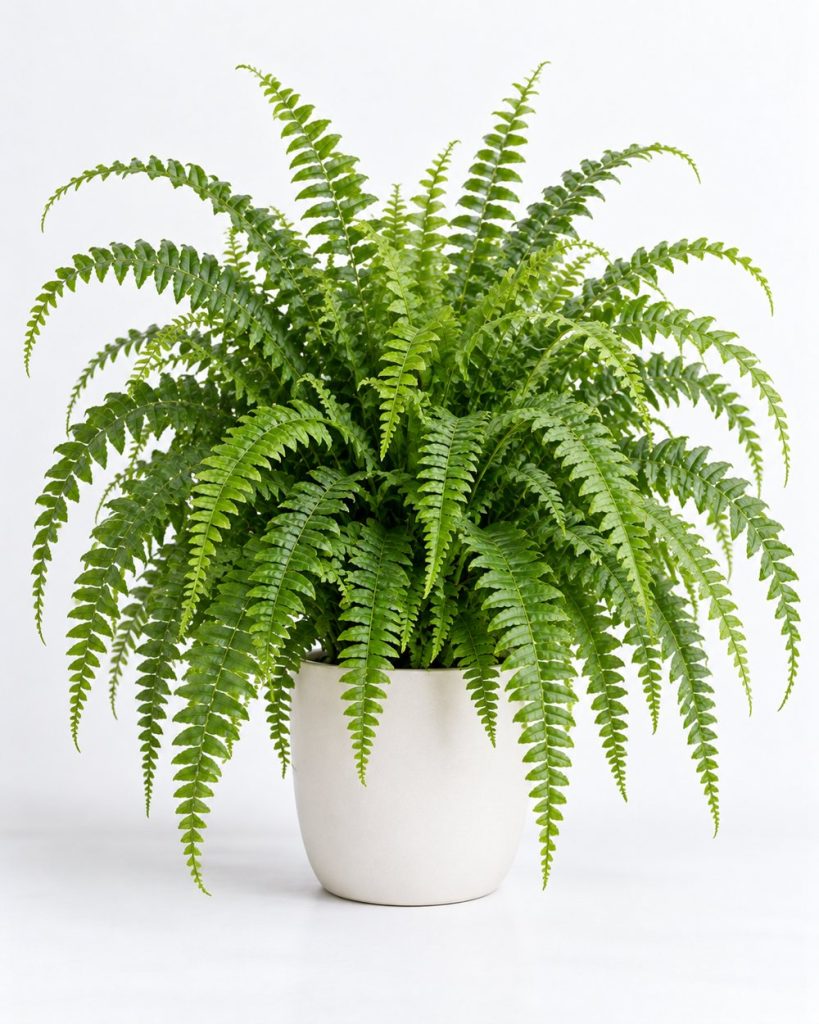
12.Boston Fern
Nephrolepis exaltataA fern ball at eye level is a classic look, with fronds spilling all around the pot. Hanging pots dry fast, and this fern does not forgive dry soil, so a ceiling spot in a dry room is risky. A bright bathroom or kitchen suits it best.
Read the full care guide →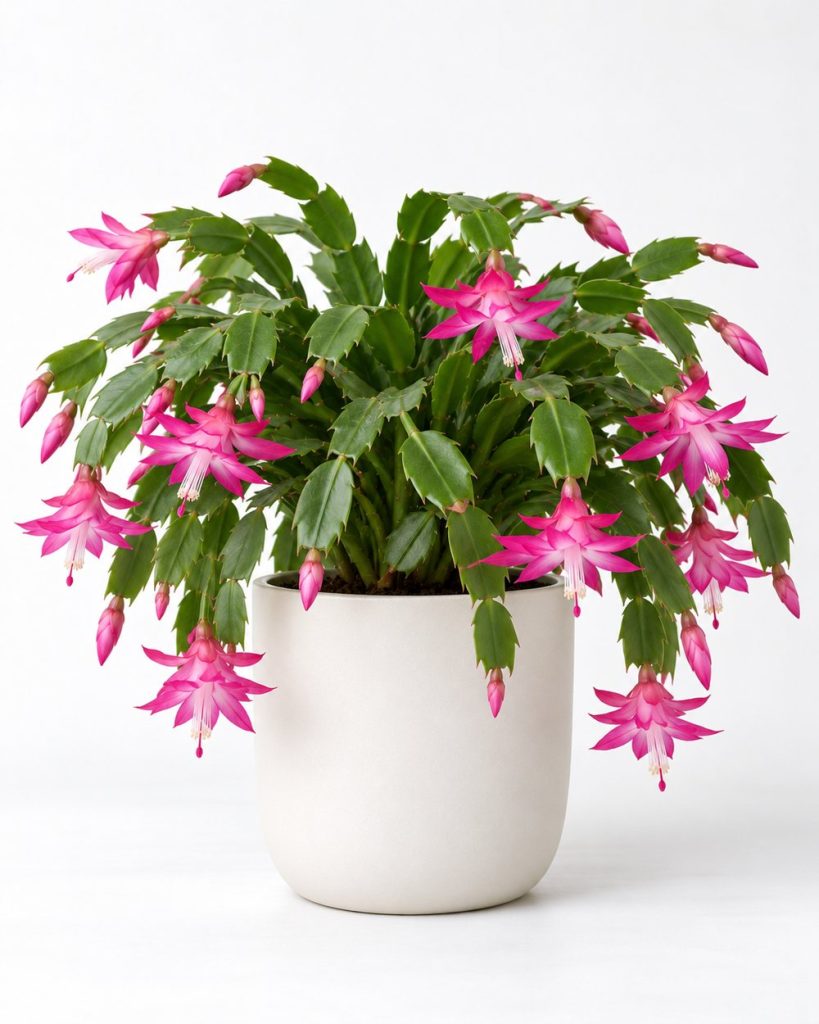
13.Christmas Cactus
Schlumbergera × buckleyiAs it ages, the flat stem segments arch over the rim, so it works in a hanging basket or on a tall stand. It is pet-safe and can live for decades. It is not a fast trailer, though. Expect a gentle arch of 1 to 2 feet, not long vines.
Read the full care guide →If you have a cat that climbs, hang the toxic vines well away from shelves and furniture it can jump from. Use a swivel hook so you can turn each pot toward the light without taking it down. And when you water, slip a towel under the pot or carry it to the sink. Drips from above always find the one thing on the floor you care about.
Frequently asked questions
How often do hanging plants need water?
Usually more often than the same plant on a table, since warm air near the ceiling dries the soil faster. Check them every week, and lift the pot to feel its weight.
How do I make a trailing plant look fuller?
Trim the longest vines and pinch the tips, which makes the stems branch. With pothos and philodendron, root the cuttings in water and plant them back in the same pot.
Which trailing plants are safe for cats?
From this list, the ASPCA lists the spider plant, hoya, Christmas cactus, Boston fern, lipstick plant, and burro's tail as non-toxic to cats and dogs. Pothos, heartleaf philodendron, string of pearls, English ivy, arrowhead plant, Swiss cheese vine, and inch plant are toxic.
Want a plant picked for you?
Take a plant quiz