Inch Plant
Tradescantia zebrina · also called Tradescantia, Wandering dude, Zebrina, Purple heart (T. pallida)
Striped silver and purple vines that grow fast and root anywhere
- Light
- Bright indirect, Medium light: Bright indirect for the best stripes, some morning sun is fine
- Water
- About weekly, when the top inch of soil is dry
- Difficulty
- Easy
- Pet safety
- Toxic to cats and dogs
- Size
- Medium
- Height
- 6-9 in tall, trails 2 ft or more
- Growth
- Fast
- Humidity
- Average home humidity is fine
- Temperature
- 60-80°F
- Good rooms
- Kitchen, Living room, Office
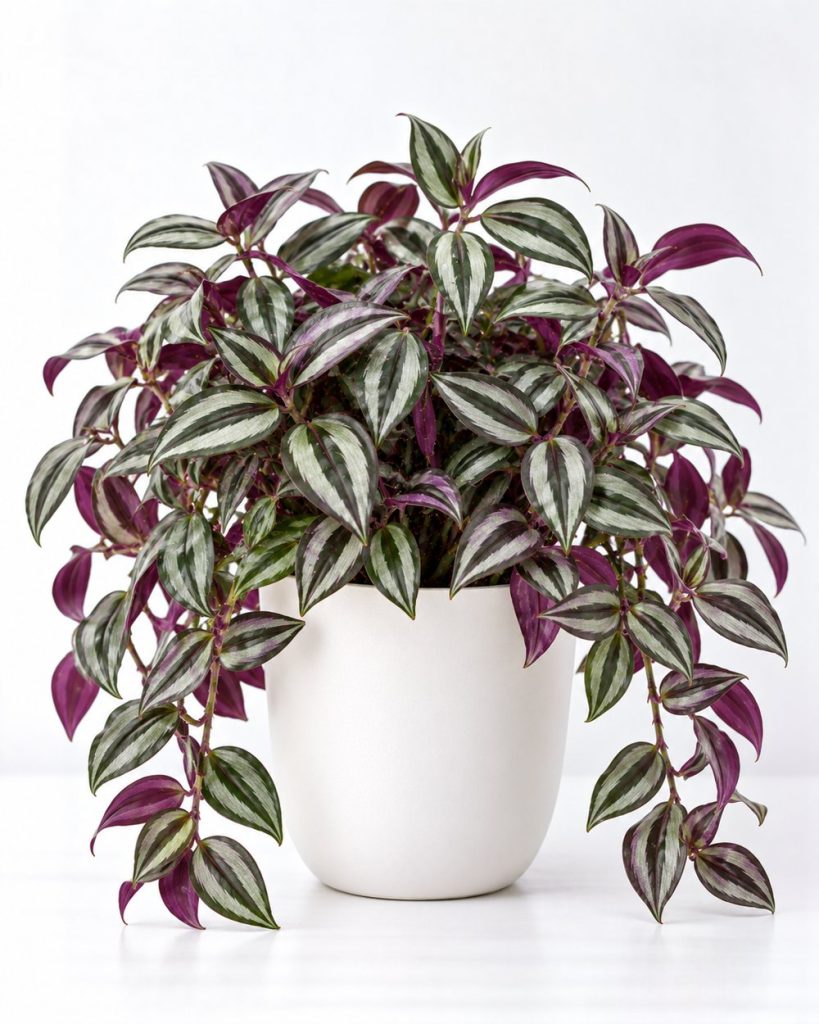
Tradescantia zebrina grows so fast that a pot of it can look different from one month to the next. The leaves are pointed ovals striped in silver and green on top and deep purple underneath. They sit along juicy, jointed stems that trail over the edge of a pot and root wherever a joint touches soil. Hang it in a bright window and the vines can spill a foot or more below the rim in a single season.
Most shops and searches still use the old common name, though you will see other names on tags too. A close cousin, Tradescantia pallida, has solid purple leaves and is often sold as purple heart. Care for both is nearly the same. They want bright light, soil that dries a little between drinks, and a good trim now and then. Both are cheap, easy to find, and ideal for a first hanging basket.
Here is the downside. This plant ages fast. After a year or so the stems near the soil go bare and stringy while the leaves crowd at the tips. The fix is simple. Cut it back hard and replant the cuttings, but you do have to do it. On pets, the ASPCA lists its relative, the inch plant Tradescantia fluminensis, as toxic to cats and dogs because the sap irritates skin. This one has similar sap, so keep it away from cats that like to nap in plant pots.
Inch Plant care
Light
Bright indirect light keeps the silver stripes crisp and the purple deep. An east or west window is ideal, and a few hours of soft morning sun helps the color. In low light the stems stretch, the gaps between leaves grow, and the colors fade to dull green. Harsh midday sun through glass can scorch it.
Watering
Let the top inch of soil dry, then water well and drain. That is often weekly in summer and every 10 to 14 days in winter. The stems hold water, so a short dry spell is fine. Soggy soil is the real threat and rots the stems at the base. Pour onto the soil rather than over the leaves.
Soil and pot
Any well-draining houseplant mix works. Add a handful of perlite if your bag feels heavy and dense. A hanging basket or a pot on a high shelf shows off the trailing stems. Make sure it has a drain hole. Clay and plastic both work fine for this plant.
Humidity and temperature
Normal home humidity suits it fine. Very dry winter air can brown the leaf tips, but it rarely causes more trouble than that. No misting needed. Good airflow matters more, since crowded, damp foliage can develop leaf spots, so space pots so the air can move.
Feeding
This trailer grows so fast that it gets by on little food. One half-strength dose of balanced liquid fertilizer a month from April to September keeps the purple and silver stripes bright. More than that, and the stems turn soft and lanky with big gaps between leaves. Let it go without in winter, and rinse the soil if a pale crust forms on top.
Repotting
It rarely needs a bigger pot. Every year or two, refresh the soil, or better, restart the pot with fresh cuttings. Young stems look fuller than an old, woody plant ever will. Keep the same pot, add new soil, and plant the cuttings around the edge.
Propagation
Few plants root faster. Cut a 4 to 6 inch piece of stem, strip the leaves from the bottom inch, and set it in water or straight into moist soil. Roots often show in about a week. Push five or six cuttings into one pot, and in a few weeks you have a full plant.
Common problems
Why have the leaves lost their stripes and gone plain green?
This is a light issue. In low light the plant makes greener leaves to catch what light it has. Move it to a brighter spot and new leaves should color up.
Why are the stems mushy and falling apart at the base?
That is rot from wet soil. Take healthy cuttings from the top, root them, and throw out the rotten base and the old soil.
Why do the leaf tips look dry and brown?
Dry air or soil that stayed dry too long often causes this. Water a little sooner and keep the pot away from heaters. Snip the tips if they bother you.
What are the tiny white fluffy spots on the stems?
Those are likely mealybugs. Dab each one with a cotton swab dipped in rubbing alcohol. Check the leaf joints, where they like to hide, every few days for a few weeks.
Frequently asked questions
Why do some people call it wandering dude?
Many people find the older name offensive, so a lot of growers have moved to wandering dude, inch plant, or just tradescantia. The plant is the same under any of these names.
Can it grow outdoors?
In frost-free areas it is often used as a ground cover. Elsewhere it can spend summer outside in light shade and come in before nights drop below about 50°F.
Should I wear gloves when I trim it?
If you have sensitive skin, yes, since the sap bothers some people. Washing your hands afterward is enough for most.
Not sure this plant fits your home?
Take a plant quizSources: plants.ces.ncsu.edu, www.aspca.org