English Ivy
Hedera helix · also called Common ivy, Ivy
A trailing vine for cool rooms, hanging baskets, and wire hoops
- Light
- Bright indirect, Medium light: Medium to bright indirect, low light shortens its life
- Water
- When the top inch is dry, often about weekly
- Difficulty
- Moderate
- Pet safety
- Toxic to cats and dogs
- Size
- Medium
- Height
- Vines trail several feet indoors
- Growth
- Moderate
- Humidity
- Likes moist air, dry heat invites spider mites
- Temperature
- 50-70°F
- Good rooms
- Bathroom, Bedroom, Entryway, Kitchen
English ivy is the rare houseplant that would rather be a little cold. Most leafy plants come from warm forests and sulk below 60°F. Ivy is happiest somewhere between 50 and 70°F, the kind of temperature you find in a cool bedroom, a back entryway, or a kitchen windowsill in winter. If your home runs warm and dry, keep that in mind before you buy one.
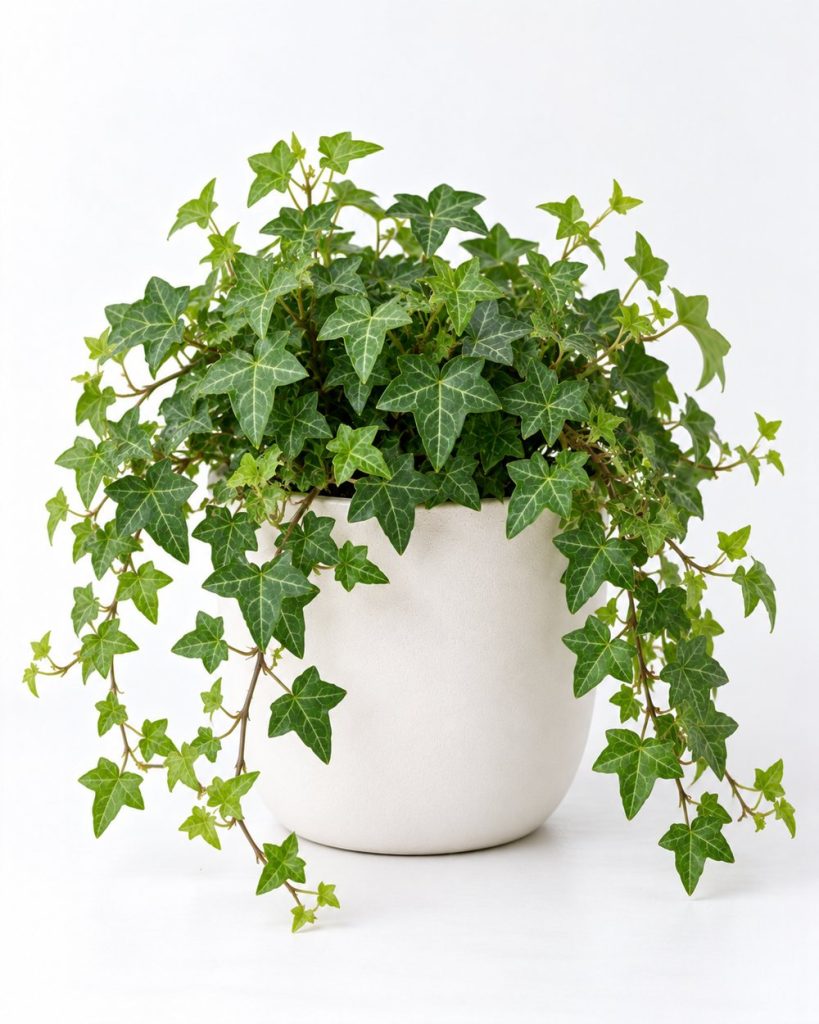
In the right spot it is charming. The small, pointed leaves come in dark green, or with white, cream, or yellow edges, and some types have curly or tiny needle-like leaves. Let it spill from a hanging basket, wind it around a wire hoop, or train it into a little topiary shape. It grows at a steady pace and is easy to shape with a pair of scissors. Pinching off the tips makes it branch, so one long strand turns into a fuller clump.
Here is the honest part. Ivy is a spider mite magnet in heated winter rooms. You will see fine webbing and speckled, dull leaves if they move in, so a weekly shower for the plant is a good habit. It is also toxic to pets. Outside, it is a different story again. In many parts of the US it escapes gardens and smothers trees, so keep it as a pot plant and do not toss cuttings in the yard.
English Ivy care
Light
Medium to bright indirect light keeps the leaves full and the colors clear. An east window is a good bet. It survives in low light for a while, but the vines grow thin with big gaps between leaves. The white and cream types burn more easily, so keep those out of direct afternoon rays.
Watering
Let the top inch of mix dry, then water well and empty the saucer. Ivy that sits wet gets brown, dry edges that look like thirst, which fools a lot of people into watering more. When you are not sure, wait a day or two. A little too dry is safer than too wet.
Soil and pot
A general indoor potting mix with good drainage works. Ivy roots are fine and shallow, so it does well in a modest pot rather than a deep one. Make sure there is a drainage hole, and never let the bottom of the pot stand in water.
Humidity and temperature
It likes moist air more than most people expect. Set the pot on a tray of wet pebbles, keeping the pot above the water line, or group it with other plants. Keep it away from radiators and heating vents. Dry heat is the main thing that brings in mites.
Feeding
Ivy grows fine on very little. One dose a month from late spring to midsummer, at half the bottle rate, keeps the vines leafy. Go even lighter with white or yellow edged types, because heavy feeding can turn their pale parts green. A cool room in winter means the plant is resting, so give it no food until spring.
Repotting
Ivy can stay in the same pot for two years or so. Move it up one size in spring when roots poke out the bottom or the soil dries within a day or two. If you want to keep it small, just trim the vines instead.
Propagation
Snip a 4 to 6 inch piece from the end of a vine. Pull off the bottom leaves and put the bare stem in water or damp mix. Ivy often roots at the nodes along the stem, so pinning a vine onto soil in the same pot also works. Roots form in a few weeks.
Common problems
Why do the leaves look dusty and speckled?
This is the classic sign of spider mites. Hold a sheet of white paper under a leaf and tap it. If tiny dots crawl, rinse the whole plant in the shower and repeat every few days, or use neem oil.
Why are the leaf edges brown when the soil is moist?
That is usually too much water, not too little. Roots sitting in wet soil cannot take up water, so the edges dry out. Let it dry more between drinks.
Why did my variegated ivy turn all green?
Low light often makes the pale patches shrink. Move it brighter, and cut out any all-green stems so they do not take over.
Why is my ivy thin and stringy?
Warm rooms and low light both make long, bare vines. Pinch the tips to force side shoots, and find it a cooler, brighter spot.
Frequently asked questions
Is English ivy invasive?
In many US regions, yes. It climbs and smothers trees and is hard to remove. As a houseplant it is fine, just bag up trimmings instead of composting them outside.
Can English ivy grow up a wall indoors?
Its little roots cling to rough surfaces and can leave marks on paint. A trellis, hoop, or moss pole gives it something to climb without hurting the walls.
Is it okay in a bathroom?
A bright, cool bathroom suits it well because of the extra moisture. Avoid a dark one with no window.
Not sure this plant fits your home?
Take a plant quizSources: www.aspca.org, plants.ces.ncsu.edu, costafarms.com