Boston Fern
Nephrolepis exaltata · also called Sword fern, Boston sword fern
Soft green fronds that need damp air and steady water
- Light
- Bright indirect, Medium light: Bright indirect light, no hot direct sun
- Water
- Often 1-2 times a week, keep the soil lightly moist
- Difficulty
- Moderate
- Pet safety
- Non-toxic to cats and dogs
- Size
- Medium
- Height
- 1-3 ft tall and wide
- Growth
- Moderate
- Humidity
- Needs higher humidity than most homes have
- Temperature
- 60-75°F
- Good rooms
- Bathroom, Kitchen, Living room
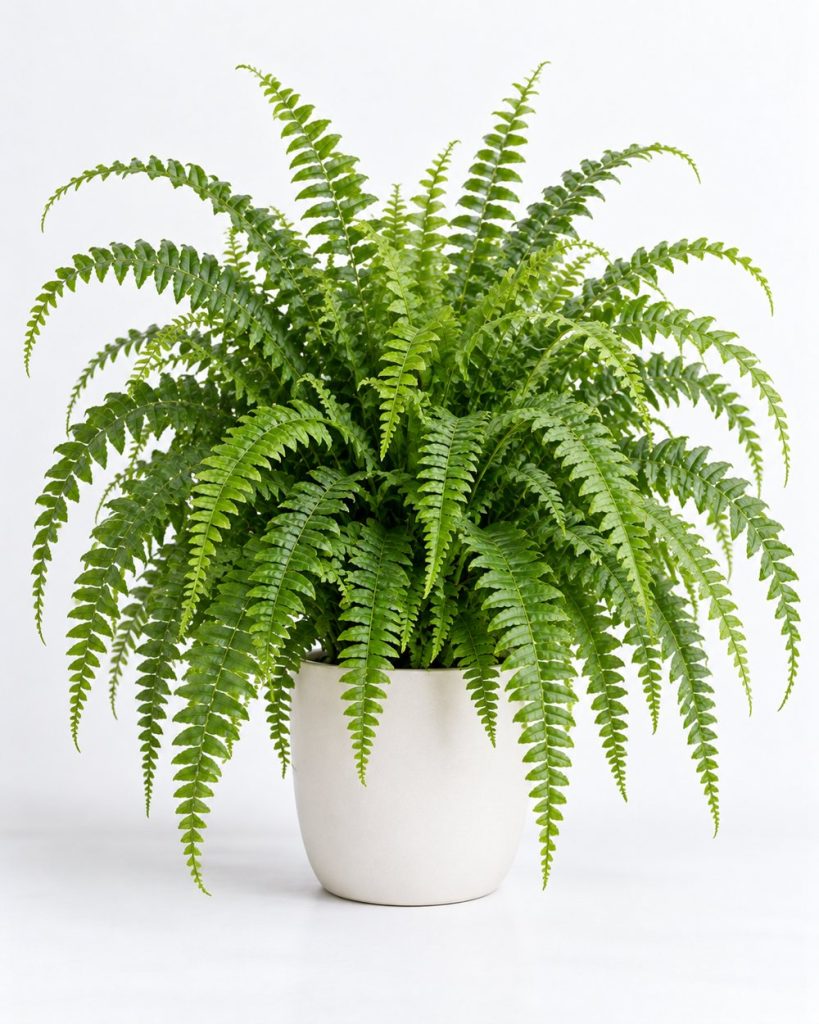
Most Boston ferns struggle in their first winter indoors. Summer on a porch was easy, then the heat comes on, the air dries out, and tiny leaflets start raining onto the floor. If you know that going in, you can plan for it. This fern grows a full ball of arching green fronds, soft and frilly, often 2 to 3 feet across. It looks best hanging at eye level or sitting on a stand where the fronds can spill over.
It is a good plant for people with cats and dogs, since the ASPCA lists it as non-toxic to both. It also suits a bathroom or kitchen with a decent window. Steam from showers and cooking keeps the air damp, which is what this fern cares about most. If you like a plant that looks soft and full instead of stiff and sculpted, this is one of the classics. A plain white bathroom looks friendlier with one on the windowsill.
The honest downside is the mess and the attention. A Boston fern does not forgive dry soil. Let it dry out once and some fronds will crisp and drop. Dry air causes the same thing more slowly. Expect to sweep up shed leaflets now and then, and to water more often than you do for most plants. In a dim, dry bedroom it will look tired by spring.
Boston Fern care
Light
Bright indirect light keeps it full and green. A spot near an east or north window works well, or a few feet back from a sunnier one. Hot direct sun scorches the fronds. In a dim room it slowly thins out, so choose your brightest shaded spot.
Watering
Keep the soil lightly moist all the time, like a wrung-out sponge. Check it every few days by touch. When the top half inch feels dry, water until it drains. Hanging baskets dry fastest, so they may need water twice a week in summer.
Soil and pot
A peat-free or regular potting mix that holds moisture but still drains is ideal. A plastic pot keeps the soil damp longer than clay. Make sure there is a drainage hole, since standing water rots the roots even on a fern.
Humidity and temperature
This is the big one. It wants damp air, and winter heating is hard on it. Use a humidifier nearby, set it on a tray of wet pebbles, or keep it in a bright bathroom. Grouping it with other plants helps a little. Keep it well away from heat vents.
Feeding
Ferns have fine roots that burn easily, so go light. Mix a liquid fertilizer at a quarter of the normal strength and give it monthly from spring to the end of summer. Some growers prefer fish emulsion for a gentler feed, though it smells for a day. A fern that looks pale yellow-green in spring may be hungry. Brown, crispy frond tips after a feed mean the mix was too strong.
Repotting
Repot when roots fill the pot and water runs straight through, often every year or two. Spring is best. Move up one size, or split an overgrown plant into two or three pieces. Water well and keep it out of strong light while it settles.
Propagation
Division is the easy way. Cut the clump into sections, each with roots and fronds, and pot them separately. It also sends out thin runners that root where they touch soil. Pin one into a small pot of damp mix, then cut it free once it grows.
Common problems
Why is my fern dropping tiny leaves everywhere?
Dry soil or dry air is almost always the cause. Water more often and raise the humidity. Trim off bare or crispy fronds at the base so new ones can fill in.
Why are the fronds turning brown and crispy?
Dry air, dry soil, or direct sun can all do this. Check all three, and move it if it gets midday sun.
Why are the fronds yellow and limp?
This often means the soil stayed soggy or the pot has no drainage. Let it dry slightly and check the roots for rot. Repot into fresh mix if the roots smell sour.
Can I save a fern that looks half dead?
Often, yes. Cut away the dead fronds, keep the soil moist, and raise the humidity. New fronds usually grow from the center within a few weeks.
Frequently asked questions
Is a Boston fern safe for cats?
The ASPCA lists it as non-toxic to cats and dogs. Do not confuse it with asparagus fern, which is a different plant and is toxic.
Will my fern do well on a shaded porch?
Yes, in a shady spot once nights stay above 55°F. Check for bugs and bring it in before cold nights return. A quick rinse with the hose before it comes in helps too.
Does it need misting?
Misting helps only for a short time. A humidifier or a bright bathroom does far more for it.
Not sure this plant fits your home?
Take a plant quizSources: www.aspca.org, plants.ces.ncsu.edu