Calathea Orbifolia
Goeppertia orbifolia · also called Calathea orbifolia, Round-leaf calathea
Huge striped round leaves for a damp, shaded room
- Light
- Medium light: Medium light, no direct sun on the leaves
- Water
- About once a week, keep the soil lightly moist
- Difficulty
- Hard
- Pet safety
- Non-toxic to cats and dogs
- Size
- Medium
- Height
- 2-3 ft tall and wide
- Growth
- Moderate
- Humidity
- Needs high humidity, about 50% or more
- Temperature
- 65-80°F
- Good rooms
- Bathroom, Bedroom, Living room
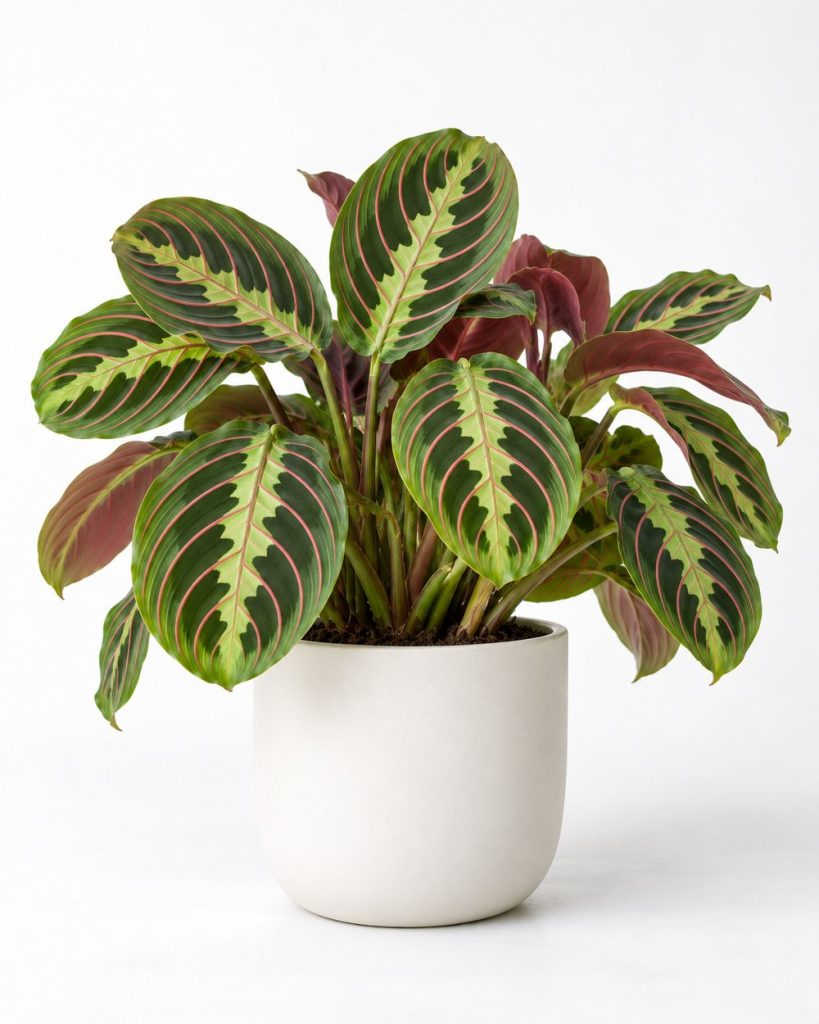
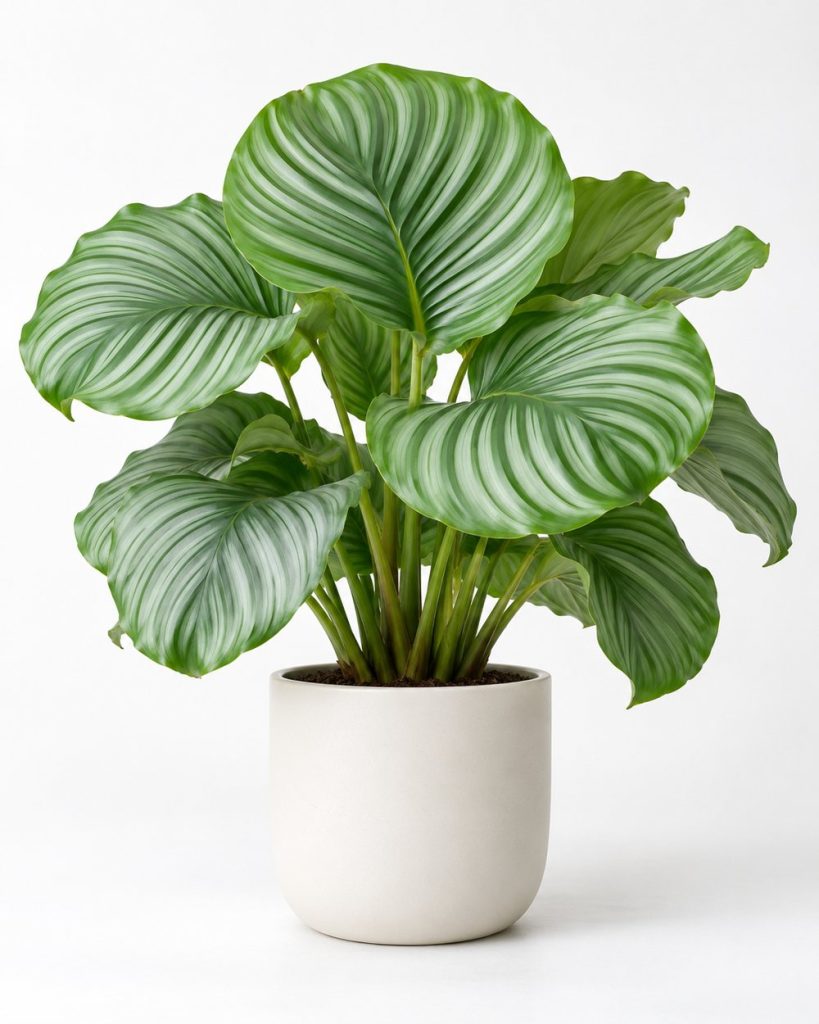
Here is the deal with orbifolia: it is stunning, and it is fussy. The leaves are round and broad, often a foot across on a mature plant, with pale silver stripes running across a soft green base. They feel thin, almost like paper. Each leaf rises on its own long stem, so the plant grows into a wide, airy mound. At night the leaves lift a little and close up slightly, then lower again in the morning.
It is a strong pick for pet homes, since the ASPCA lists calatheas as non-toxic to cats, dogs, and horses. It suits someone who enjoys checking on a plant a few times a week and does not mind a humidifier humming nearby. A bright bathroom or a bedroom with a humidifier makes a good home. You will also find it sold under its old name, Calathea orbifolia. Botanists moved it into the Goeppertia group, but the care is the same.
The downside is the care itself. Dry air, hard tap water, or a single dry spell can turn the leaf edges brown and crispy, and those marks do not heal. It also dislikes cold drafts and direct sun. Expect brown edges in winter unless you raise the humidity. If you want a calm plant you can ignore for two weeks, look at a cast iron plant instead.
Calathea Orbifolia care
Light
Medium light is right, such as a few feet from an east or north window. Direct sun fades the silver stripes and burns the thin leaves. In low light it slowly gets smaller and makes fewer leaves. Bright, filtered light without sun on the leaves is the goal.
Watering
Keep the soil lightly moist, never soggy and never bone dry. Water when the top inch feels dry, which is often about once a week. Use rainwater, filtered, or distilled water if your tap water is hard, since minerals can brown the leaf edges. Room temperature water is best.
Soil and pot
A light mix that holds some moisture but drains well works. Regular potting mix with perlite and a little bark is a good start. Use a plastic or glazed pot with a drainage hole, which keeps the soil damp a little longer than clay.
Humidity and temperature
This matters most. It wants humidity around 50% or higher. A small humidifier nearby is the most reliable fix, and a cheap hygrometer helps you check. Pebble trays and grouping plants help a little. Misting does very little on its own. Keep it far from heat vents.
Feeding
Calathea leaves show salt damage fast, as brown, crispy edges. Use a balanced liquid fertilizer at a quarter to half strength once a month in spring and summer, and mix it with filtered or rain water if your tap water is hard. Every couple of months, run plain water through the pot until it drains clear. A plant that is already struggling should not be fed. Fix the water and humidity first.
Repotting
Repot every year or two in spring, when roots fill the pot. Move up one size. Disturb the roots as little as you can, and keep it out of bright light for a week or two after. Expect a leaf or two to droop while it settles.
Propagation
Division is the only way at home. In spring, slide the plant out and gently split it into clumps, each with several leaves and roots. Pot them in damp mix and keep the humidity high. It does not grow from leaf or stem cuttings.
Common problems
Why does my orbifolia get crispy edges?
Dry air is the top cause, followed by hard tap water and dry soil. Raise the humidity and switch to filtered or distilled water. Trim the brown edges with clean scissors if they bother you.
Why are the leaves curling?
Curled leaves mean thirst or dry air. Water if the soil is dry and add humidity. Leaves that curl in the afternoon and open by morning may just need a drink sooner.
Why is it turning yellow?
Soggy soil or a cold spot often causes yellow leaves. Let the top dry a bit and move it away from cold windows. One old outer leaf yellowing now and then is normal.
What are the tiny webs under the leaves?
Spider mites, which love dry air. Wipe both sides of each leaf with a damp cloth and raise the humidity.
Frequently asked questions
Is Calathea orbifolia the same as Goeppertia orbifolia?
Yes. The name changed when botanists moved it to a new group. Plant shops still use Calathea most of the time. Your receipt may say either one.
Is it safe for cats?
The ASPCA lists calatheas as non-toxic to cats and dogs. It is still best to stop pets from chewing it.
Does it move at night?
A little. The leaves lift and fold slightly in the evening, less than a prayer plant does.
Not sure this plant fits your home?
Take a plant quizSources: www.aspca.org, plants.ces.ncsu.edu