Swiss Cheese Vine
Monstera adansonii · also called Adanson's monstera, Monkey mask plant, Swiss cheese plant
Hand-sized leaves full of holes on a fast climbing vine
- Light
- Bright indirect, Medium light: Bright indirect for the most holes, no harsh sun
- Water
- About weekly in summer, when the top inch or two is dry
- Difficulty
- Moderate
- Pet safety
- Toxic to cats and dogs
- Size
- Medium
- Height
- Climbs 3-8 ft indoors on a pole
- Growth
- Fast
- Humidity
- Likes 50% or more
- Temperature
- 60-85°F
- Good rooms
- Bathroom, Bedroom, Living room, Office
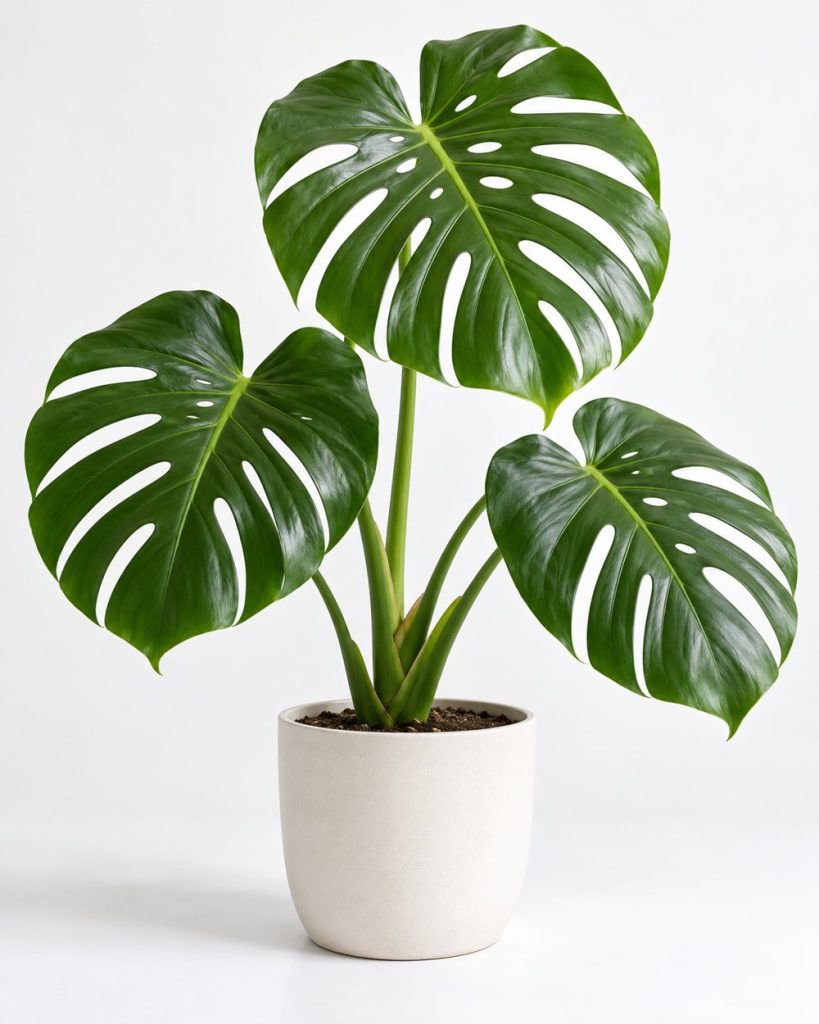
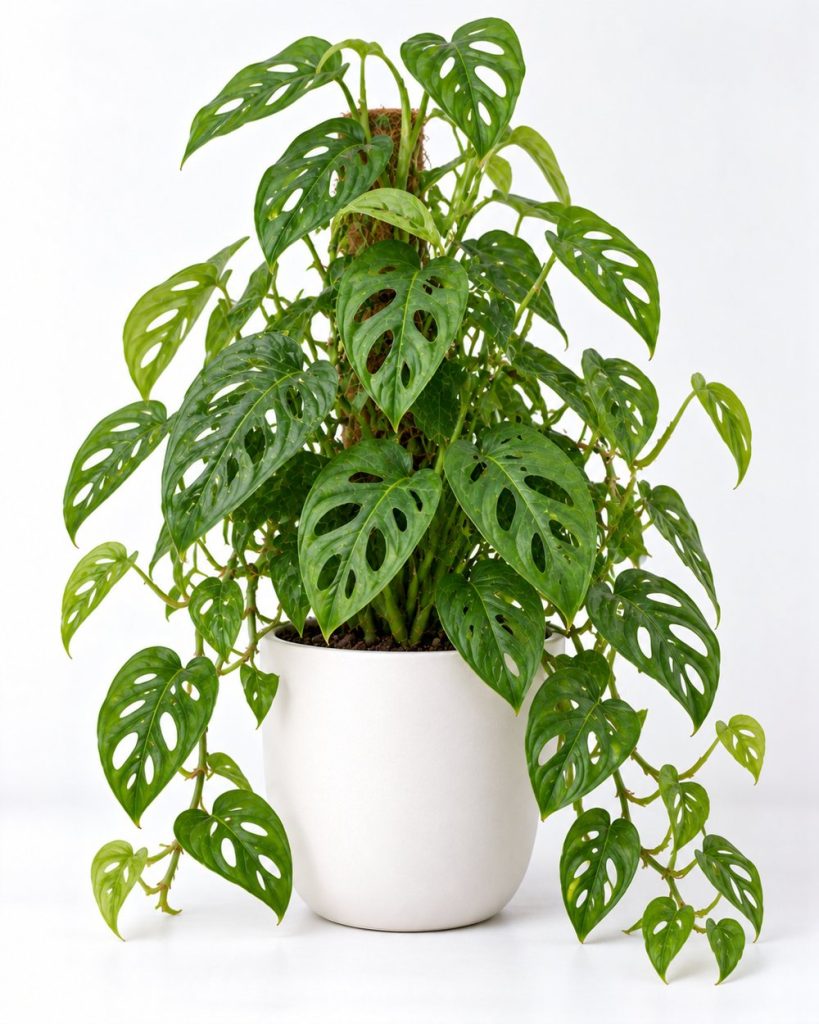
Hold a Swiss cheese vine leaf up to a window and the light comes through in ovals. The holes are part of the leaf from the day it opens, not damage, and they are where the plant gets its name. It is often confused with the big Monstera deliciosa. This one is smaller and thinner, with leaves about the size of your hand and long stems that either climb or hang. On a mature plant, most leaves carry a row of holes along each side of the center vein.
It is a fun plant for anyone who likes a quick result. In a warm, bright room it puts out new leaves often in summer, and the vines can be pinned up a moss pole or left to trail from a high shelf. Give it something to climb and the leaves tend to grow larger, with more holes. Let it hang and they stay smaller. A steamy bathroom with a good window suits it very well.
Now the part the plant tags skip. It wants more humidity than a pothos or a heartleaf philodendron. In a dry, heated room the new leaves can get stuck as they unroll, or come out with brown, crispy edges. The thin leaves also show damage fast if the soil stays wet too long. It is toxic to cats and dogs, and a dangling vine is very tempting to a playful cat.
Swiss Cheese Vine care
Light
Bright indirect light grows the biggest leaves and the most holes. Place it near an east window or a few feet back from a south or west one. Direct midday sun can scorch the thin leaves within a day or two. In medium light it keeps going, but the gaps along the vine get longer.
Watering
Let the top inch or two of mix dry, then water until it drains. In summer that is often once a week. In winter it may be every ten days to two weeks. The leaves go limp when it is dry and perk up within hours of a drink, which makes it easy to read.
Soil and pot
Use an airy, chunky mix. Regular potting soil with plenty of orchid bark and perlite works well. The roots want air as much as water. A pot with good drainage keeps them from sitting in a puddle at the bottom.
Humidity and temperature
It likes at least 50 percent humidity, and more is better. A humidifier is the easiest fix for dry homes. Pebble trays and grouping plants help a little. Misting does not raise humidity for long, so do not count on it. Keep it far from heaters.
Feeding
In summer this vine can add a few feet of stem, and all those holey leaves take fuel. Every two weeks from May to September, add a half dose of a balanced fertilizer to your normal watering. If you tend to forget, a slow-release pellet worked into the top of the soil in spring does the same job. Small new leaves with few holes usually mean low light, not hunger.
Repotting
Repot every one to two years in spring, or when roots circle the pot. Go up one size. This is also a good time to add a moss pole, pushed in before you fill the soil so it does not tear the roots later. Wear gloves, since the sap can irritate skin.
Propagation
Snip a length of vine just below a node, ideally one with an air root already growing. Damp sphagnum moss in a clear cup works well, because you can watch the roots form. Water works too. Once the new roots are a couple of inches long, move the cutting to soil and keep it a little moist for the first weeks.
Common problems
Why are new leaves tearing as they open?
Dry air is the usual cause. The leaf sticks to itself as it unrolls. Raise the humidity, and do not try to pull a stuck leaf open.
Why do the new leaves have no holes?
Young plants and plants in low light often make solid leaves. More light and a pole to climb usually bring the holes back on new growth.
What are the tiny brown bumps on the stems?
Those may be scale insects, which stay in one place and suck sap. Scrape them off, wipe the stems with a soft cloth and insecticidal soap, then check weekly.
Why is the soil still wet a week after watering?
The mix may be too dense or the pot too big for the roots. Repot into a chunkier mix in a pot just slightly larger than the root ball.
Frequently asked questions
Is Swiss cheese vine the same as monstera?
They are in the same genus but are different species. Monstera deliciosa grows huge, split leaves, while Monstera adansonii stays smaller, with holes inside the leaf edge.
How big can it get indoors?
On a moss pole it can reach 3 to 8 feet over time. Left trailing, the vines keep getting longer, so trim them to the length you like.
Why is it called monkey mask plant?
The holes in the leaf look a bit like the eye holes in a mask. It is just a nickname, and the plant has nothing to do with monkeys.
Not sure this plant fits your home?
Take a plant quizSources: plants.ces.ncsu.edu, www.aspca.org