Arrowhead Plant
Syngonium podophyllum · also called Arrowhead vine, Nephthytis, Goosefoot plant
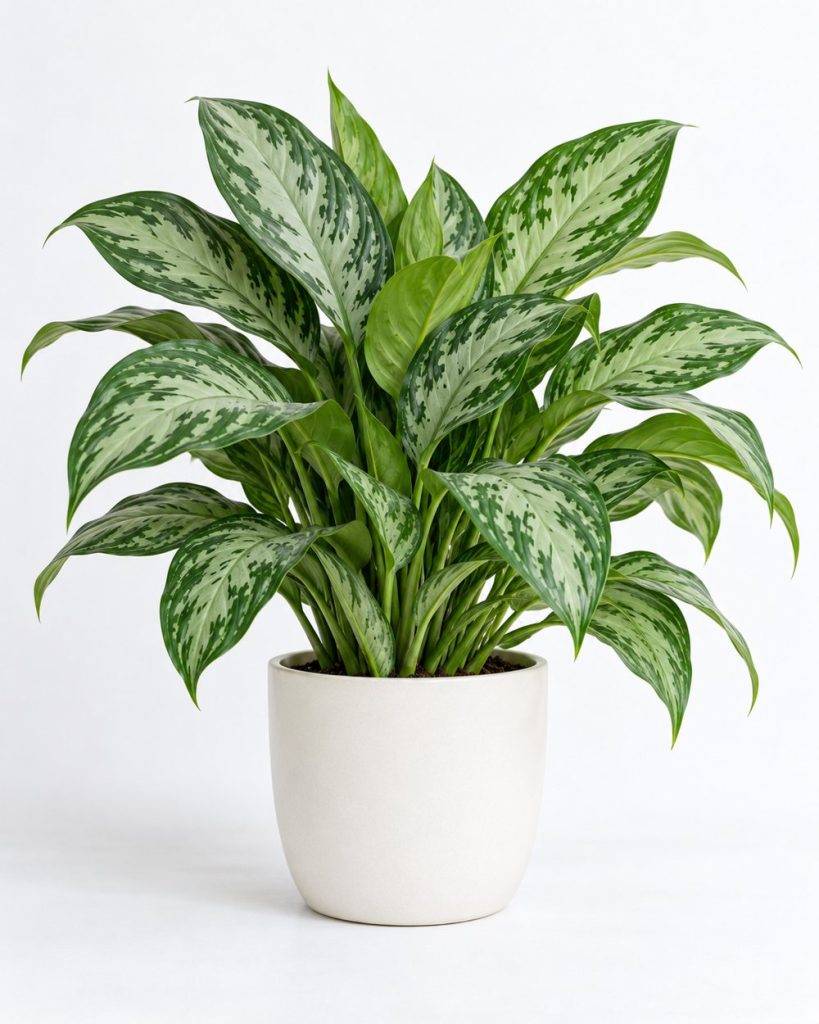
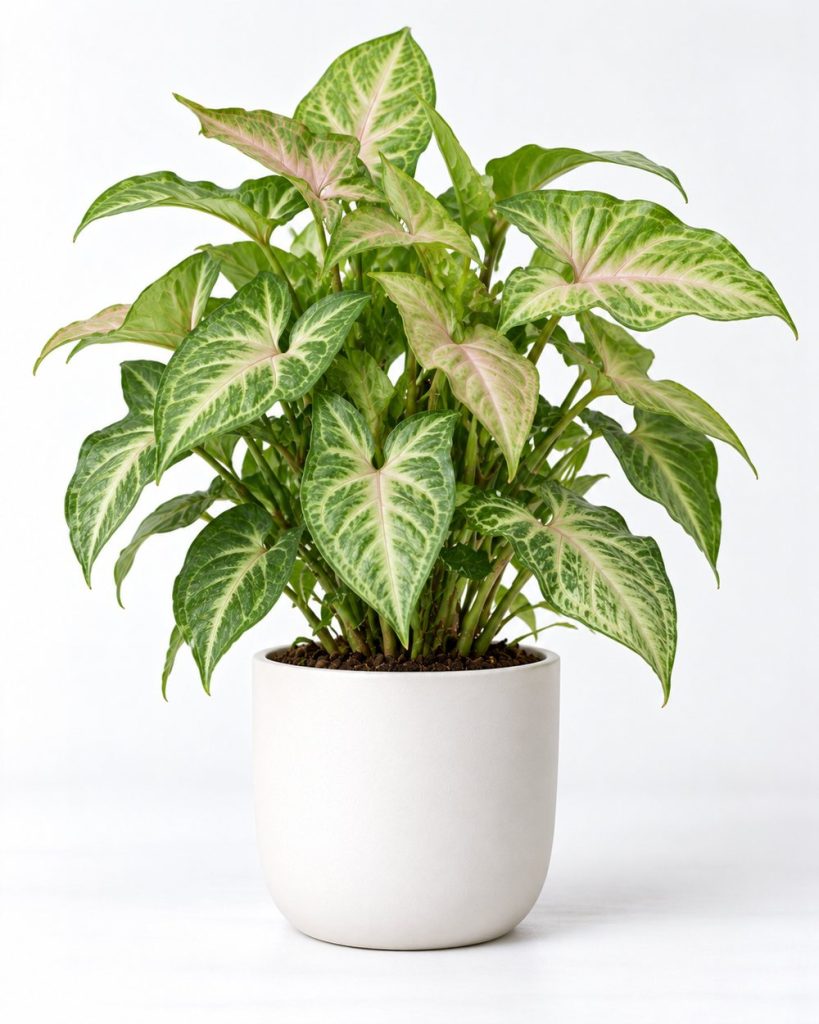
Pink, cream, or green arrow leaves that change shape as it grows
- Light
- Bright indirect, Medium light: Medium to bright indirect, no harsh sun
- Water
- About once a week, when the top inch of soil is dry
- Difficulty
- Easy
- Pet safety
- Toxic to cats and dogs
- Size
- Medium
- Height
- 1-3 ft as a bush, climbs to 3-6 ft
- Growth
- Fast
- Humidity
- Likes extra humidity, copes with average
- Temperature
- 60-85°F
- Good rooms
- Bathroom, Bedroom, Living room, Office
Most plants keep the same leaf shape their whole life. Arrowhead plant changes its mind as it ages. Young plants make neat, pointed leaves that look like the tip of an arrow, often in pink, cream, or silvery green. Give it a few years and a pole to climb, and the new leaves split into three, then five or more fingers. Many owners never see that stage, because they trim it to stay small.
That trimming is the main skill here. Left alone, it grows fast and sends out long stems that want to climb or hang. Cut those back in spring and summer and the plant stays a full, bushy mound on a shelf or desk. Skip the pruning and you can train it up a moss pole or let it trail from a hanging pot. It fits a bright office or a living room that gets steady light most of the day.
Pink and cream types are the ones you see in shops, and they need more light than the plain green ones to hold their color. All of them are toxic to cats, dogs, and horses. The sap can also make sensitive skin itchy, so wear gloves if you do a big cut back. If you have a cat that chews leaves, put this one up high or choose another plant.
Arrowhead Plant care
Light
Medium to bright indirect light suits it best, such as a few feet from an east or west window. Direct afternoon sun bleaches and burns the leaves. In a dim corner it keeps living, but the colorful types fade toward green and the stems get long and floppy.
Watering
Let the top inch of soil dry, then water until it runs out the bottom. In summer that may be every five to seven days. In winter it slows down, so stretch the gap. A plant that sits wet for days gets yellow leaves and soft stems, which is far harder to fix than a thirsty one.
Soil and pot
Use a light indoor potting mix with some perlite or orchid bark stirred in. You want soil that holds a little moisture but never turns into mud. A plastic pot with drainage holes is fine, and it means you water a bit less often than with clay.
Humidity and temperature
It grows best with higher humidity, the kind you get in a bright bathroom or near a group of other plants. Average room air is fine for most homes. In very dry winters the leaf edges may brown, and a small humidifier nearby helps.
Feeding
Syngonium can put out a new leaf every week or so in summer, which makes it one of the hungrier plants on this site. A balanced fertilizer diluted to half, given every three weeks between April and early October, suits it. Watch the edges of new leaves. If they brown soon after a dose, the mix was too strong. Rest it from November to February.
Repotting
Fast growth fills a pot quickly. Expect to repot every year or so, in spring, into a pot about 2 inches wider. If you would rather keep it small, trim the roots and stems a little and put it back in the same pot with fresh mix.
Propagation
Cut a stem just below a node, the bump where a leaf joins the stem. Many stems already have small brown air roots there, which speeds things up. Set the cutting in water or damp mix. Roots usually show in a few weeks, and a big plant can also be split when you repot.
Common problems
My pink arrowhead plant is turning green. What happened?
Low light is the usual cause. Colored leaves need more light to keep their pink. Move it to a brighter spot out of direct sun, and new leaves should come in with more color.
Why are the stems long, bare, and floppy?
It is stretching toward light and starting to climb. Cut the long stems back to keep it bushy, or give it a pole to grow up. The cuttings root easily.
Why are the leaves drooping even though I water often?
Droopy leaves with wet soil usually mean the roots are sitting in water and starting to rot. Let it dry out and make sure the drainage hole is clear. Repot into fresh mix if the roots look brown and mushy.
Why are the new leaves so small?
Small new leaves usually mean it wants more light or food. Move it a little brighter and start feeding monthly in spring.
Frequently asked questions
Is arrowhead plant the same as nephthytis?
Yes. Shops often sell it under that older name. The plant inside the pot is Syngonium podophyllum either way.
Can it grow in just water?
Cuttings can live in a jar of water for a long time and look nice on a shelf. For a full plant that keeps growing, pot it in soil once the roots form.
Will it climb on its own?
It sends out air roots that grab rough surfaces, but indoors it needs help. Tie the stems loosely to a moss pole or stake to get it started.
Not sure this plant fits your home?
Take a plant quizSources: www.aspca.org, plants.ces.ncsu.edu