Nerve Plant
Fittonia albivenis · also called Fittonia, Mosaic plant, Silver nerve
Small leaves netted with white or pink veins, for shelves and terrariums
- Light
- Bright indirect, Medium light: Medium to bright indirect, office lights work too
- Water
- 1-2 times a week, keep the soil lightly moist
- Difficulty
- Moderate
- Pet safety
- Non-toxic to cats and dogs
- Size
- Small
- Height
- 3-8 in tall, spreads 6-18 in
- Growth
- Slow
- Humidity
- Likes 50% or more, terrariums are ideal
- Temperature
- 60-80°F
- Good rooms
- Bathroom, Bedroom, Kitchen, Office
The first time a nerve plant faints on you, it is alarming. One morning it is a tidy mound of leaves. By afternoon it is flat on the soil, every stem slumped over the rim. Give it a drink and within a few hours it stands back up as if nothing happened. That dramatic flop is how it tells you it is thirsty, and you learn to read it fast.
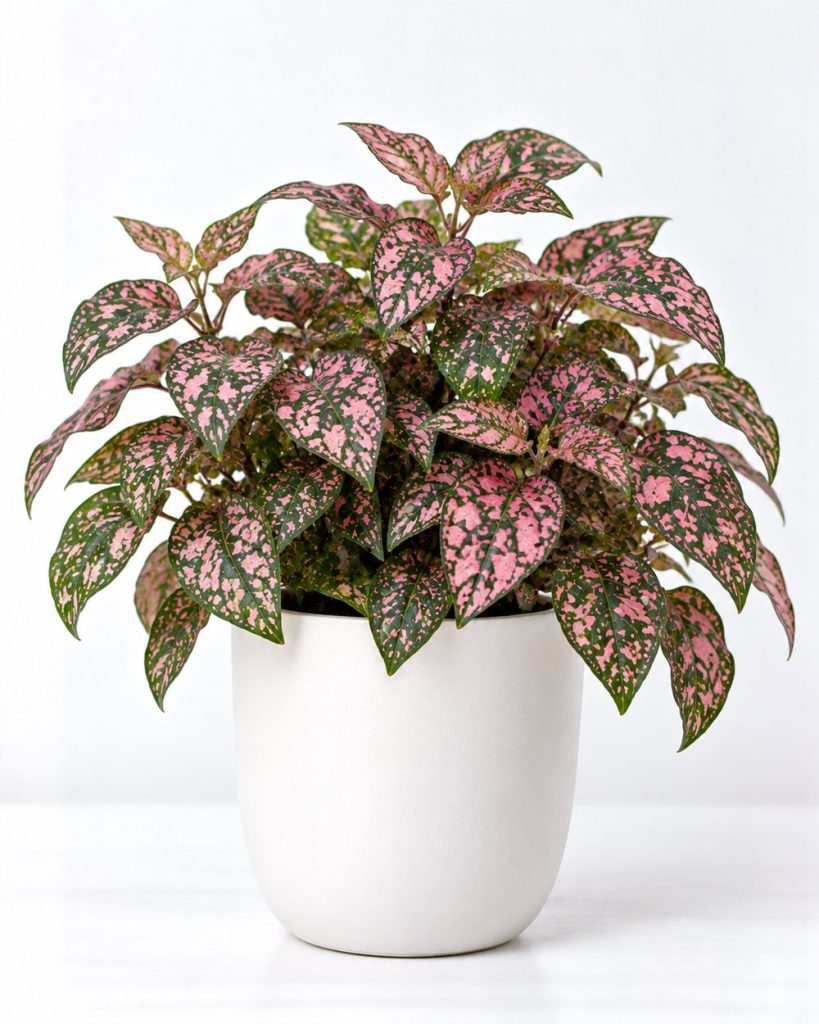
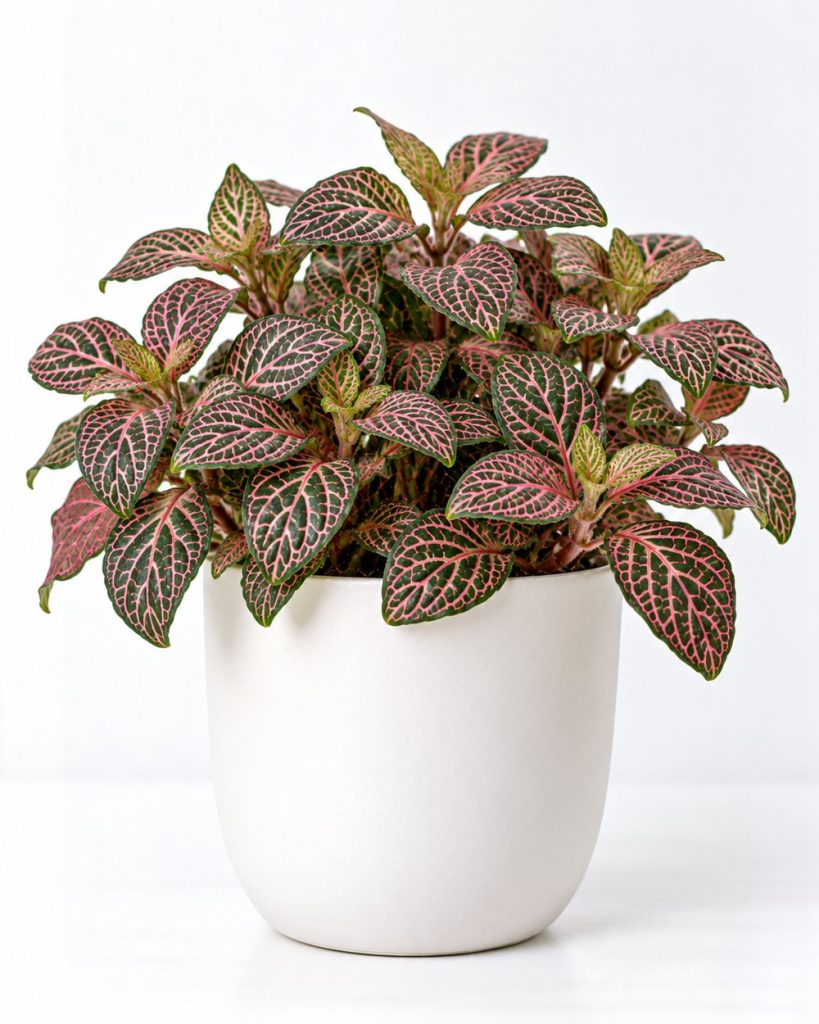
The leaves are the reason to own one. They are small and oval, laced with a fine net of veins in white, pink, or red against green. It stays low, usually 3 to 8 inches tall, and creeps sideways as it grows. That size makes it a natural fit for a desk, a bookshelf, or a glass terrarium, where the moist air keeps it happy with little effort. It also grows well under office lights, which few colorful plants can manage.
The ASPCA lists it as non-toxic to cats and dogs, so it is easy to place in a pet home. The trade-off is that it does not forgive dry soil or dry air for long. Wilting over and over weakens it, and the lower stems go bare. If you water on a set day each week, or have a bright shelf in the bathroom, it is a cheerful little plant. If you forget for a week at a time, it will keep fainting until it stops getting back up.
Nerve Plant care
Light
Medium to bright indirect light keeps the veins bright. A spot near an east or north window works. Direct sun scorches the small leaves and fades the color. It does fine under fluorescent or LED office lights too. In deep shade the stems get leggy and the veins look dull.
Watering
Keep the soil lightly moist, never soggy. In most homes that is once or twice a week. Feel the top of the soil, and when it starts to feel dry, water. If the plant has collapsed, water at once. It recovers, but repeated wilting costs it leaves over time. Wet soil that never dries is the opposite risk and leads to rot.
Soil and pot
A regular indoor potting mix with a little perlite is fine. The roots are shallow, so a small, shallow pot works better than a deep one. In a terrarium, put a layer of gravel or clay balls under the soil so extra water has somewhere to go.
Humidity and temperature
It prefers humid air, around 50 percent or more. Dry air makes the leaves shrivel and drop. A terrarium or a bathroom shelf are easy ways to keep the air moist. In a living room, a pebble tray under the pot helps.
Feeding
Fittonia is small and stays small, so it eats little. In a regular pot, a weak liquid feed every five or six weeks from spring into summer is plenty. In a closed terrarium, two or three tiny doses a year will do, since faster growth only means more trimming. Leggy, pale stems usually call for more light rather than food.
Repotting
It stays small and only needs a new pot every year or two. Move it to a pot just an inch wider. Older plants that have gone bare in the middle are often easier to replace with rooted cuttings than to repot.
Propagation
Very easy. Snip a 2 to 3 inch stem tip just below a leaf joint and pull off the lowest leaves. Stand it in water or stick it straight into damp soil. Cover it with a clear cup to keep the air moist. Roots form in two to three weeks. Creeping stems often root where they touch the soil, too.
Common problems
Why are the bottom leaves dropping off?
Older, lower leaves fall when the plant has wilted many times or the air is very dry. Pinch back the stems to push new growth lower down, and water a little sooner.
Why are the stems long with gaps between leaves?
That is a sign of too little light, or an older plant that needs a trim. Pinch the tips back to just above a leaf pair. The plant branches out from the cut and fills in.
Why are the leaves going yellow and soft?
Soft yellow leaves usually mean the soil is staying wet. Let the top dry a little between drinks and make sure the pot drains.
What are the small flower spikes coming up?
Nerve plant sometimes sends up short spikes of pale flowers. They are not very showy. Many people pinch them off so the plant spends its energy on leaves.
Frequently asked questions
Do I need to open a closed terrarium?
Now and then, yes. If the glass stays fogged all day or you spot mold, take the lid off for an hour or so to let it air out.
Can I grow it with other plants in one pot?
Yes, as long as the partners like the same damp soil and humid air. It pairs well with small ferns and with polka dot plant in a mixed bowl.
What is the difference between Fittonia albivenis and verschaffeltii?
They are a current and an older name for the same group of plants. Tags still use both, and the care is identical.
Not sure this plant fits your home?
Take a plant quizSources: plants.ces.ncsu.edu, www.aspca.org