Polka Dot Plant
Hypoestes phyllostachya · also called Freckle face, Measles plant, Pink splash
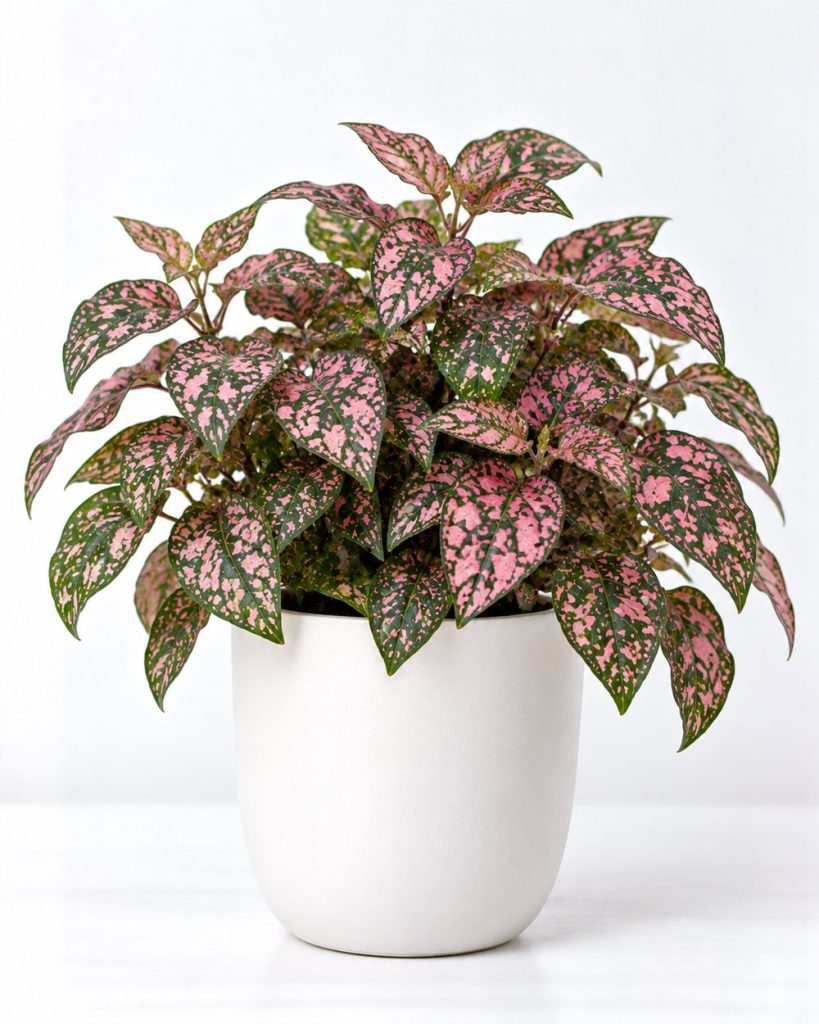
Pink, red, or white freckled leaves on a small, fast plant
- Light
- Bright indirect: Bright indirect, a little gentle sun keeps the color strong
- Water
- Every 4-7 days, keep the soil lightly moist
- Difficulty
- Easy
- Pet safety
- Non-toxic to cats and dogs
- Size
- Small
- Height
- 1-2 ft tall if not pinched
- Growth
- Fast
- Humidity
- Average is OK, 50% or more is better
- Temperature
- 65-80°F
- Good rooms
- Kitchen, Living room, Office
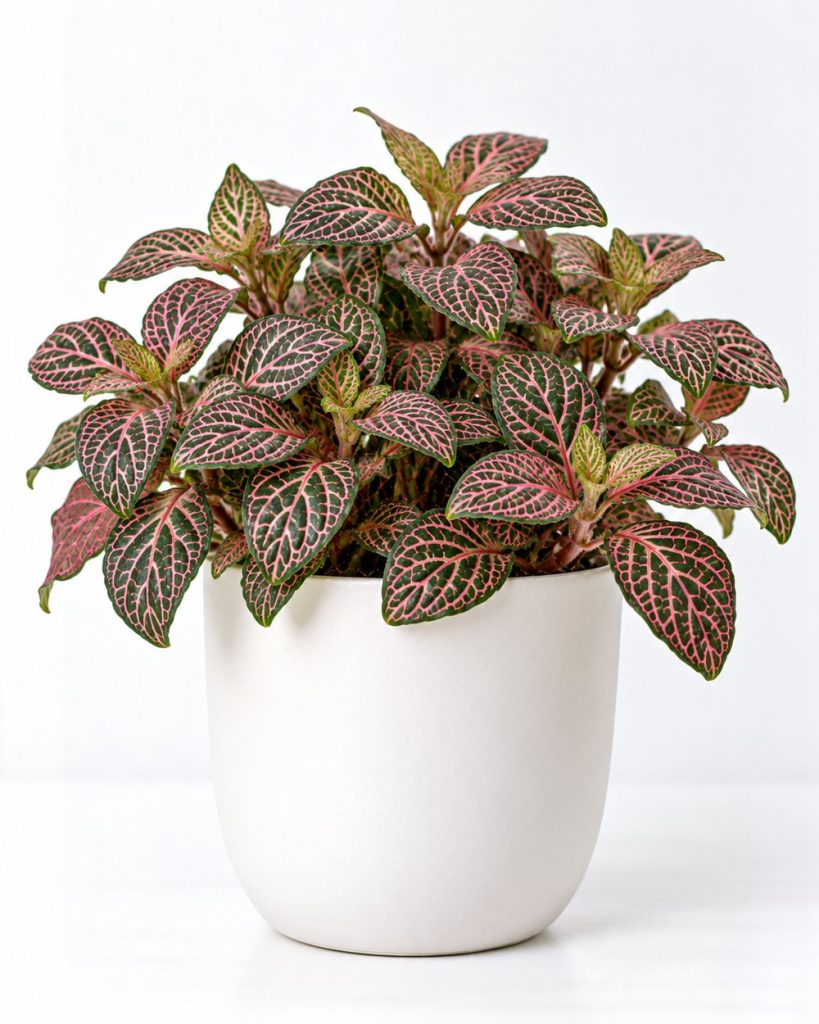
Polka dot plant is the one in the small pots near the checkout, splashed in pink, red, or white. It looks like someone flicked paint across green leaves. Most are sold in 3 or 4 inch pots for very little money, and that is a good way to think of them. Fun, bright, and fast, but not a plant you keep for ten years.
It grows quickly and wants to become a small shrub, 1 to 2 feet tall. Left alone it gets lanky, with long bare stems and a few leaves on top. Regular pinching keeps it short and bushy. You simply nip off the top pair of leaves on each stem every couple of weeks. It also tries to bloom, sending up small lilac flowers, and once it does, leaf growth slows. Many growers remove the flowers as soon as they show.
The ASPCA lists it as non-toxic for cats and dogs, though chewing on it can cause mild vomiting or diarrhea. It mixes well with other small plants in a bowl and makes a bright spot on a kitchen sill. The honest catch is that it will not sit quietly in a dim corner. Without bright light the dots fade and the stems stretch, and without steady water it droops by the end of a hot day.
Polka Dot Plant care
Light
Bright, filtered light gives the strongest color. An east window is perfect, and a south or west window works with a sheer curtain. Some morning sun is fine, but hot afternoon sun is too strong. In low light the pink fades toward green and the stems reach toward the glass.
Watering
This plant does not like to dry out. Water when the top half inch of soil feels dry, which can be every few days in a warm, bright room. It droops hard when thirsty and usually recovers after a drink. Still, keep it moist, not wet. Soggy soil leads to root rot.
Soil and pot
A rich, regular potting mix that drains well suits it. A little compost or peat helps hold moisture. Use a pot with a drain hole. Small pots dry out fast, so check them more often. Plastic pots hold water a bit longer than clay, which this thirsty plant likes.
Humidity and temperature
Average humidity is fine, though it looks its best at around 50 percent. In a dry winter room the leaf edges may brown. Grouping it with other plants or setting it near a humidifier helps. Skip heavy misting, which can invite mildew.
Feeding
Polka dot plant is grown for its spotted leaves, and very rich feeding can fade the pink. Pick a balanced liquid fertilizer and use it at half strength every three weeks from May through August. Never feed it while it is wilted from dry soil, because the roots burn more easily then. Water, wait a day, then feed. Ease off in winter.
Repotting
Since it is fast and fades after a year or two indoors, many people never repot. They take cuttings and start fresh instead. If you do repot, go up one size in spring. An old, woody plant in a big pot rarely looks as good as a fresh pot of young cuttings.
Propagation
Cuttings root readily. Snip a 3 to 4 inch stem tip, pull off the lower leaves, and put it in a glass of water in a bright spot. Roots usually show within a couple of weeks. Plant several in one pot for a full look. It can also be grown from seed, which is cheap but slower.
Common problems
Why are the leaves crinkled and curled?
Too much direct sun is a common cause, especially through a hot window. Move it back a few feet or add a sheer curtain. New leaves should come in flat.
What is the white powder on the leaves?
That is likely powdery mildew, a fungus that likes still air. Remove the worst leaves, improve airflow, and water the soil rather than the leaves.
Why do tiny white insects fly up when I touch it?
Those are whiteflies. Wash the undersides of the leaves and spray with insecticidal soap. Repeat weekly until they are gone.
Why is the plant leaning to one side?
It is bending toward the window. Turn the pot a quarter turn every week or so to keep it upright and even.
Frequently asked questions
Is polka dot plant the same as polka dot begonia?
No. Polka dot begonia is a different plant with silver spots, and the ASPCA lists begonias as toxic to pets. Check the tag before you buy.
Can I plant it outdoors?
Yes, as a summer bedding plant in partial shade. It cannot take frost, so treat it as an annual or bring it inside before nights turn cold.
Can it grow in a terrarium?
Small plants can, but they grow fast and soon press against the glass. Expect to trim them often or swap them out.
Not sure this plant fits your home?
Take a plant quizSources: plants.ces.ncsu.edu, www.aspca.org