Majesty Palm
Ravenea rivularis · also called Majestic palm, Ravenea
A cheap, tall palm that needs more light and water than you expect
- Light
- Bright indirect: Bright indirect for several hours, gentle morning sun is fine
- Water
- Keep evenly moist, often once or twice a week
- Difficulty
- Hard
- Pet safety
- Non-toxic to cats and dogs
- Size
- Large
- Height
- 5-10 ft indoors
- Growth
- Moderate
- Humidity
- Needs 50% or more
- Temperature
- 65-85°F
- Good rooms
- Living room, Office
Big box stores sell majesty palms in spring for very little money, and they look great on the shelf. Then they come home, and many of them start to yellow within a month. Here is why, and how to be one of the people whose palm keeps looking good.
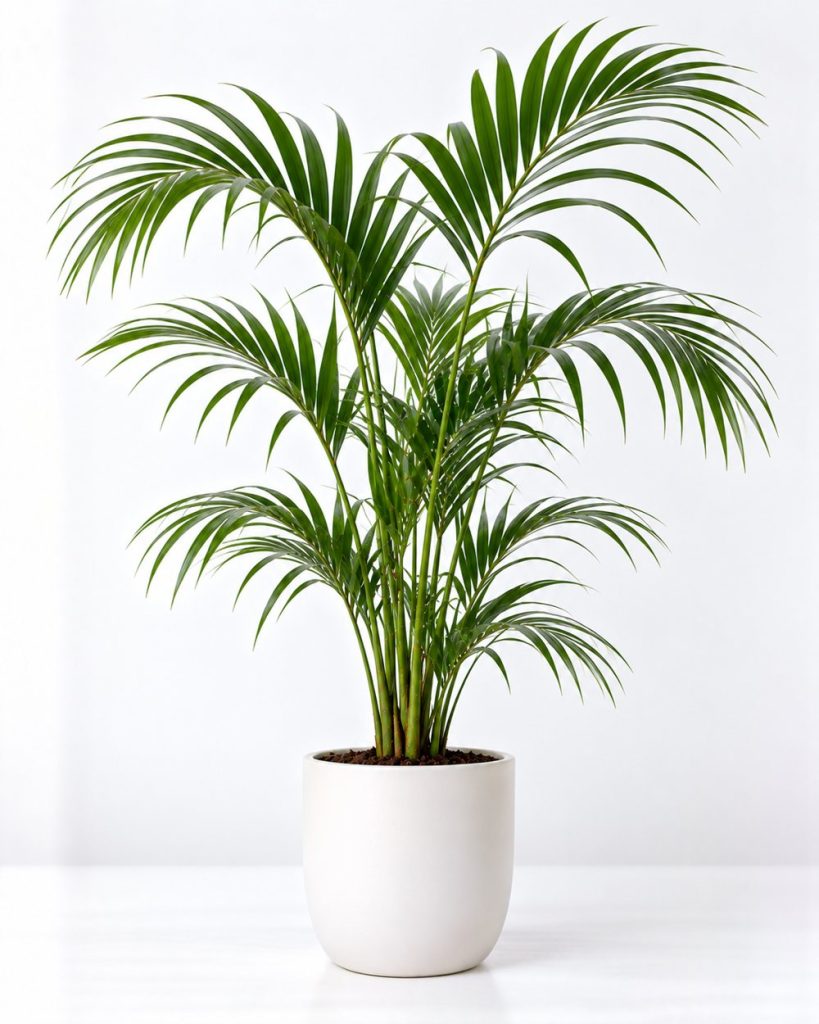
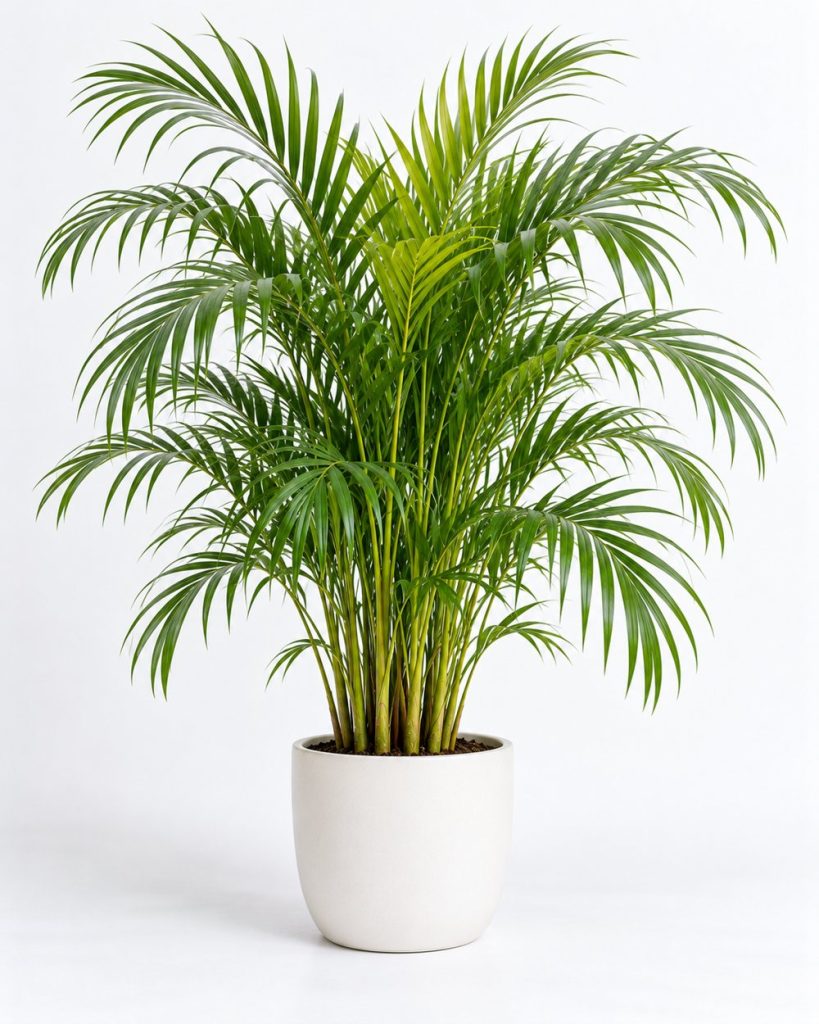
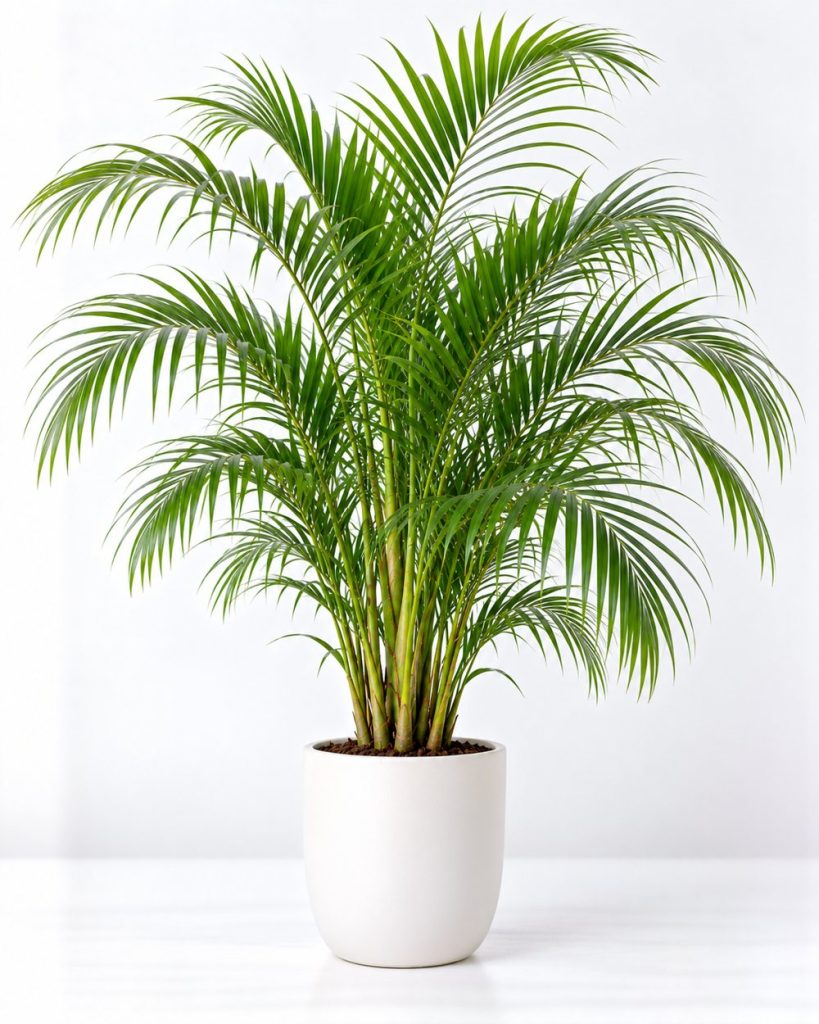
In the wild this palm grows along riverbanks in Madagascar. Its roots like wet feet and its leaves like strong light. A dim corner and a sip of water every two weeks, which suits a kentia palm, is the opposite of what it wants. Give it a bright window, soil that stays moist and humid air and it grows into a full, upright palm, often five to ten feet tall indoors. The fronds are bright green and feathery, held more upright than a kentia's. For the price of a takeout dinner, you get real height right away.
So is it hard? For most homes, yes, at least harder than the label suggests. Spider mites love it in dry winter air, and a missed watering shows quickly. On the plus side, the ASPCA lists it as non-toxic to cats and dogs. It is a fine choice if you have a sunny room, a humidifier and the habit of checking soil twice a week. Many people also move it to a shady patio for the summer, where it perks up fast.
Majesty Palm care
Light
Light is the make-or-break factor. Put it right beside your brightest window, where it gets several hours of strong indirect light. Gentle morning sun is fine, but hot afternoon sun through glass can scorch the fronds. In low light the palm slowly yellows from the bottom up, no matter how well you water.
Watering
Keep the soil evenly moist, like a wrung-out sponge. In a bright, warm room that can mean watering once or twice a week. Water when the top inch starts to feel dry. Use a pot with holes and empty the saucer, because moist is good but standing water still rots roots.
Soil and pot
A rich potting mix that holds water well, with some perlite for drainage, suits it. Peat or coir based mixes are a good base. Avoid cactus mix or very sandy soil, which dries out much too fast for this palm.
Humidity and temperature
Aim for 50 percent humidity or more. Dry air is the main reason indoor majesty palms get spider mites. Run a humidifier nearby in winter and rinse the fronds in the shower every month or so. A pebble tray alone is usually not enough for a plant this size.
Feeding
Majesty palm is a hungry palm, and it often goes yellow indoors when food runs short. Use a palm fertilizer with magnesium, iron and manganese every four weeks from spring to early fall, following the label for indoor plants. Yellow new fronds point to missing iron or manganese. Brown, burned tips point to too much food. Give nothing in winter.
Repotting
Repot every two to three years in spring when roots fill the pot. Go up one size. Stores often put several stems in one pot, and those crowded roots dry out fast, so a bigger pot can help. Water well the day before, so the root ball slides out in one piece.
Propagation
Most store pots hold several separate palms. In spring you can carefully divide them into smaller pots, though the roots may sulk for a while. Seed is the only other way, and it is slow. Stem cuttings do not work with palms.
Common problems
Why is my new majesty palm turning yellow?
Usually it is not getting enough light, or the soil is drying out between waterings. Move it right next to a bright window and check the soil every few days.
What is the fine webbing and speckled look on the fronds?
Spider mites, which spread quickly in dry air. Rinse the whole plant, wipe the fronds and raise the humidity. Repeat weekly until no webs return.
Why do the frond tips go brown and crispy?
Dry air or dry soil, sometimes salt from tap water. Water more evenly, flush the pot now and then and trim tips at an angle.
The trunk feels soft at the base. What now?
That is rot from soggy soil that could not drain. Unpot it, cut away mushy roots, and repot in fresh mix with better drainage.
Frequently asked questions
Is majesty palm safe for cats?
Yes. The ASPCA lists it as non-toxic to cats and dogs.
Can it go outside?
In summer, yes, in bright shade. It stays outdoors all year only where winters stay frost free, around USDA zones 10 and 11.
How is it different from a kentia palm?
A kentia copes with low light and dry soil. A majesty needs bright light and steady moisture, but it costs much less.
Not sure this plant fits your home?
Take a plant quizSources: www.aspca.org, plants.ces.ncsu.edu