Rattlesnake Plant
Goeppertia insignis · also called Calathea lancifolia, Calathea insignis
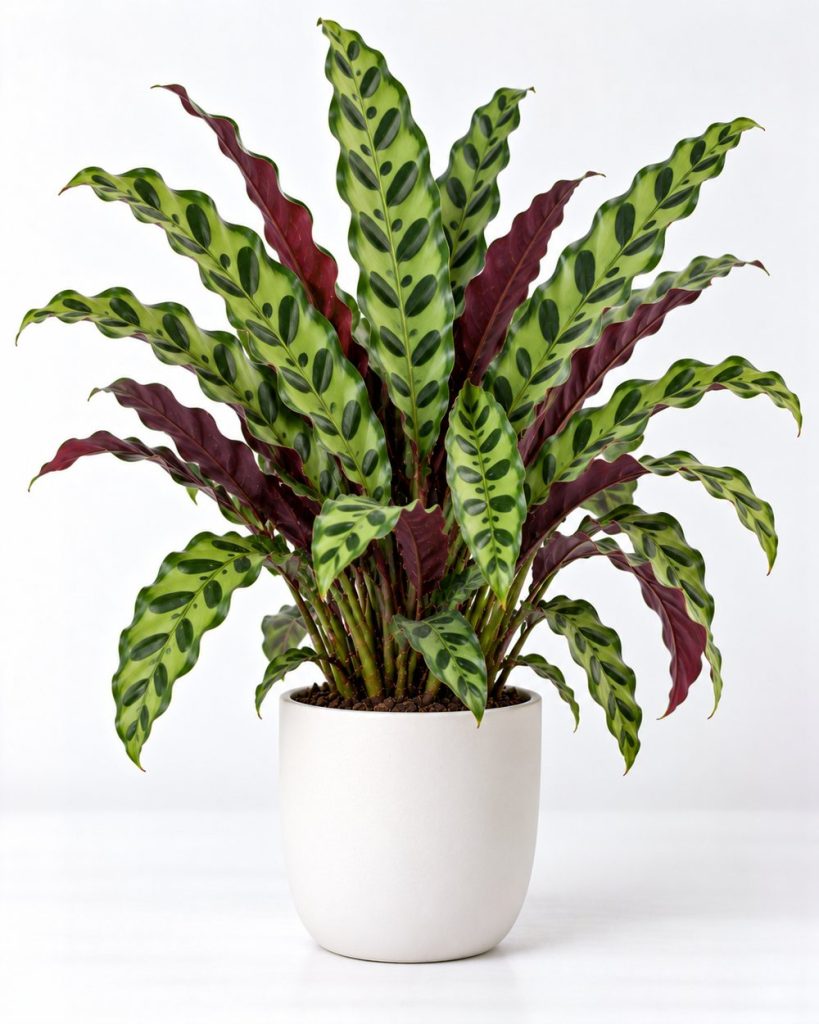
Long wavy leaves spotted like a snake, with purple undersides
- Light
- Bright indirect, Medium light: Medium to bright indirect, keep it out of direct sun
- Water
- About weekly, keep the soil evenly damp, not wet
- Difficulty
- Moderate
- Pet safety
- Non-toxic to cats and dogs
- Size
- Medium
- Height
- About 1.5-2 ft tall indoors
- Growth
- Moderate
- Humidity
- Needs extra humidity, 50% or more
- Temperature
- 65-75°F
- Good rooms
- Bathroom, Bedroom, Living room, Office
Ask anyone who gave up on calatheas, and there is a good chance the rattlesnake plant is the one they still have. It is one of the tougher members of a fussy family. The leaves are long and narrow, up to 18 inches, with rippled edges like a pie crust. Down each side runs a row of dark green ovals on a pale green base. Flip a leaf over and the back is a deep purple red.
It grows upright to about a foot and a half indoors, so it suits a side table or a floor pot next to a chair. Like its relatives, it lifts its leaves in the evening and lowers them by morning, and the purple backs show more after dark. The ASPCA lists it as non-toxic to cats and dogs. That makes it a good pick if your pet sniffs every new plant you carry through the door.
The weak spot is the leaf edges. Dry air, a missed watering, or hard tap water all show up as brown, crisped tips. It will not die from this, but it stops looking like the photo on the label. Plan on filtered or rain water and a little extra moisture in the air. In an apartment with radiators running all winter, expect a few brown edges anyway, and trim them without guilt.
Rattlesnake Plant care
Light
A spot a few feet from an east or north window works well. It copes with a darker corner better than most calatheas, though the pattern gets duller there. Keep it out of direct sun. Even an hour of hot light through glass can bleach the spots and make the leaves roll in.
Watering
Keep the soil evenly damp, like a wrung-out sponge. Most people end up watering about once a week, more in a warm bright room, less in winter. Use filtered water, rain water, or water that sat out overnight. Tap water heavy in minerals often shows up as brown tips within a few months.
Soil and pot
Pick a light, peaty mix that holds some moisture but still drains fast. A bag of regular indoor potting soil with a few handfuls of perlite is plenty. Avoid cactus mix, which dries out far too quickly for this plant. Plastic pots keep the soil damp longer than clay, which works in your favor here.
Humidity and temperature
This plant likes humid air, ideally 50 percent or more. A pebble tray or a cheap humidifier helps. So does a bright bathroom where someone showers daily. Keep it well away from heating vents and air conditioners, which blow dry air straight onto the leaves.
Feeding
Prayer plant relatives have touchy roots, so feed this one sparingly. Every six weeks or so in spring and summer, a quarter dose of liquid houseplant fertilizer is enough. Mix it with distilled water or rainwater if your tap water is hard. Brown spots or crispy margins after a feed mean minerals are piling up in the soil, so skip the next one.
Repotting
Repot every year or two in spring, once roots fill the pot. Go up just one size. A pot that is too big stays soggy at the bottom, which leads to root rot. Shake off old, crusty soil while you are at it.
Propagation
Division is the way to go. When you repot, ease the clump apart into two or three sections, each with its own roots and a few leaves. Pot each piece in damp mix and keep it warm and out of direct light. Expect some droop for a couple of weeks while the roots settle. Stem cuttings do not work for this plant.
Common problems
Why do the leaves curl inward during the day?
Curling in daylight is how this plant says it is thirsty or the air is too dry. Check the soil first. If it is damp, look for a nearby heater or a sunny window and move the pot.
Why are there round brown spots inside the leaf?
Spots in the middle of the leaf can come from water sitting on the surface, which lets fungus in. Water the soil, not the leaves, and give the plant a bit more air. Cut off badly spotted leaves at the base.
Why is the whole plant drooping even though the soil is wet?
Droop with wet soil points to root trouble. Slide the plant out and look. Healthy roots are pale and firm, while mushy brown ones need trimming, fresh mix, and less water.
Why is the leaf pattern fading?
Too much light washes out the dark spots, and too little light dulls them as well. Bright light with no direct sun keeps the contrast sharp.
Frequently asked questions
Is rattlesnake plant easier than other calatheas?
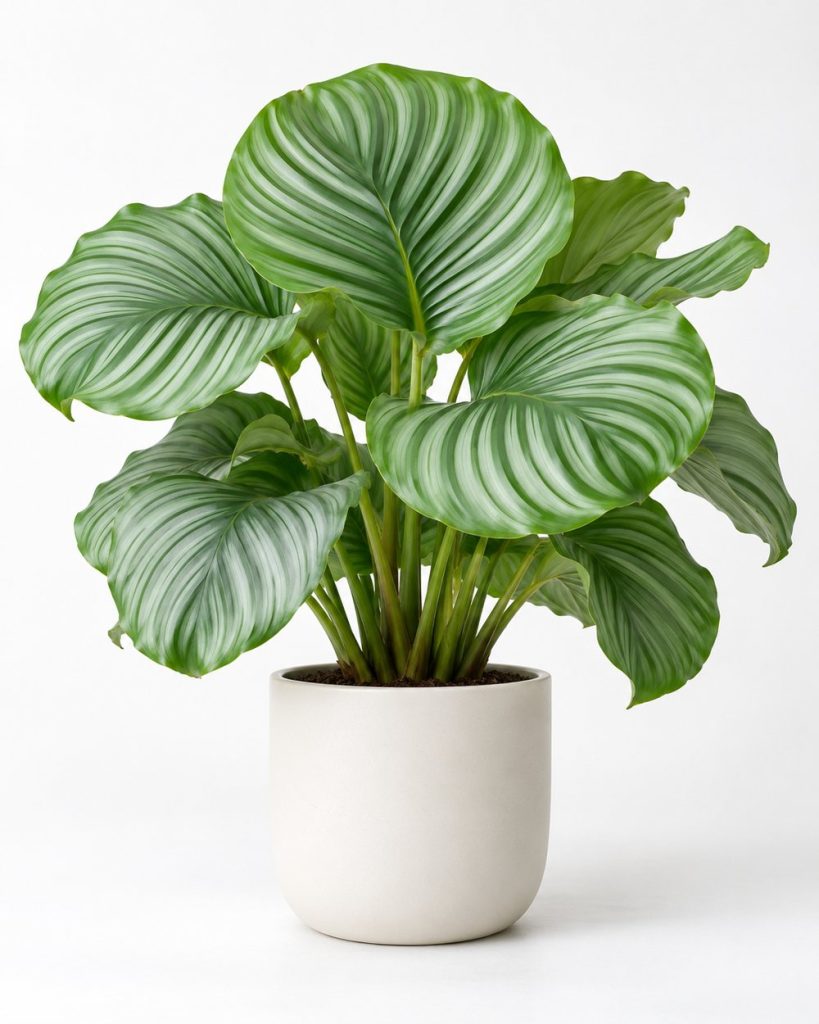
In most homes, yes. It is more forgiving about light and bounces back from a missed watering better than types like orbifolia. It still wants humid air and soft water.
Why does the tag say Calathea but the books say Goeppertia?
Plant scientists moved most calatheas into a group called Goeppertia. Shops still sell it as Calathea lancifolia, and it is the same plant either way.
Can I keep it in a bedroom?
Yes, if the room gets some natural light. Bedrooms often have dry air in winter, so a small humidifier on the dresser helps.
Not sure this plant fits your home?
Take a plant quizSources: plants.ces.ncsu.edu, www.aspca.org, www.aspca.org