Calathea Medallion
Goeppertia roseopicta 'Medallion' · also called Calathea veitchiana 'Medallion', Rose-painted calathea, Calathea roseopicta
Round silver-painted leaves for a humid room and a patient owner
- Light
- Bright indirect, Medium light: Bright indirect or medium light, never direct sun
- Water
- About weekly, when the top half inch feels dry
- Difficulty
- Hard
- Pet safety
- Non-toxic to cats and dogs
- Size
- Medium
- Height
- 1-2 ft tall and wide
- Growth
- Moderate
- Humidity
- High humidity, 60% or more
- Temperature
- 65-75°F
- Good rooms
- Bathroom, Bedroom, Living room
Let's get the hard part out of the way. Calathea Medallion is a diva. It wants soft water, damp soil, and humid air, all at the same time. Miss one of those for a week and the leaf edges turn brown and crisp. Plenty of people buy one, lose half the leaves in the first month, and swear off the whole family. It is not a plant for a dry studio next to a radiator.
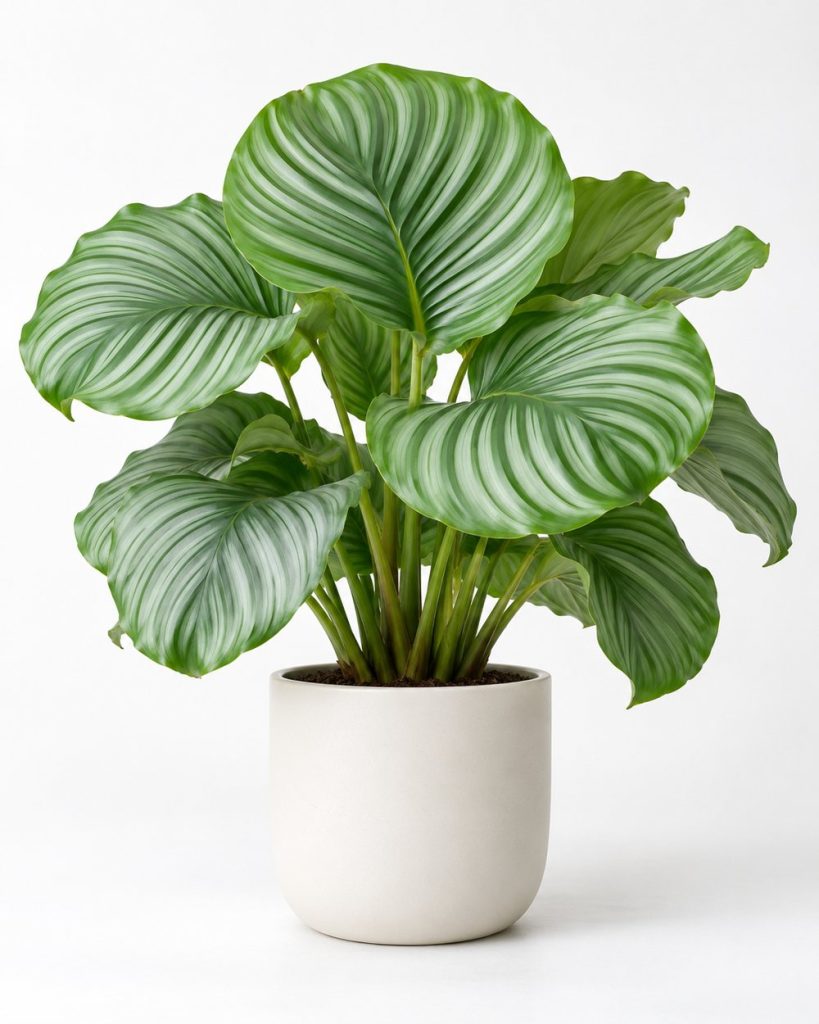
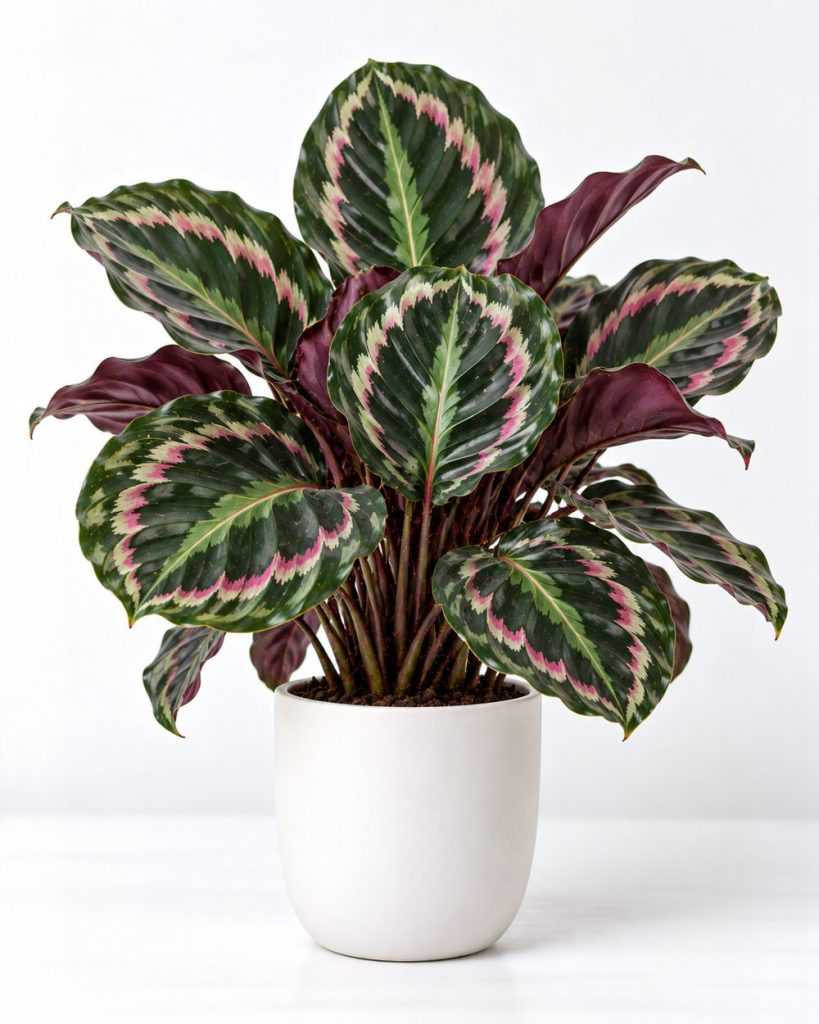
So why bother? Because the leaves are something else. Each one is a wide oval, up to about 10 inches long, painted with pale silver and green bands that look brushed on by hand. The backs are a deep purple. New leaves come up rolled tight from the center of the clump, then slowly flatten out. At night the leaves fold upward, and in the morning they settle back down. A healthy plant makes a full, round clump about two feet tall and wide.
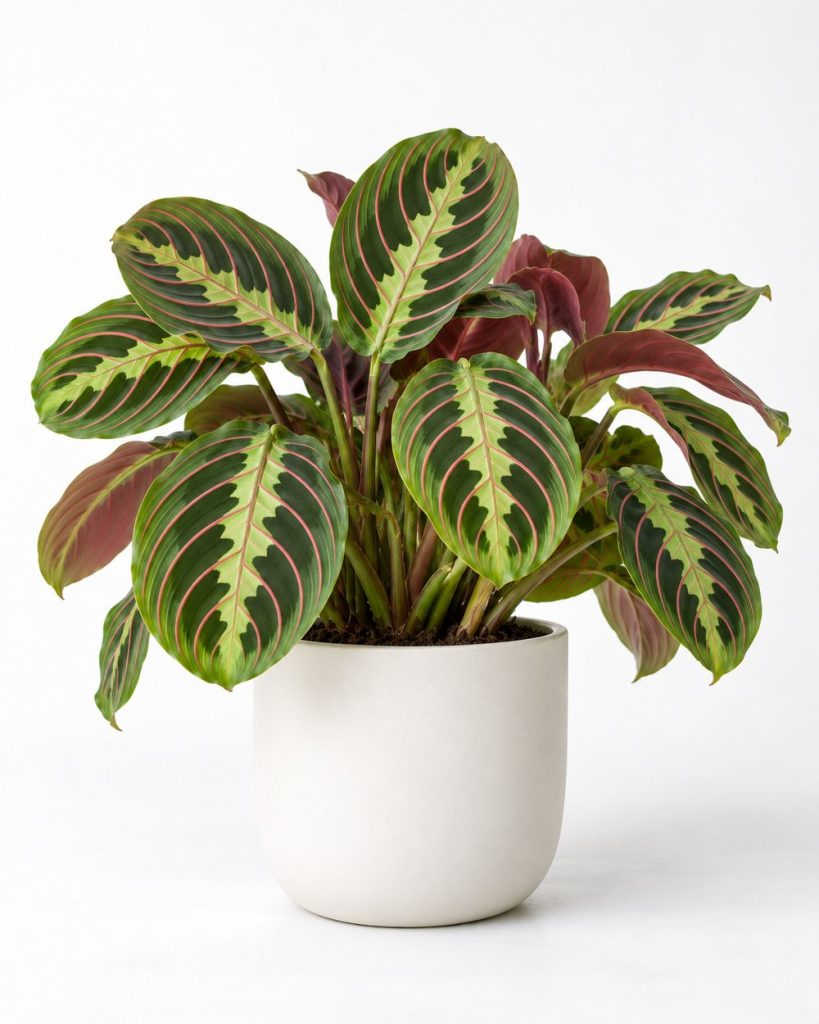
It suits someone who already enjoys a routine. If you run a humidifier, keep a jug of filtered water by the sink, and like checking on your plants every few days, this one pays you back. The ASPCA lists calatheas as non-toxic to cats and dogs, so it is a safe statement plant for a pet home. Its main rival for your windowsill is the prayer plant, which looks less dramatic but forgives a lot more.
Calathea Medallion care
Light
Aim for bright light that never lands on the leaves directly. Behind a sheer curtain at an east window is ideal. Medium light, like a spot several feet from a bright window, also works. Too little light fades the silver bands. Direct sun is worse. It scorches the leaves and turns them pale and papery in a few days.
Watering
Water when the top half inch of soil feels dry, which is often about once a week. Never let the pot dry out fully, and never let it sit in water. Use distilled, filtered, or rain water. This plant is very touchy about minerals and fluoride in tap water, and brown edges are the usual sign.
Soil and pot
Use a peaty, slightly acidic mix that drains well. Regular potting soil with added perlite or vermiculite does the job. The goal is soil that stays moist for days but never turns to mud. A pot with a drain hole is not optional here.
Humidity and temperature
This is where most Medallions fail. They want humidity above 60 percent, which is wetter than most homes, especially in winter. A small humidifier next to the plant is the most reliable fix. Pebble trays help a little. A bright bathroom with a window is often the happiest spot in the house.
Feeding
Food will not rescue a stressed Medallion, and it can make things worse. Only feed when the plant is pushing out new, healthy leaves. Then a weak dose, about a third of the label rate, once a month from April to August is fine. Every second month, flush the soil with plenty of filtered water to clear out leftover minerals.
Repotting
Every one to two years, in spring, is enough. Pick a pot just slightly wider than the old one. Medallion dislikes having its roots disturbed, so handle the root ball gently and water with care for a few weeks afterward. Some leaf droop after repotting is normal.
Propagation
The only practical way is division. When the clump is big, take it out of the pot and gently separate a section that has its own roots and at least two or three leaves. Pot it up in damp mix and keep it warm. A clear plastic bag set loosely over the top for a week or two helps it settle in.
Common problems
Why do new leaves open with brown tips already?
That usually comes down to water quality or dry air while the leaf was still rolled up. Switch to distilled or rain water and raise the humidity. Leaves that form after the change should open clean.
Why is my Medallion losing leaves right after I brought it home?
Many calatheas sulk after moving from a humid greenhouse to a dry house. Cut off the dead leaves, keep the care steady, and wait. As long as the roots are firm, new leaves usually come in within a month or two.
What are the tiny pale speckles on the leaves?
Speckling, often with fine webs underneath, points to spider mites. They love dry air. Rinse the leaves in the shower, wipe the undersides, and raise the humidity to keep them from coming back.
Why are the lower leaves going yellow and limp?
Yellow, soft lower leaves often mean the soil has stayed wet too long or the room is cold. Let the top of the soil dry slightly, check the drain hole, and keep the plant above 65°F.
Frequently asked questions
Is Medallion the same as Calathea veitchiana?
Shops often label it that way, but the Medallion sold today is a form of Goeppertia roseopicta. The care is the same, so the label does not change what you do.
Should I mist my calathea?
Misting raises humidity for a few minutes and can leave water spots or invite leaf fungus. A humidifier does far more good. If you do mist, do it in the morning so the leaves dry by night.
Will it grow under a grow light?
Yes. A full-spectrum LED set a foot or two above the plant works well, run for about 10 to 12 hours a day. Keep it far enough away that the leaves never feel warm.
Not sure this plant fits your home?
Take a plant quizSources: plants.ces.ncsu.edu, www.aspca.org