Philodendron Birkin
Philodendron 'Birkin' · also called Birkin, White Wave philodendron
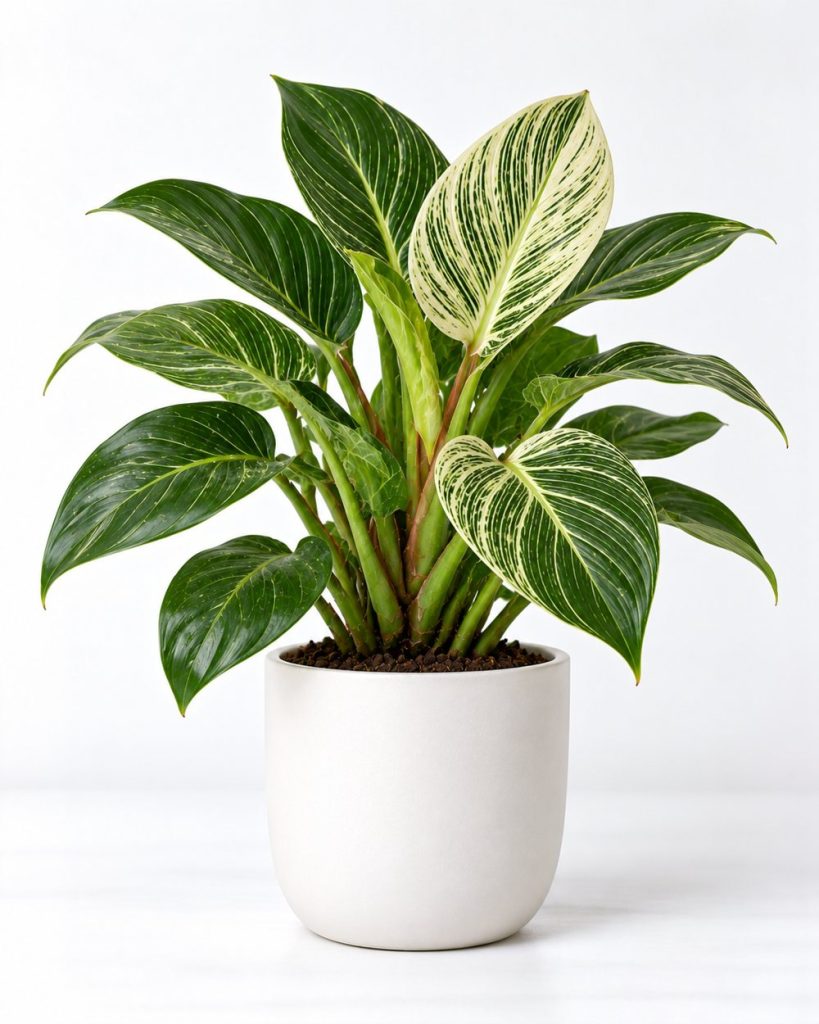
Dark leaves with cream pinstripes on a neat, upright clump
- Light
- Bright indirect: Bright filtered light keeps the white stripes
- Water
- Every 1-2 weeks, when the top inch or two is dry
- Difficulty
- Moderate
- Pet safety
- Toxic to cats and dogs
- Size
- Medium
- Height
- 6 in to 3 ft tall and about as wide
- Growth
- Moderate
- Humidity
- Prefers 50-60%, copes with less
- Temperature
- 65-85°F
- Good rooms
- Bathroom, Bedroom, Living room, Office
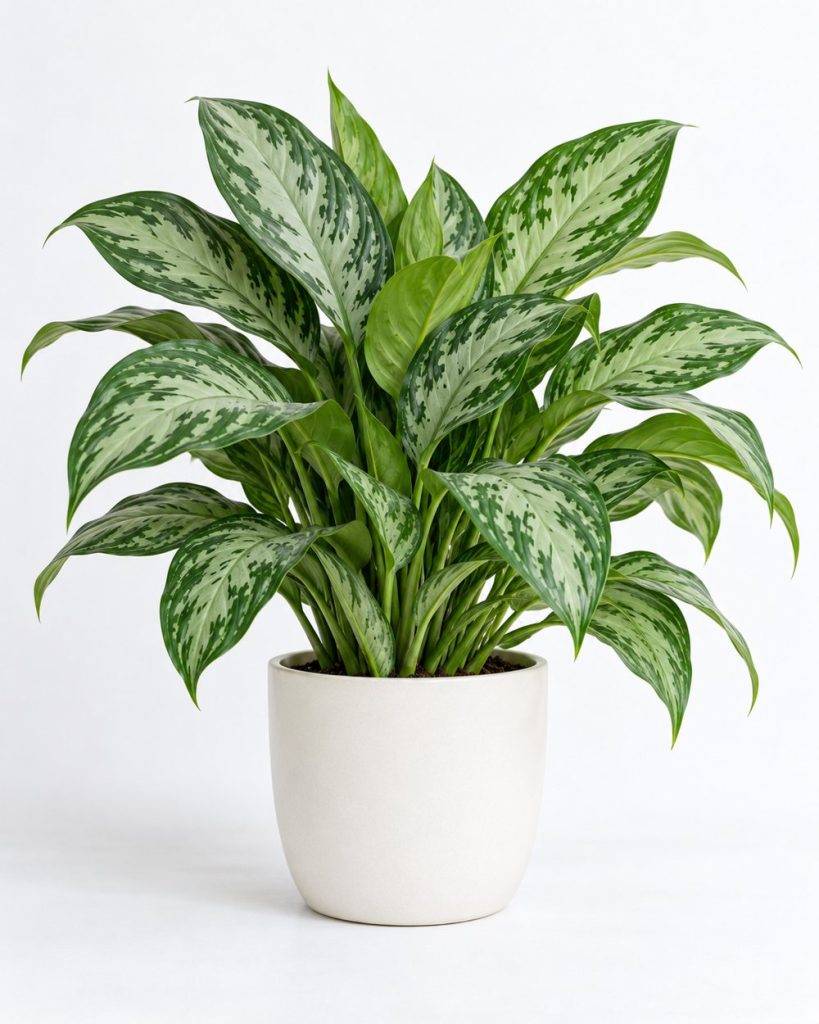
No two leaves on a Philodendron Birkin look quite alike. Each one is dark green with thin cream or white pinstripes running from the center vein out to the edge. Some leaves come out almost solid green. Others are so streaked they look pale from across the room. The newest leaf often unfurls lighter and darkens over a few weeks. The leaves are glossy and oval with a pointed tip, and they sit on short stalks close to the center.
Unlike the vining philodendrons, Birkin grows upright from a short, central stem, so it stays a neat clump instead of sprawling. NC State Extension puts it at 6 inches to 3 feet tall and about as wide. That size makes it a good choice for a side table, a bright bedroom, or a corner of a desk where a trailing vine would get in the way. It first showed up around 2010, likely as a chance mutation of a red-leaved philodendron called Rojo Congo.
The pattern is also its weak point. Birkin's stripes are not stable. In low light, new leaves often come in plain green, and now and then a plant throws out leaves that look like its Rojo Congo parent. That is not a disease, but it can be a letdown if you bought it for the stripes. Good light gives you the best odds. And like every philodendron, it is toxic to cats and dogs.
Philodendron Birkin care
Light
Aim for bright, filtered light most of the day, such as close to an east window or a few feet back from a sunny one behind a sheer curtain. Harsh direct sun burns the pale stripes first. Dim light makes the plant leggy and the stripes fade. A small grow light helps in a darker room.
Watering
Water when the top inch or two of soil feels dry, often every week or two. Water slowly until it drains, then let the pot empty fully. Drooping leaves with dry soil mean it is thirsty. Drooping with wet soil is a warning sign of root trouble.
Soil and pot
It wants an airy, chunky mix. Regular potting mix with orchid bark and perlite stirred in, roughly a third each, keeps air around the roots. Dense, heavy soil stays wet too long. A pot with drainage holes is a must.
Humidity and temperature
This is where it can be picky. It does best around 50 to 60 percent humidity. Brown, crispy leaf tips are the usual sign the air is too dry. A humidifier, a pebble tray, or a spot in a bright bathroom all help. Keep it clear of heat vents and air conditioners.
Feeding
The cream stripes on a Birkin have less green to feed the leaf, and they scorch first when the soil gets salty. A gentle routine works best: a half dose of balanced liquid fertilizer every four to six weeks, only from spring to late summer. No food in winter. Brown streaks along the white lines after feeding mean you should back off.
Repotting
Birkin grows at a modest pace and likes a snug pot. Repot every one to two years in spring, going up just 1 to 2 inches. Wear gloves, since the sap can irritate skin. Moving it into a far bigger pot raises the risk of soggy soil.
Propagation
Take a stem cutting with at least one node and a leaf or two. A cutting from the top often roots best. Stand it in water or damp sphagnum moss in bright, indirect light. Roots can take a month or more to form. Pot it up once they are a couple of inches long.
Common problems
Why are the white stripes turning brown?
Pale stripes have less green and burn more easily. Too much direct sun or strong plant food are the usual causes. Move it out of hot sun and feed more gently.
Why does my Birkin look tall and floppy?
It is reaching for light. Move it brighter and rotate the pot. A small stake can keep the main stem upright while new growth catches up.
Why are there tiny flies around the soil?
Those are probably fungus gnats, which breed in damp soil. Let the top inch or two dry out before watering, and use yellow sticky traps to catch the adults.
Why did a leaf get black, wet-looking spots?
Dark, soggy spots often point to too much water or a cold, damp spot. Cut the leaf off, let the soil dry, and keep the plant warmer.
Frequently asked questions
Is Philodendron Birkin hard to find?
It used to be. It is now grown widely and sold in many garden centers and online shops.
Does Birkin need a pole to climb?
No. It grows upright from a central stem rather than vining. An older plant may like a small stake, but it does not need a pole.
Can a Birkin lose its stripes?
Sometimes. Older plants can push out darker leaves with fewer white lines, and low light makes this more likely. Keep it bright, and cut off any stem that turns fully green so the striped growth stays in charge.
Not sure this plant fits your home?
Take a plant quizSources: plants.ces.ncsu.edu, www.aspca.org