Norfolk Island Pine
Araucaria heterophylla · also called Norfolk pine, House pine, Australian pine
A soft little conifer that wants a sunny window and cool air
- Light
- Bright indirect, Full sun: Bright indirect to some direct sun, close to a big window
- Water
- About every 1-2 weeks, when the top inch of soil is dry
- Difficulty
- Moderate
- Pet safety
- Non-toxic to cats and dogs
- Size
- Large
- Height
- 3-8 ft indoors over many years
- Growth
- Slow
- Humidity
- Likes 50% or more, struggles in dry winter air
- Temperature
- 60-75°F
- Good rooms
- Entryway, Living room, Office
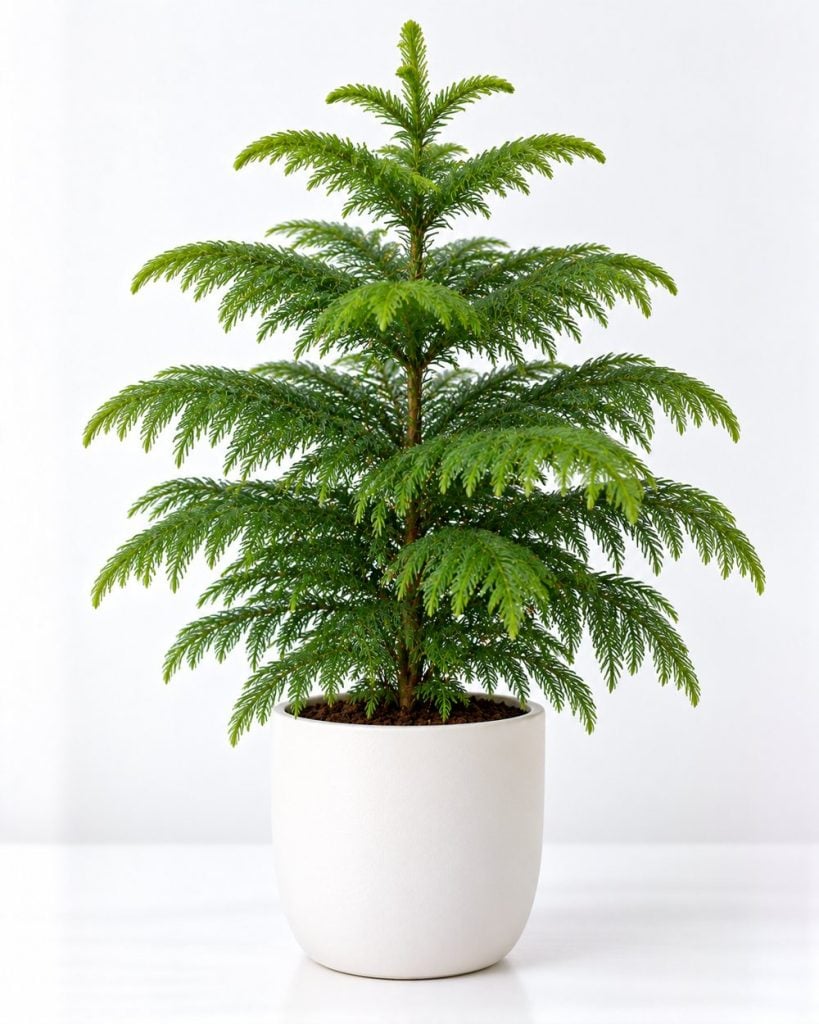
Every December, garden centers fill up with small Norfolk Island pines wearing glitter and red bows. Under the sparkle is a real tree. It grows in neat tiers of soft green branches, each one lined with short needles that feel more like a brush than a pine. It looks like a Christmas tree, but it is not a true pine, and it does not want to be a holiday prop. Treated well, it stays with you for years and adds a new tier of branches most springs.
It suits a bright room with a big window and an owner who does not mind a slow pace. Indoors it grows a few inches a year and can reach 5 to 8 feet in time. That makes it a good tall plant for a sunny living room corner or a cool entryway with a glass door. The ASPCA lists it as non-toxic to cats and dogs. A cat may still see a small tree and try to climb it, so pick a heavy pot.
The weak spot is warm, dry air. In winter, with the heat running, the lower branches can brown and fall, and they never grow back. A pine that loses its bottom tiers ends up looking like a palm on a stick. Keep it away from vents and give it all the light you can. Also look closely at the pot when you buy one. Many are sold as three or four seedlings crammed together. That is normal, but it means they share water and dry out faster.
Norfolk Island Pine care
Light
Put it right by your brightest window. A few hours of gentle direct sun, like morning sun from the east, is welcome. In a dim room it hangs on for a year or two, then the lower branches fade and drop. Give the pot a quarter turn every week, or the whole tree leans toward the glass.
Watering
Water when the top inch of soil feels dry, then soak it until water drains out. In most homes that means about once a week in summer and every two weeks in winter. Never let the pot dry out fully. Branches that stay droopy after watering are a sign the roots have been wet too long.
Soil and pot
A regular indoor potting mix is fine. Mix in some perlite if your bag feels heavy or stays soggy. Choose a heavy pot with a drainage hole. Clay or ceramic helps keep a tall tree from tipping when a pet or a vacuum bumps it.
Humidity and temperature
This is where most Norfolk pines struggle. They like the air around 50 percent humidity, and a heated home in January can drop far below that. A humidifier nearby helps most. It also prefers a cool room, around 60 to 70°F, to a warm one, so skip the spot above the radiator.
Feeding
A Norfolk pine adds only a few inches a year indoors, and food will not speed that up in poor light. In a bright window, give a balanced fertilizer at half rate every six weeks or so from April to August. In a dim corner, cut that to two doses a year. Yellow, weak new tips can hint at hunger, but check the light first.
Repotting
Repot every three or four years in spring, into a pot just 1 to 2 inches wider. The roots do not like to be disturbed, so leave the seedlings together instead of pulling them apart. If the tree gets top heavy, a wider base matters more than a deeper pot.
Propagation
Honest answer, this is hard at home. Nurseries grow new trees from seed. Cuttings from side branches will root, but they keep growing sideways and never form a proper tree. Only the very top tip grows upright, and cutting it off stops the main plant from getting taller.
Common problems
Why are the bottom branches browning and dropping?
Losing the lowest tier now and then is normal with age. Lots of loss at once points to dry air, too little light, or soil that dried out fully. Lost branches do not regrow, so fix the cause early.
Why is my tree leaning to one side?
It is growing toward the window. Start turning the pot a little each week. A tree that already leans will slowly even out over a season.
What is the sticky stuff on the branches?
Sticky spots and black dust usually mean scale insects, which look like tiny brown bumps on the stems. Scrape them off, wipe with soapy water, and look again every week for a month.
My pine's branch tips are soft and limp. What now?
Limp tips with damp soil often mean the roots have stayed wet. Let the top of the soil dry before the next drink and make sure the pot drains. If the soil is dry, it simply needs water.
Frequently asked questions
Can I decorate it for the holidays?
Yes, if you go easy. Use light ornaments and LED lights that stay cool, and take them off after a few weeks so the branches get light and air.
Is it a real pine?
No. It is a conifer from Norfolk Island in the South Pacific, in a different family from true pines. That is why it cannot handle frost the way a pine in the woods can.
Can I cut the top if it gets too tall?
It is better not to. Cutting the top stops it from growing taller, and the tree will not make a neat new leader, so it stays flat and lopsided. If it outgrows your ceiling, pass it on to someone with more room.
Not sure this plant fits your home?
Take a plant quizSources: www.aspca.org, plants.ces.ncsu.edu