Mini Monstera
Rhaphidophora tetrasperma · also called Monstera minima, Philodendron Ginny, Dwarf monstera
Split leaves like a monstera, on a vine that fits a bookshelf
- Light
- Bright indirect: Bright indirect light, a little gentle morning sun is fine
- Water
- About every 7-10 days, when the top 2 inches are dry
- Difficulty
- Easy
- Pet safety
- Toxic to cats and dogs
- Size
- Medium
- Height
- Climbs 3-6+ ft indoors with a pole
- Growth
- Fast
- Humidity
- Average is fine, 50% or more gives bigger leaves
- Temperature
- 65-80°F
- Good rooms
- Bedroom, Living room, Office
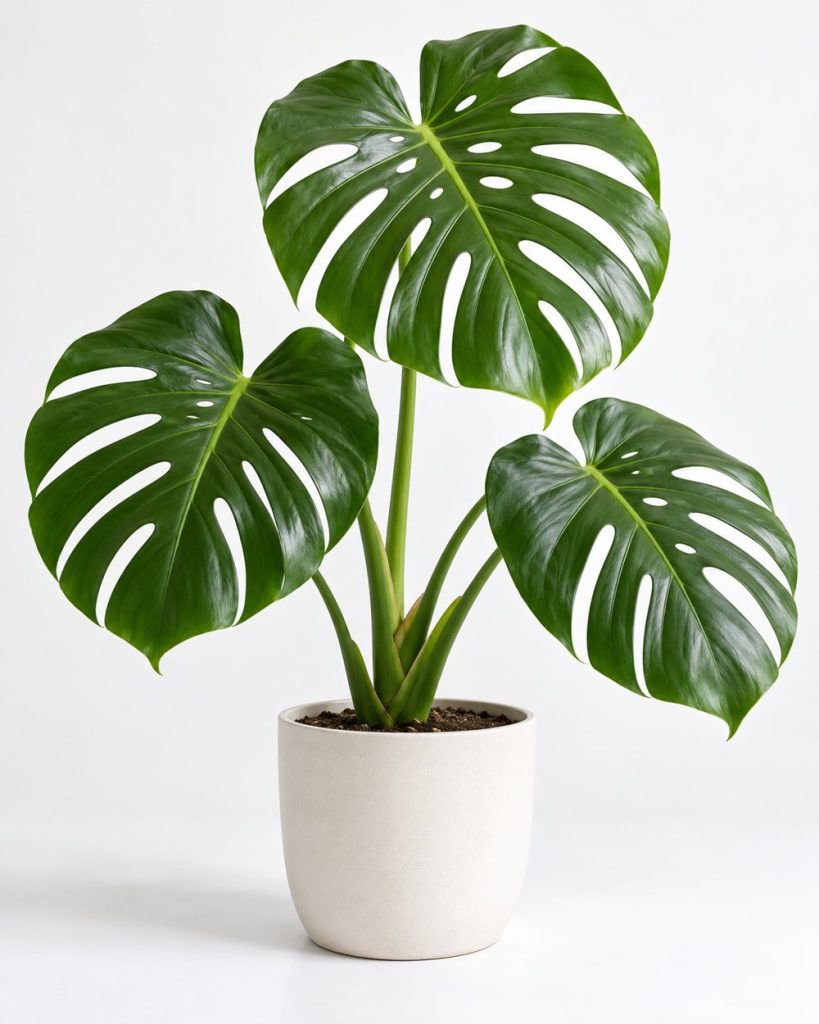
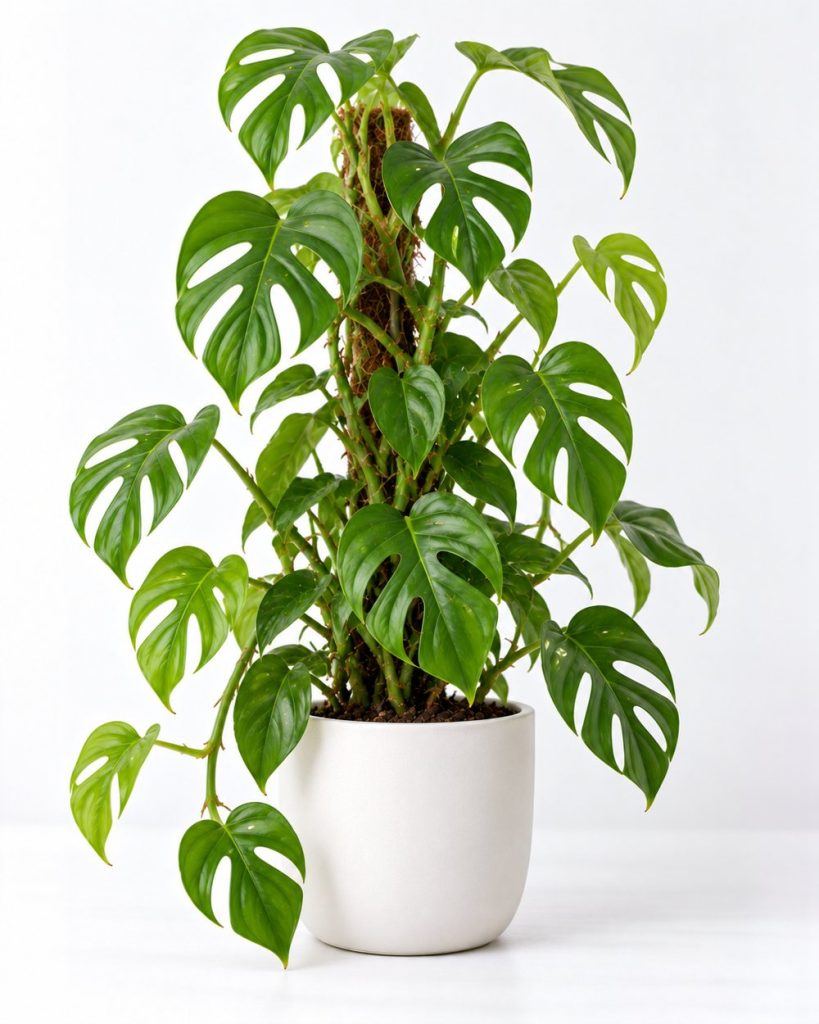
Mini monstera is not a monstera. It belongs to a different group of plants, and the name on the shop tag is a sales nickname that stuck. You can see why it caught on. Each leaf starts out whole, then opens into a row of slits as the plant matures. A grown plant looks like a monstera that went through a hot wash, with leaves about the size of your hand instead of a dinner plate.
It makes sense for someone with one bright window and not much floor. The vine climbs fast. Give it a moss pole or a slim trellis and it heads for the ceiling, often adding a new leaf every week or two in summer. Without support it sprawls, and the new leaves come in smaller. Cuttings root with almost no effort, so friends tend to get pieces of it whether they asked or not.
There are two honest drawbacks. It is toxic to cats and dogs, and a climbing plant at chewing height needs some thought in a pet home. It also falls apart in a dim room. If your best spot is a north window with a tree outside, the stems stretch, the gaps between leaves grow, and the splits may never show up. This plant needs light far more than it needs attention.
Mini Monstera care
Light
Put it within a few feet of an east window, or set it back from a south or west one behind a sheer curtain. That bright, filtered light is what brings out the splits. A little early sun is fine. Strong afternoon sun through glass can burn pale patches into the leaves. In a dim room it lives on, but slowly turns into bare stems with a few small leaves at the tip.
Watering
Water when the top 2 inches of soil feel dry. In summer near a bright window, that tends to be about once a week. In winter it can stretch to every two weeks. Soak the pot, let it drain, and tip out the saucer. Drooping leaves with dry soil mean you waited too long, and they perk up within a day.
Soil and pot
A chunky mix works best. Try regular potting soil blended with orchid bark and perlite, roughly a third of each. The roots want air as much as water. A plastic nursery pot with drain holes, slipped inside a nicer pot, makes it easy to lift and judge the weight before you water.
Humidity and temperature
Normal room air is fine for growth. Higher humidity, around 50 to 60 percent, helps new leaves unfurl without tearing at the edges. A small humidifier in winter is the simplest fix. Misting does very little and can leave spots on the leaves.
Feeding
Rhaphidophora climbs fast once it has a pole, so it does best on a steady supply in the growing months. Try a liquid fertilizer for leafy plants every three weeks, at half the label rate, from spring through August. Leave it unfed over winter. A white crust on the pot rim means salts are building up. Pour plain water through until it runs clear from the bottom.
Repotting
Move it up one size, about 2 inches wider, every spring or two. Roots coming out of the drain hole are your signal. This is also the moment to add or swap the pole. Push the pole in first, then fill soil around it, so you do not stab through the roots later.
Propagation
Cut a piece of stem with one or two nodes, the brown bumps where leaves and air roots grow. Stand it in water in a bright spot. Roots usually appear in two to three weeks. A cutting with one leaf and one node is enough. Plant several together in one small pot for a fuller look.
Common problems
Why are the new leaves coming in without splits?
Young plants and plants in low light make solid leaves. The splits come with size and brightness. Move it closer to a window and give it something to climb, and later leaves should start to open up.
Why are there brown, papery patches in the middle of leaves?
Patches like that usually mean sunburn from direct afternoon sun. Pull the plant back a few feet or add a sheer curtain. Damaged leaves will not heal, but the new ones will come in clean.
Why are the stems turning black at the soil line?
That is stem rot from soil that stays wet. Cut off any healthy top sections and root them in water. Repot what is left in fresh, chunky mix and water less often.
What are the fine webs under the leaves?
Those are spider mites, tiny pests that love warm, dry rooms. Rinse the plant in the shower, then wipe both sides of each leaf. Repeat every few days for two weeks to catch the ones that hatch.
Frequently asked questions
Is a mini monstera a baby Monstera deliciosa?
No. It is a separate plant, and it will never grow into a big monstera. The leaves look alike, which is how it earned the nickname.
Do I need a moss pole?
You do not need one, but it helps a lot. Vines that climb make bigger leaves than vines that hang. A coir pole or a simple wooden stake with soft ties both work.
Can I cut it back if it gets too tall?
Yes. Cut just above a node and the plant will branch from below the cut. Root the top piece and you have a second plant.
Not sure this plant fits your home?
Take a plant quizSources: plants.ces.ncsu.edu, www.aspca.org