Croton
Codiaeum variegatum · also called Joseph's coat, Garden croton, Fire croton
Leaves painted red, gold, and orange for a sunny, warm room
- Light
- Bright indirect, Full sun: Bright light with some direct sun for the best color
- Water
- About weekly, when the top inch of soil is dry
- Difficulty
- Moderate
- Pet safety
- Toxic to cats and dogs
- Size
- Medium
- Height
- 2-4 ft indoors
- Growth
- Moderate
- Humidity
- Moderate to high, 40% or more
- Temperature
- 60-85°F
- Good rooms
- Kitchen, Living room, Office
Bring a croton home and there is a fair chance it will sulk. A few days after the move, leaves start falling. This is so common that some plant shops warn you at the register. The plant is reacting to a new spot with different light, warmth, and air. If you keep things steady, it usually settles in and starts making new leaves within a few weeks.
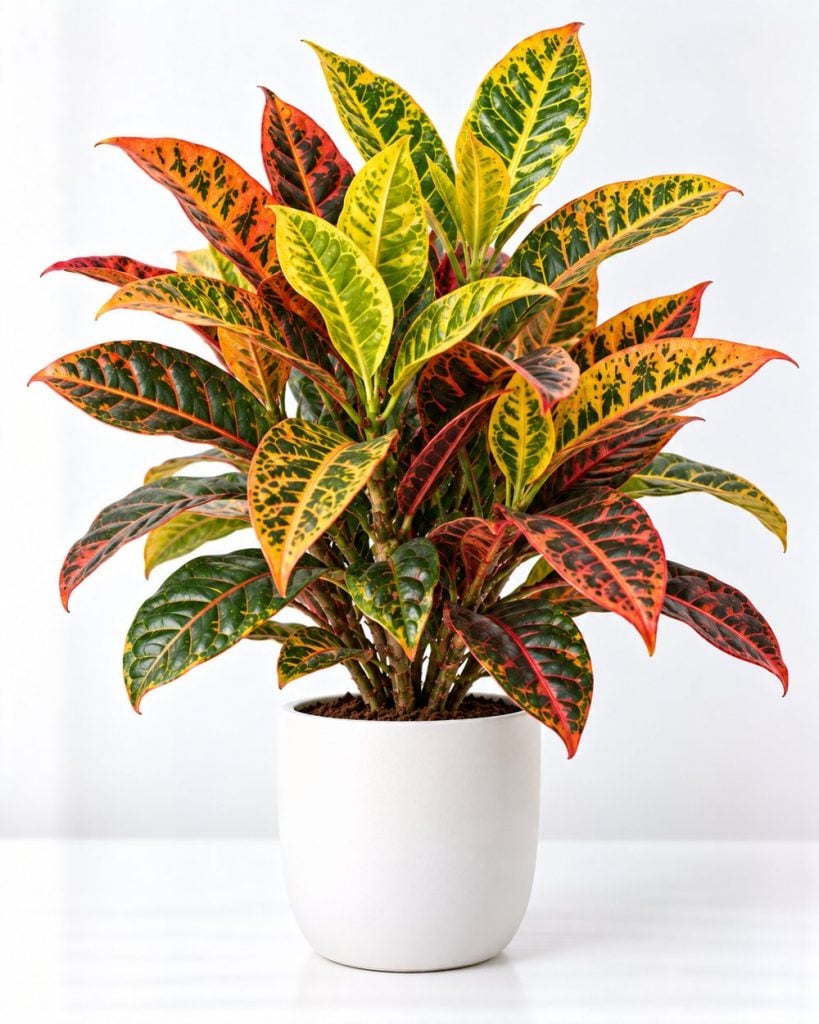
Why put up with that? The color. Croton leaves come striped, spotted, and splashed in yellow, orange, red, pink, and almost black, often several shades on one plant. Some leaves are broad and leathery. Others are long and thin, or twisted like a corkscrew. The brighter the light, the stronger the colors. In shade, new leaves come in mostly green, and you lose the reason you bought it.
It suits a warm room with a sunny window and an owner who checks on plants often. Indoors it grows to about 3 feet and stays bushy if you trim it each spring. Outdoors in frost-free places it becomes a shrub up to 10 feet tall. Keep it away from cold doors and drafty glass, since it wants to stay above 60°F. It is also toxic. The milky sap can irritate skin, and chewing the leaves can cause drooling and vomiting in cats and dogs. Wear gloves when you prune and wash your hands after.
Croton care
Light
Croton needs lots of light to keep its color. Set it in or near a bright window where it gets a few hours of direct sun, ideally in the morning. Harsh, all-day sun through glass can leave the leaves gray and dull. Too little light turns new growth green and makes the lower leaves fall.
Watering
Water when the top half inch to inch of soil is dry, which in most homes is about once a week in summer. Water less in winter. Soggy soil and a bone-dry pot can both lead to leaf drop. Use room-temperature water, since cold water can shock the roots.
Soil and pot
A rich, well-draining potting mix suits it. Add a bit of perlite if the mix feels dense. Use a pot with a drainage hole, and do not go much bigger than the root ball. Plastic or glazed pots hold moisture a little longer than clay, which helps in a warm, sunny window where the soil dries fast.
Humidity and temperature
Croton is a tropical shrub and likes moderate to high humidity. In a dry winter room the leaf edges can brown and mites move in. A humidifier or a pebble tray helps. Wiping the leaves with a damp cloth every few weeks keeps dust off and lets you spot trouble early.
Feeding
Croton needs steady food to keep those red, orange and yellow leaves bright. From spring to early fall, use a balanced liquid fertilizer every three to four weeks at the label rate for houseplants. Too much shows up as a crust on the soil and dull, leggy growth. Feed only when the plant sits in a bright spot, and rinse the pot every couple of months.
Repotting
Repot every year or two in spring, only when roots fill the pot. Move up one size. Expect a few dropped leaves afterward, and keep its spot the same while it recovers. A pot that is too big holds wet soil around the roots, and that leads to rot and more leaf loss.
Propagation
Take a 4 to 6 inch tip cutting in late spring or summer. Rinse off the milky sap, let the cut dry for a bit, and root it in damp mix in a warm, bright spot. Around 70 to 80°F, roots often form in under a month. Air layering works on larger plants.
Common problems
The color is fading to green. What happened?
New croton leaves need bright light to show color. Move it to a sunnier window. Leaves that already turned green will stay that way, but new growth should color up.
My croton dropped half its leaves in a week.
Sudden leaf drop usually follows a move, a cold draft, or a big swing in watering. Keep it warm and steady. In spring, trim bare stems to push out new shoots.
Why do the leaves look dusty and speckled?
Tiny pale specks and fine webbing usually mean spider mites. Spray the plant hard with lukewarm water, then treat with insecticidal soap as the label says. Keep at it weekly for a month.
Should I cut off the flowers?
Many people do. Crotons sometimes send up thin spikes of small, plain flowers that use energy the leaves could use. Snipping them off will not harm the plant.
Frequently asked questions
Is croton a good plant for beginners?
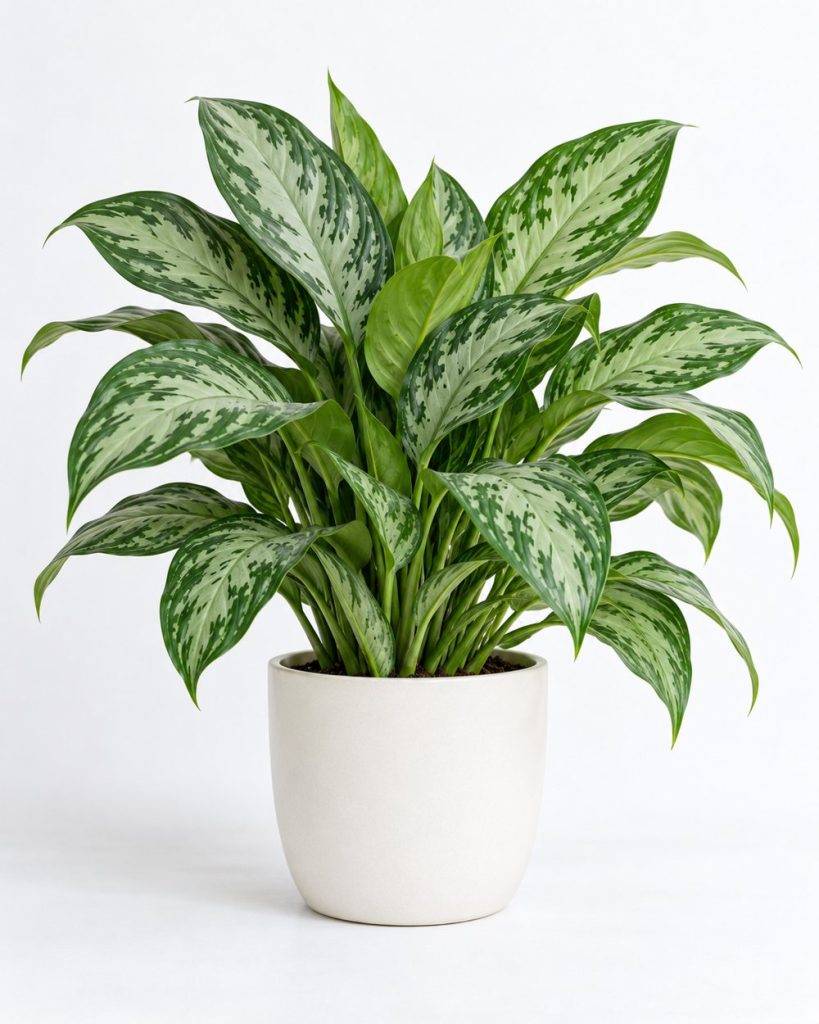
It can work if you have a sunny, warm room and check it often. If your home is dim or drafty, a Chinese evergreen gives you color with far less fuss.
Can I put a croton in a bathroom?
Only if the bathroom has a big, sunny window. Croton likes the extra moisture, but most bathrooms are too dim, and without light it loses its color.
Why are some croton leaves twisted?
Many types are bred for twisted, curled, or narrow leaves. If twisting shows up on a plain, broad-leaved type, look for pests or very dry air.
Not sure this plant fits your home?
Take a plant quizSources: plants.ces.ncsu.edu, hort.extension.wisc.edu