Bird’s Nest Fern
Asplenium nidus · also called Nest fern, Asplenium
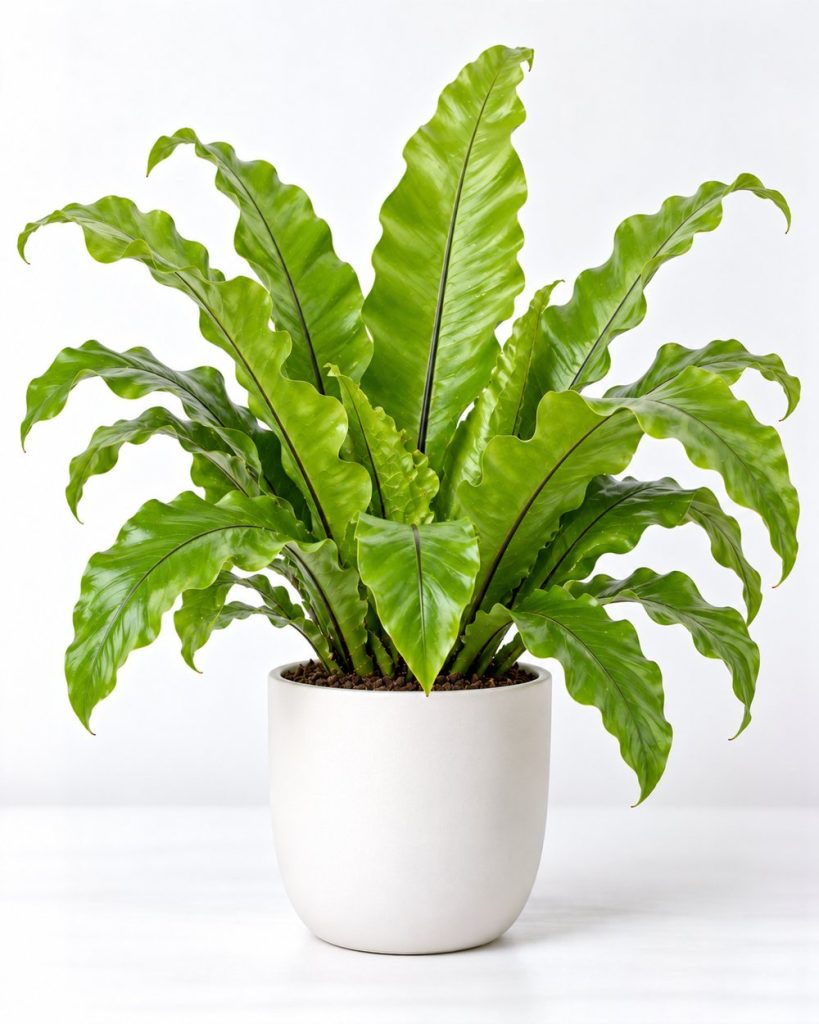
Wide glossy fronds that rise from a center like a nest
- Light
- Bright indirect, Medium light: Medium to bright indirect, like a north or east window
- Water
- About weekly, when the top inch of soil is dry
- Difficulty
- Easy
- Pet safety
- Toxic to cats and dogs
- Size
- Medium
- Height
- 1-3 ft tall and wide indoors
- Growth
- Slow
- Humidity
- Average rooms are OK, 50% or more is better
- Temperature
- 60-75°F
- Good rooms
- Bathroom, Kitchen, Living room
Forget the lacy fern you picture hanging on a porch. Bird's nest fern has no tiny leaflets at all. Its fronds are smooth, wide, apple green straps with a dark midrib and a slightly wavy edge. They rise in a ring from a fuzzy brown center that looks a bit like a nest, which is where the name comes from. New fronds uncurl from that center like fiddleheads.
In the wild it often grows on tree trunks in rainforests, catching falling leaves in its center as food. Indoors it settles for a pot and stays far smaller, usually 1 to 3 feet tall and wide. Growth is slow, a handful of new fronds a year, and a healthy plant keeps its glossy shine for years. It handles medium light well and does not shed dry bits the way many ferns do. That makes it a tidy fit for a kitchen or bathroom where you do not want to sweep.
The downsides are real, though. The fronds are fragile and crease or tear if they get bumped, and the damage stays for good. Water poured into the center can rot the whole plant. On pets, the ASPCA has no entry for this fern. A close cousin, the hen and chickens fern, is on its non-toxic list, but that is not the same plant, so we treat this one as unconfirmed.
Bird’s Nest Fern care
Light
Medium light suits it best, such as a north window or a few feet back from an east one. It will take brighter filtered light, but direct sun yellows and burns the fronds. A darker corner is survivable for a while, though new fronds come in small and pale. Turn the pot every few weeks so it grows evenly.
Watering
Water the soil around the edge of the pot, not the middle of the rosette. Let the top inch dry out between drinks. That often means once a week in summer and every 10 to 14 days in winter. It dislikes drying out completely, but it hates soggy soil more.
Soil and pot
A loose, airy mix works well. Use potting soil mixed with orchid bark and a little perlite, or a ready-made fern or aroid mix. In nature the roots cling to bark, not deep dirt, so they need air. A fairly small pot is better than a large one.
Humidity and temperature
Average room humidity is fine for this fern, which is one of its best traits. It does even better at 50 percent or more. A bathroom with a window or a kitchen near the sink gives it a natural boost. Keep it well away from heaters, which brown the frond tips.
Feeding
Bird's nest fern grows slowly, so it needs very little. A liquid fertilizer at a quarter of the label rate, every six to eight weeks in the warm months, is enough. Pour it onto the soil around the edge, never into the central cup, where it can sit and rot the crown. Spotted or twisted new fronds hint at too much.
Repotting
It grows slowly and rarely needs a new pot, about every two years. Go up only an inch or two. Set the plant at the same depth as before. Burying the center under soil is a quick way to rot it.
Propagation
This is not one to divide or root from cuttings. It grows from a single center, and cutting through it splits the plant's only crown. In nature it spreads by spores, the brown stripes under mature fronds. Growing new plants from spores is possible but slow and fiddly. Most people buy a new small plant instead.
Common problems
Why is the center of the plant mushy and brown?
That is crown rot, almost always from water collecting in the middle. Stop watering into the rosette and let the soil dry a bit. If the center has collapsed, the plant usually cannot be saved.
What are the brown lines under the fronds?
Neat, even stripes in rows are spore cases and perfectly normal. Raised bumps you can flick off with a fingernail are scale insects. Wipe those away with a cotton pad dipped in rubbing alcohol.
Why have the fronds gone pale and washed out?
Too much direct sun is the usual cause, so move it back from the window. Old outer fronds also yellow with age, which is fine. Cut them off at the base.
Why did a frond come out wrinkled or bent?
New fronds are soft and get damaged if they bump into a wall or dry out while unrolling. Give the plant some space and steady humidity. The next fronds should come in smooth.
Frequently asked questions
Can I wipe the fronds to make them shine?
Wipe gently with a damp, soft cloth. Skip leaf-shine sprays, which can clog the surface and damage the fronds.
Does it need a big pot to get big?
No. It grows slowly no matter the pot size. A pot that is too big holds extra wet soil and makes rot more likely.
Is it okay to keep in a bathroom?
A bright bathroom suits it well, since steam from the shower keeps the air moist. It still needs a window nearby. In a bathroom with no glass it will turn pale and grow even more slowly.
Not sure this plant fits your home?
Take a plant quizSources: plants.ces.ncsu.edu, www.aspca.org, www.aspca.org