Chinese Money Plant
Pilea peperomioides · also called Pilea, Pancake plant, UFO plant, Missionary plant
Round leaves on thin stalks, plus baby plants to give away
- Light
- Bright indirect: Bright indirect light, a little soft morning sun is fine
- Water
- About weekly in summer, when the top inch or two is dry
- Difficulty
- Easy
- Pet safety
- Toxic to cats and dogs
- Size
- Small
- Height
- 8-12 in tall and about as wide
- Growth
- Moderate
- Humidity
- Average home humidity is fine
- Temperature
- 60-75°F
- Good rooms
- Bedroom, Kitchen, Living room, Office
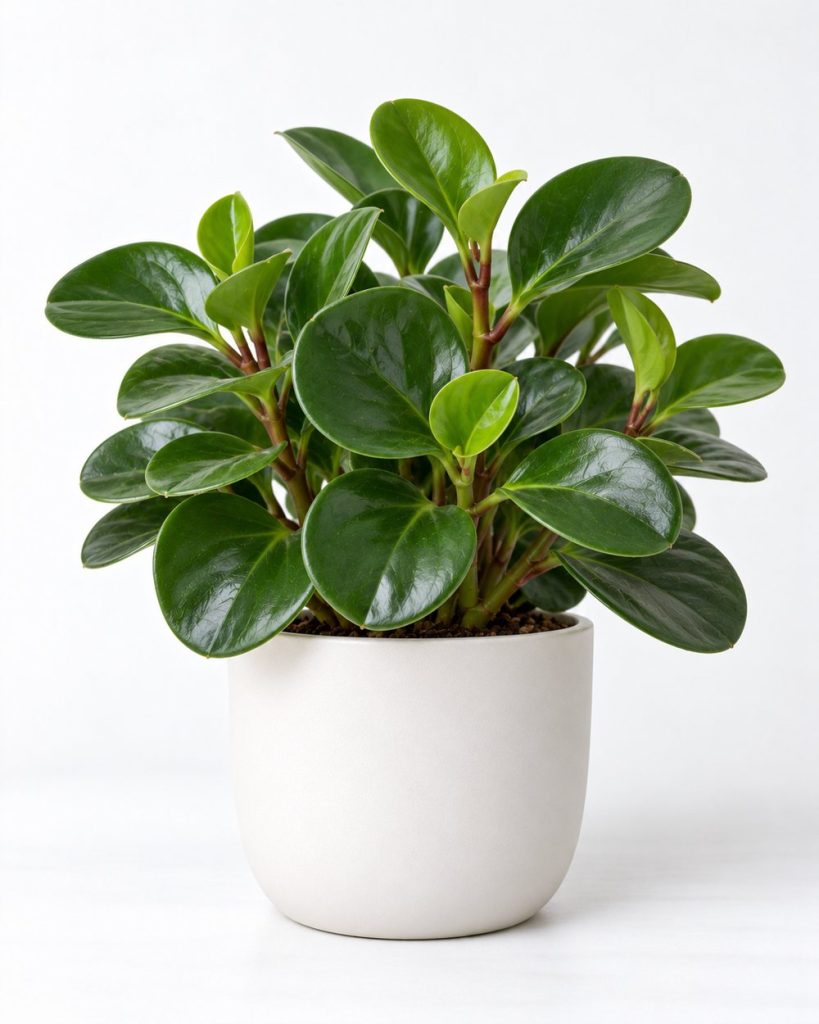
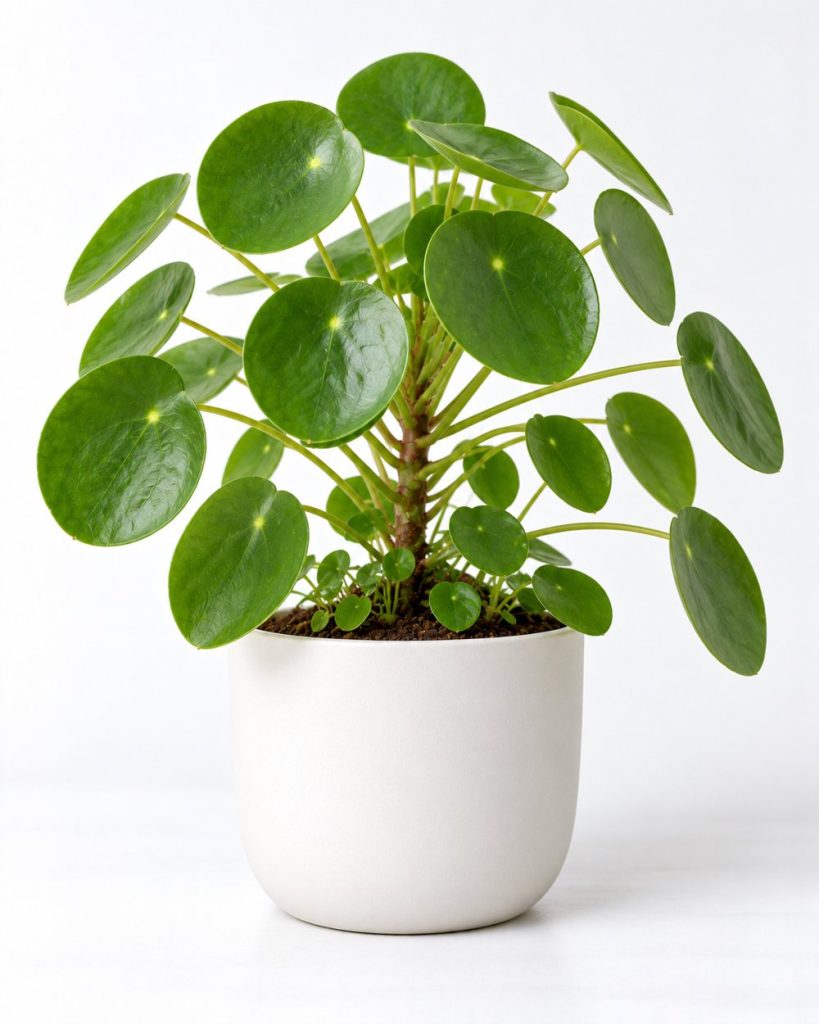
Each leaf looks like a small green pancake balanced on a thin stalk. The stalk joins the leaf near the middle, not at the edge, which gives Chinese money plant its odd, floating look. A healthy one is a tidy dome of these coins, about a foot tall and just as wide. It fits on a desk, a kitchen sill, or the corner of a bookshelf.
The real charm shows up a few months in. Small new plants pop up from the soil around the main stem, and sometimes right out of the stem itself. Once they are a few inches tall you can cut them free and pot them up. This is how the plant spread around the world, passed from friend to friend long before big shops sold it. If you like handing people a plant as they leave your house, this is a good one to own.
It does have a habit that drives tidy people a little crazy. The leaves turn hard toward the window, and within weeks the whole plant leans like it wants to go outside. A quarter turn of the pot each time you water fixes it. In a dim room it stretches into a tall, bare stem with a few leaves on top. Pet owners should know one more thing. The ASPCA rates several of its Pilea cousins as non-toxic, but this exact plant is not on its list, so we play it safe.
Chinese Money Plant care
Light
Bright indirect light keeps it compact. A spot near an east window, or a few feet back from a south or west one, works well. A little gentle morning sun is fine. Strong afternoon sun through glass can leave pale or brown patches. Too little light gives you long stalks and smaller leaves, so this is not a plant for a dark hallway.
Watering
Water when the top inch or two of soil feels dry. For most homes that is about once a week in summer and every two weeks in winter. Leaves that droop and feel soft usually mean it is thirsty. Leaves that droop while the soil is still damp mean the opposite, so check with a finger first.
Soil and pot
A regular indoor potting mix with a few handfuls of perlite drains well enough. The roots do not like to sit wet, so the pot needs a hole in the bottom. Terracotta is a good match here, since the clay pulls extra water out of the soil between drinks.
Humidity and temperature
Normal room air suits it, and it can take a bit more moisture if your home has it. There is no need to mist. Keep it away from heat vents and cold, drafty windows in winter, since sudden chills can mark the leaves.
Feeding
Pilea is a light eater. Mix a balanced liquid fertilizer at about a quarter of the label dose and add it to every second watering from April to August. That small, steady supply keeps the coins dark green and the pups coming. When the days shorten, stop. Small, pale new leaves in midsummer hint that it wants a little more.
Repotting
Move it to a pot one size up every year or two, in spring. A crowded pot is fine for a while, and some growers think a snug pot pushes out more babies. Repotting time is also the easy moment to separate any pups that have grown roots of their own.
Propagation
Wait until a pup is two or three inches tall. Brush back the soil, find where it joins the mother's root, and cut it free with a clean knife, keeping some roots on it. Pot it in damp mix. Pups that sprout from the stem itself can be cut off and rooted in a glass of water first.
Common problems
Why is my plant leaning to one side?
It is reaching for the window. Turn the pot a quarter turn every week or so, and new growth will even out. Old stalks may stay bent, which is normal.
Why are the leaves curling into little cups?
Doming is often linked to light. Too much direct sun can make leaves cup one way, and very low light can make them cup the other. Change the spot and watch the newest leaves.
What are the white dots under the leaves?
Small chalky dots are common on this plant, and most growers put them down to minerals from the water. They are harmless. Look closely to make sure they are not moving, which would point to pests.
Why are there brown, dry spots on some leaves?
Crisp brown spots often come from strong sun through glass or a cold window in winter. Pull the pot back from the pane a little. Spotted leaves will not heal, so snip them off at the base if they bother you.
Frequently asked questions
Does Chinese money plant bring money?
No. The name comes from the coin shape of the leaves. It does make a nice gift, which is how many people get their first one.
How do I keep it bushy instead of tall and bare?
More light is the main fix. You can also cut off the top, root it in water, and let the old stem push out side shoots.
When is a pup ready to cut free?
Wait until it is two or three inches tall with a few leaves of its own. Dig gently around its base with a finger, cut the runner close to the pup, and pot it in moist mix or root it in a glass of water.
Not sure this plant fits your home?
Take a plant quizSources: plants.ces.ncsu.edu, www.aspca.org